Official game
Play Dunebound Tactics
This game is hosted by Steam. Continue to the official page to play or download it.
Wishlist on SteamDunebound Tactics: Complete Strategy Guide
Overview
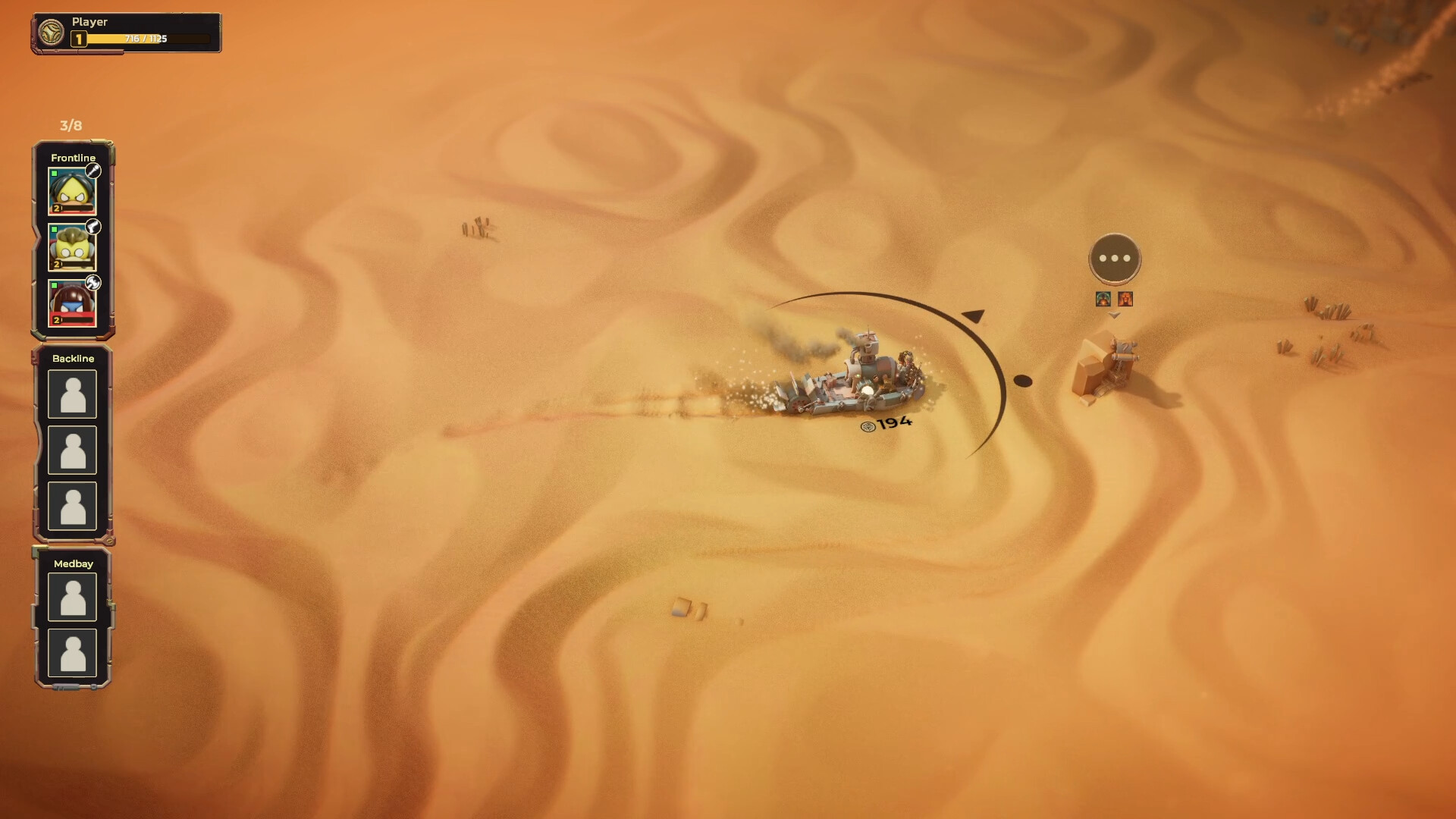
Dunebound Tactics is a roguelite turn-based tactical RPG from Terahard Ltd, published by indie.io. You command a caravan of survivors trying to cross Imperial-controlled desert territories in search of a new home. The journey runs on Elios, a resource that powers your ship's engine. You gather it through quests, from the bodies of enemies you kill, or in desperate moments, from your own crewmates. The pitch is simple: risk and reward woven into every decision, with full character death that makes each loss sting.
The game marries two genres. The combat half plays like a tactics RPG with fully destructible terrain. The campaign half plays like a roguelite, where each run starts fresh but your previous defeats leave behind wrecks you can find. Modules and survivors from past caravans can be recovered, so a failed run is never a total loss. Everything feeds the next attempt.
Release is set for September 14, 2026 on Windows. A free demo has been live on Steam, which means the core combat loop is already playable ahead of launch. The demo shows off the terrain manipulation system and the first stretch of the caravan journey.
| Fact | Detail |
|---|---|
| Developer / Publisher | Terahard Ltd / indie.io |
| Genre | Roguelite, turn-based tactical RPG |
| Platforms | Windows |
| Release date | September 14, 2026 |
| Price | To be announced, free demo on Steam |
| Players | Single-player |
| Classes | 15 distinct classes |
| Traits | 16 unique traits |
| Modules | 50+ equippable |
| Enemy classes | 38 |
| Key resource | Elios |
| Modes | Narrative campaign runs, special events, last stand missions |
| Demo | Available now on Steam |
Who is this for? Players who liked Into the Breach's puzzle-box combat, XCOM's permadeath tension, or FTL's caravan economy. It also lands for anyone who enjoys roguelites where bad runs still progress your account somehow. If you hate losing characters permanently, this game will test you.
Target Audience
The sweet spot is players who enjoy tactics games where positioning beats raw stats. The destructible terrain system gives Dunebound Tactics a board-game feel closer to Into the Breach than to XCOM. Every fight is a puzzle you can reshape, which rewards planning over grinding.
People who hate permanent death should think twice. Characters can die for good, and the game explicitly lets you extract Elios from wounded crewmates to fuel the engine. That is a cruelty mechanic, not a bug. If that tension sounds unpleasant rather than thrilling, wait for a sale and try the demo first.
Getting Started
The first hour sets the tone. Here is the sequence that works in the demo and carries into the full game.
1. Play the demo before the release build
The demo is free and already on Steam. It teaches the terrain system without the pressure of a full campaign. Movement, cover, and the Elios economy in combat carry over unchanged. A few practice runs here save you from learning on a run that actually matters.
2. Learn what Elios does in combat
Elios is not just a fuel gauge. In battle it powers your terrain abilities: ice pillars, explosive pillars, mines, and traps. Every spend is a tradeoff between shaping the fight now and keeping fuel for the journey later. Early on, hoarding Elios is the correct instinct. Spend it only when a fight starts to spiral.
3. Reshape the battlefield before making your first attack
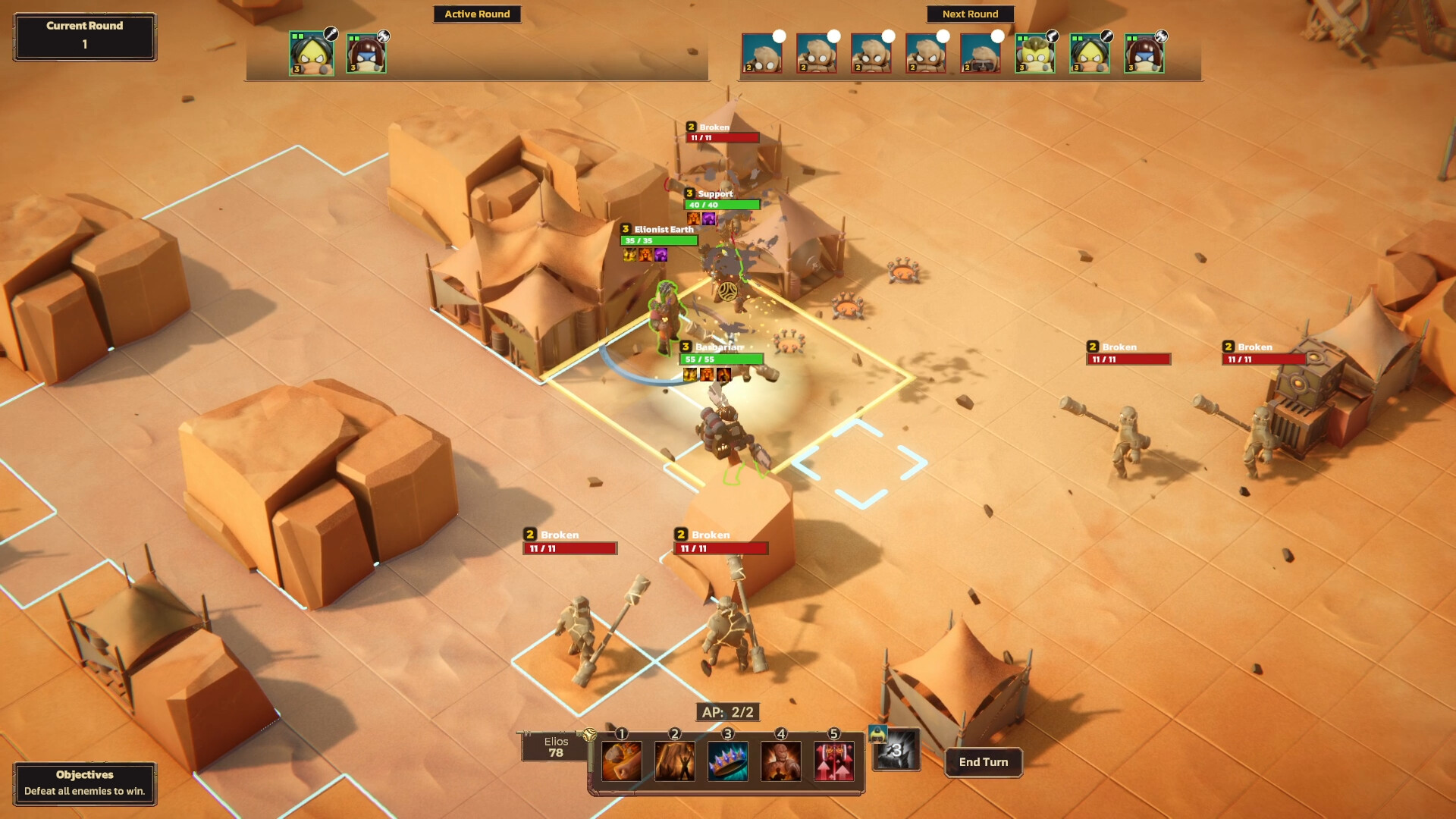
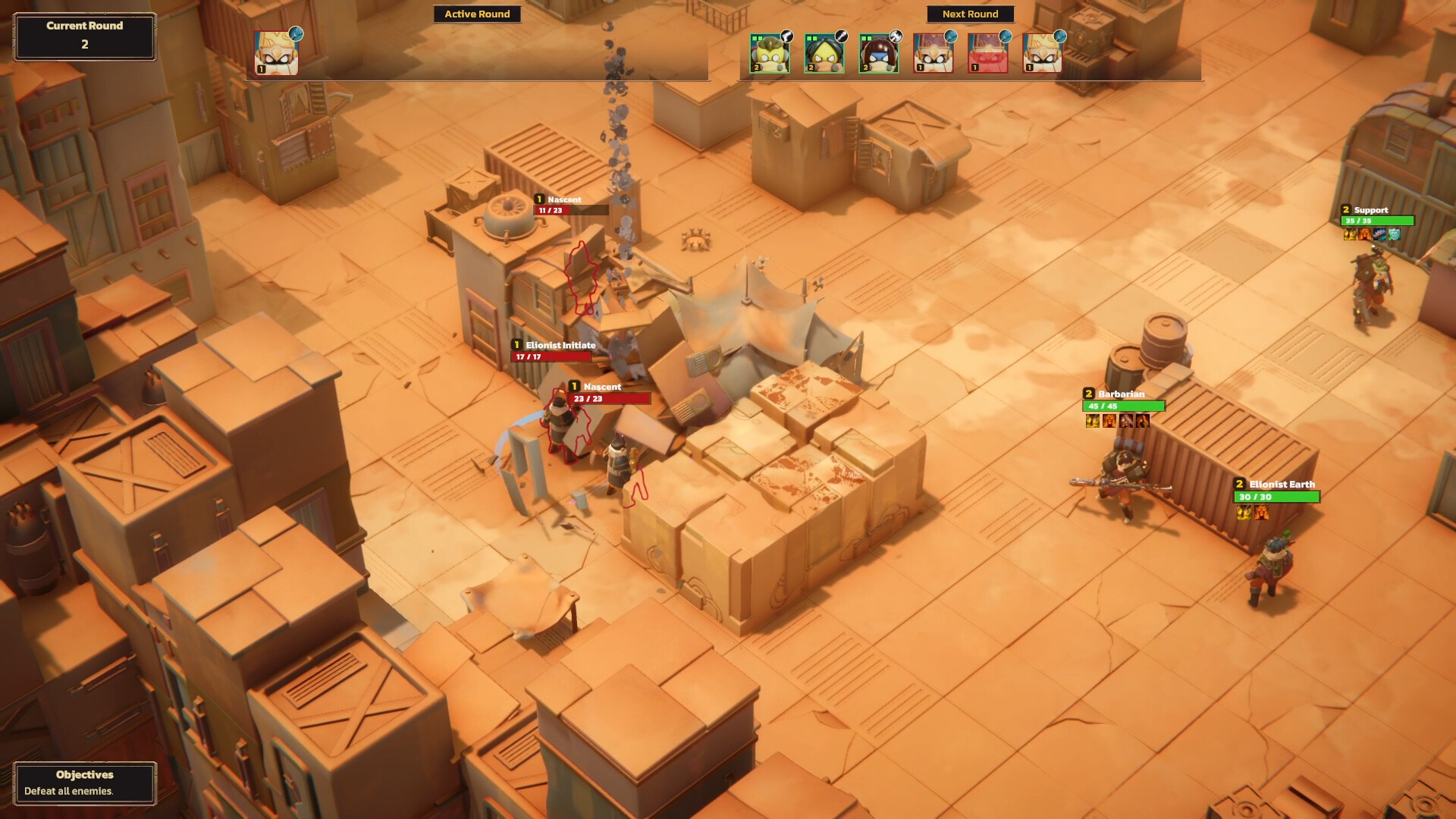
The core loop is: destroy cover, reposition cover, then fight. If you just walk your party into the enemy firing line, you will lose units fast. Look at every fight as a terrain puzzle first and a shooting match second. Obliterate enemy cover, then push into the gap.
4. Keep an eye on caravan seats
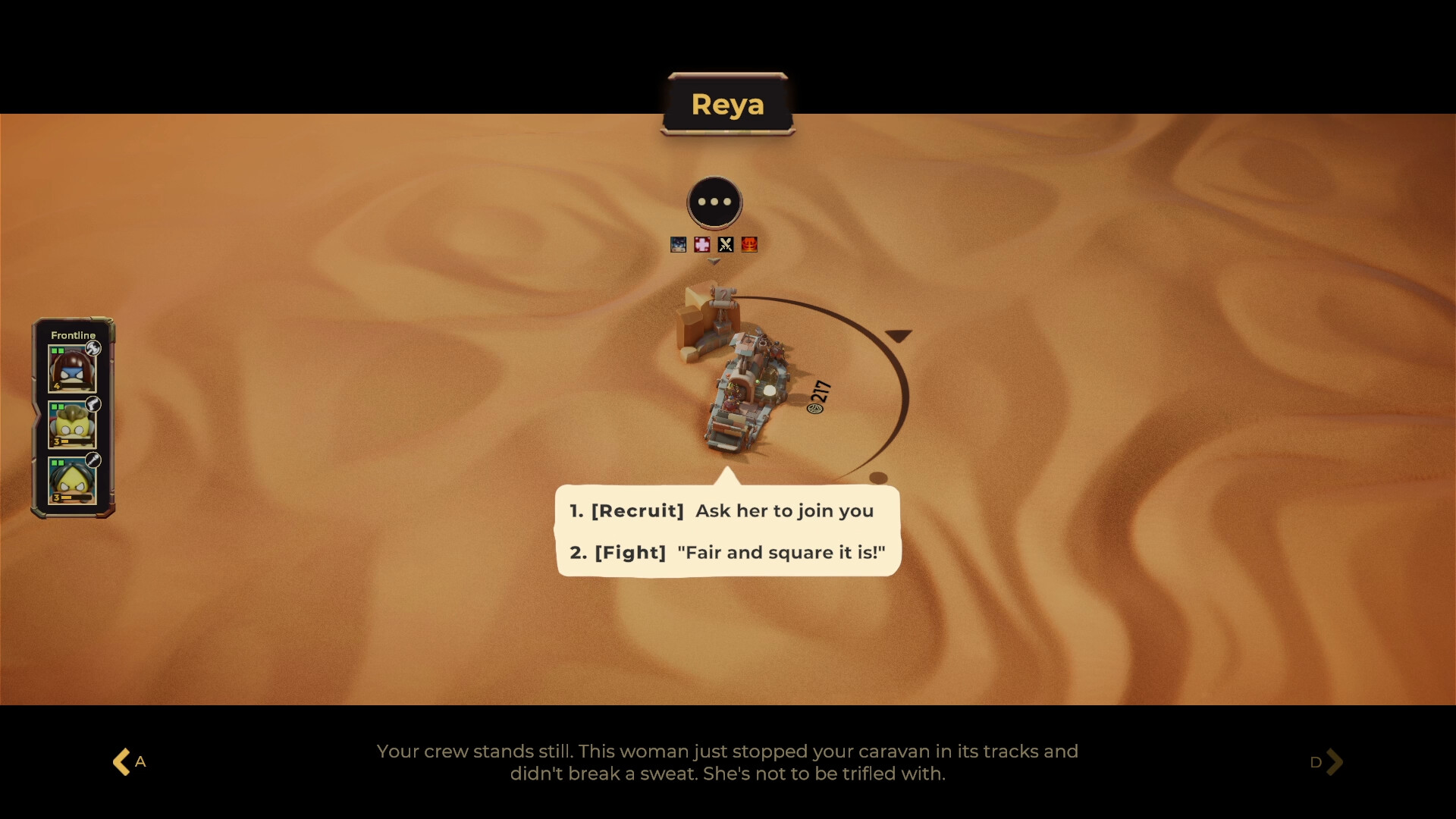
Your caravan has limited seats. Recruiting every survivor you meet will hit a hard cap. Choose who joins based on class synergy, not sympathy. A full caravan with two healers is better than a full caravan with five damage dealers.
5. Expect the wrinkle
Terrain in the wastes is dynamic. Battlefields, locations, and quests are generated to push you into new situations each run. Do not rely on a memorized route. Read each map fresh.
Beginner Mistakes to Avoid
| Mistake | Why It Hurts | Fix |
|---|---|---|
| Ignoring terrain destruction | Enemy cover stays up and their ranged units shred your party | Spend your first actions on destroying or repositioning cover |
| Spending all Elios on combat | The engine needs fuel to keep moving; a drained ship stalls the run | Keep a reserve for travel, spend only the surplus on abilities |
| Recruiting everyone | Caravan seats are limited; a bloated roster means dead weight | Pick classes that cover missing roles |
| Extracting Elios from crew too early | It kills or cripples the character for a short-term fuel gain | Reserve this for true desperation, late in a run |
| Treating every fight as fair | Some missions are ambushes and last stands by design | Scouting and positioning matter more than equal trades |
| Ignoring your previous caravan wreck | Past runs leave recoverable modules and survivors | Always search wreck sites before pushing on |
| Pushing into Imperial territory early | Higher-tier enemies appear sooner than you are ready for | Follow the Elios leylines and avoid detours until your party out-levels the region |
Core Mechanics Deep Dive
The Elios Economy
Elios is the resource that runs everything. It powers the ship engine, enabling travel along the leylines. It fuels combat abilities. And it is harvested from three sources: narrative-driven quests, fallen enemy bodies, and your own wounded crew. The third option is the darkest lever in the game. Using it removes a character from your roster permanently but can save a run that is otherwise doomed. The constant math is: how much of your future do you spend to survive the present?
Terrain Manipulation
The battlefield is fully destructible and reshapable. You can obliterate cover, move it to new positions, or raise your own defenses with Elios. Ice pillars block enemy movement. Explosive pillars damage and trap enemies who get close. Mines and traps handle ambushes. You can also push enemies into pitfalls you have dug. This turns every encounter into a spatial problem rather than a damage race.
Caravan Skills
Your party fights in close quarters, and caravan skills exist to support that. They buff allies, destroy cover, or damage enemies before they can hurt your crew. These skills sit outside the normal class abilities, which makes them a shared toolbox you can lean on when a single unit is out of position.
Classes, Traits, and Modules
The roster has 15 classes and 16 traits that enhance skills, stats, or add new abilities. Characters level up and equip modules, of which there are more than 50. The combination space is enormous. A trait that buffs ice pillar duration, a class with a push skill, and a module that refunds Elios on kills forms a very different playstyle from a raw damage build. On top of that, enemy variety reaches 38 classes, so you will build against specific threats rather than one generalist strategy.
Special Events and Mission Types
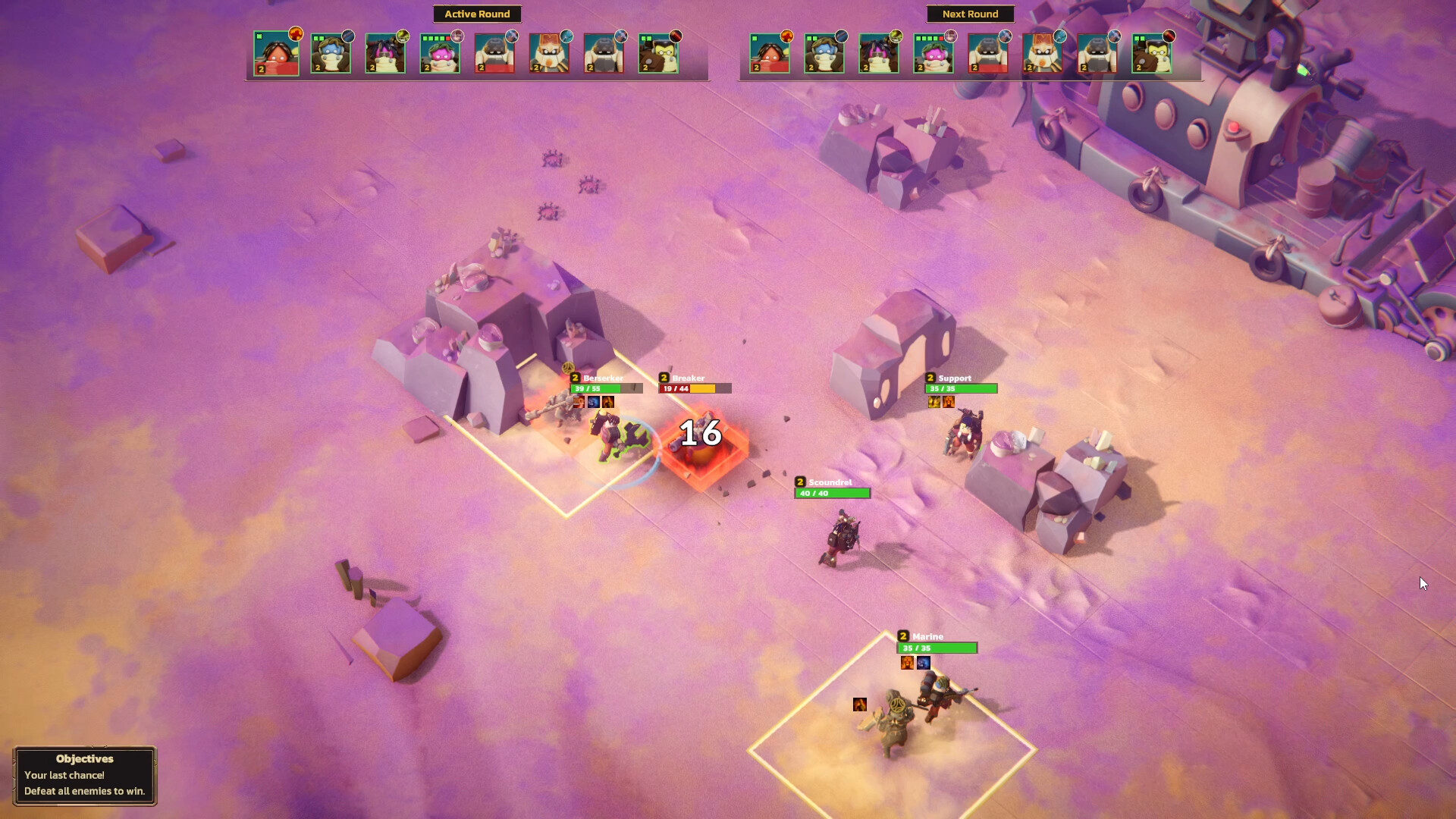
The campaign throws in special events such as last stands, where you hold a position against waves, and assassination missions against elite enemies. These break the normal flow of skirmish combat and force different loadouts. A party built for slow, attrition fights will struggle in an assassination mission that demands burst damage.
Run Structure and Meta-Progression
This is a full roguelite. Failure is not a game over screen; it is the cost of living free. The landscape shifts between runs, and your previous mishaps shape the next attempt. When you find a previous caravan's wreck, you recover modules and potentially survivors. Your knowledge of the war-torn world, which classes to bring, which Imperial units to fear, is the real progression that carries across attempts.
Advanced Strategies
The Ice Pillar Funnel
Against ranged-heavy Imperial squads, raise ice pillars to create a single-file corridor, then funnel enemies into your melee units. The pillar placement decides the fight before any damage is dealt. This works best in chokepoint maps and falls apart on open dunes, so only use it when the terrain supports it.
The Explosive Pillar Trade
When an elite enemy is closing in, place an explosive pillar between you and them, then trigger it as they reach it. One pillar can soften an elite enough that a follow-up burst kills them before their turn. The trade is resource-heavy: you spend Elios and an action, so only use it against units you cannot out-trade normally.
The Pitfall Push Combo
Pair a unit with a push skill and a pre-dug pitfall. Push the enemy into the hole, then focus fire on whoever remains. This removes one unit from the fight without killing it. It is particularly strong in last stand events, where a pinned enemy is one fewer attacker on the field.
The Wreck-First Route
At the start of every run, steer toward your previous caravan's wreck before following the main quest. Recovered modules give a power spike that makes the first few story battles trivial. The detour costs time and Elios, but the upgrade snowball is worth it.
The Elios Reserve Rule
Keep a floating reserve of Elios equivalent to one full engine jump at all times. Everything above that reserve is spendable. This rule stops the most common death spiral: spending everything on a fight, then being unable to escape a region you are underleveled for.
The Caravan Role Lock
Assign each seat a role: tank, healer, damage, scout. Recruit strictly into those slots. When a survivor who duplicates an existing role shows up, skip them. This keeps the roster lean and the combat reliable.
FAQ
When does Dunebound Tactics release?
September 14, 2026 on Windows, published by indie.io.
Is there a demo?
Yes. A free demo is available on Steam now and covers the core combat loop.
What platforms are supported?
Windows is confirmed. The current Steam listing does not list macOS or Linux.
Is it single-player only?
Yes. Steam categories list single-player with Steam Achievements, Steam Cloud, and Family Sharing.
How permanent is character death?
Characters can die permanently. The game even lets you extract Elios from wounded crewmates, which removes them from the roster. This is a core mechanic, not a bug.
How many classes are there?
15 distinct classes and 16 unique traits. Characters also equip modules, with more than 50 available.
How does progression carry between runs?
Failed runs leave wrecks on the map. Future runs can find those wrecks and recover modules and survivors. World generation shifts each run, so the knowledge you carry is the real meta-progression.
Does the full release have controller support?
Not confirmed yet. The demo plays with mouse-first controls and keyboard shortcuts. Check the store page closer to release for a final answer.
Is there a wiki or community yet?
Too early. The game has not launched. Expect community resources to appear after September 14.
What is the price?
To be announced. The publisher, indie.io, typically prices mid-size tactical games in the $15 to $25 range, but nothing is confirmed.
Can I stream or make content with this game?
Nothing in the store listing restricts content creation. Most indie.io releases allow streaming and videos.
Does the game have Steam Achievements?
Yes, Steam Achievements and Steam Cloud are listed in the store features.
Final Tips
The single most useful habit is the terrain check. Before you move a single unit, look at what cover exists, what can be destroyed, and what you can raise with Elios. The fights in Dunebound Tactics are won and lost in that first inspection, not in the shooting. Players who treat the field as a puzzle from the demo onward will have a much gentler launch week.
Verdict: buy the demo first. If the terrain manipulation clicks, this is a strong candidate for genre fans. If permanent death and resource cruelty sound exhausting, you just saved yourself $20 and some heartbreak.
Last reviewed by Game How To Editorial. We play each game, verify controls against official sources, and update guides when game mechanics change.
Screenshots