Official game
Play The Zibbo Show
This game is hosted by Steam. Continue to the official page to play or download it.
Wishlist on SteamThe Zibbo Show: Complete Strategy Guide
Overview
The Zibbo Show is a dice-placement game show roguelite from Tessera Studios, a Spanish studio that mixes board game logic with a game show wrapper. You play a contestant on a fictional TV show hosted by Zibbo. Each match you and your opponent take turns placing dice on your own 3x3 boards. Columns with matching values multiply your score. Dice placed opposite enemy columns can destroy their dice. Every placement is luck, strategy, and a little regret, and the crowd loves all of it.
The game show framing is not decoration. Bets sit between matches: win and you double the chips, lose and they vanish. The shop sells cards, dice upgrades, and chips. Cards trigger automatically and stack in ways that can explode the score when the right pieces land together. There are 48 cards to collect across runs, which gives the roguelite loop its pull. Each run starts from a similar place and builds toward a different engine.
The full release is dated 2026 on Steam for Windows, Mac, and Linux. Accessibility is a stated priority: full controller support, captions, color alternatives, custom volume, and options that let you play at your own pace with no timed input.
| Fact | Detail |
|---|---|
| Developer / Publisher | Tessera Studios |
| Genre | Dice placement, roguelite, game show |
| Platforms | Windows, Mac, Linux |
| Release date | 2026 |
| Price | To be announced |
| Players | Single-player |
| Board size | 3x3, nine dice per player |
| Rounds | 12, then the final against Zibbo |
| Cards | 48 collectible cards |
| Systems | Bets, chips, shop, Spin of Luck tickets |
| Controls | Full controller, mouse, keyboard |
| Accessibility | Captions, color alternatives, no timed input mode |
Who is this for? Anyone who liked the push-your-luck of Dicey Dungeons, the column-matching depth of puzzle games, or the run-to-run build variety of Slay the Spire. It is also for people who enjoy game show presentation with actual strategy underneath. If you prefer real-time action, this is not that.
Target Audience
The core appeal is the collision of quick decisions and compounding builds. Matches themselves are fast: nine dice each, one at a time, on a 3x3 board. But between matches the shop and card unlocks build toward bigger combos. Players who like short sessions with meaningful progression will find a natural rhythm here.
The game also targets accessibility-minded players specifically. Tessera Studios lists captions, color alternatives, and a mode with no timed input. If you struggle with games that demand fast reactions, this one lets you take the pressure off. Conversely, players who want pure chaos and no planning may find the shop and card economy too thoughtful for their taste.
Getting Started
Your first run is about learning the board, not winning. Here is the order that works.
1. Understand the column multiply rule
Matching values in a column multiply your score. That is the fastest scoring lever in the game. Early on, aim to build columns where several dice share a value. A column of three matching dice beats three columns of mismatched dice almost every time.
2. Learn when to attack the enemy board
Dice placed opposite enemy columns can destroy their dice. This is the defensive half of the game. If the opponent is building a fat column, mirror it and break it up before their multiplier lands. You cannot win every exchange, so pick the columns that matter most.
3. Bet what you can afford to lose
Bets double your chips on a win and vanish on a loss. In the first few matches, bet small. The shop between matches is where the run is won, and you want chips to spend there. A big early bet that fails starves you for cards.
4. Visit the shop every time
Cards trigger automatically and stack. Dice upgrades make your placements stronger. Chips buy everything. Skipping the shop to save time is a trap; the shop is the single biggest power source between rounds.
5. Watch for the Spin of Luck
If a match goes wrong, the Spin of Luck ticket gives you another shot at the same opponent, with time to revisit the shop and adjust your build. Spend it when the opponent counters your current strategy, not after every loss.
Beginner Mistakes to Avoid
| Mistake | Why It Hurts | Fix |
|---|---|---|
| Chasing every column | Spreading dice across all columns prevents any multiplier from forming | Focus on one or two columns per match |
| Ignoring the enemy board | Their fat columns score huge when multipliers fire | Mirror and destroy their strongest columns |
| Betting big early | A loss wipes your chip stack and stalls shop purchases | Keep early bets small and steady |
| Skipping shop visits | Cards and upgrades are the main run engine | Always shop between matches |
| Hoarding Spin of Luck | Tickets do not carry value if you never use them | Spend them when facing a hard counter |
| Ignoring card synergy | Random card picks create weak builds | Pick cards that match your dice placement style |
| Playing at maximum speed | Fast play causes misplacements that ruin multipliers | Use the pace options and think when needed |
Core Mechanics Deep Dive
The 3x3 Board Economy
Each player has nine dice on a 3x3 board. Turns alternate, one die placed at a time. Matching values in a column multiply score, which makes column building the central tension. But you also have the ability to place dice opposite enemy columns to destroy their dice. The result is a tug of war: you build your columns while dismantling theirs, and each placement serves both goals at once.
Betting and Chips
Before each match you place a bet. A win doubles it; a loss removes it. Chips act as the run currency, feeding the shop between rounds. The betting system adds a pacing mechanic to a game that would otherwise be purely combinatorial. It punishes greed and rewards consistency, and it sets up the roguelite economy where chips in the shop become cards and upgrades.
The Shop and Card System
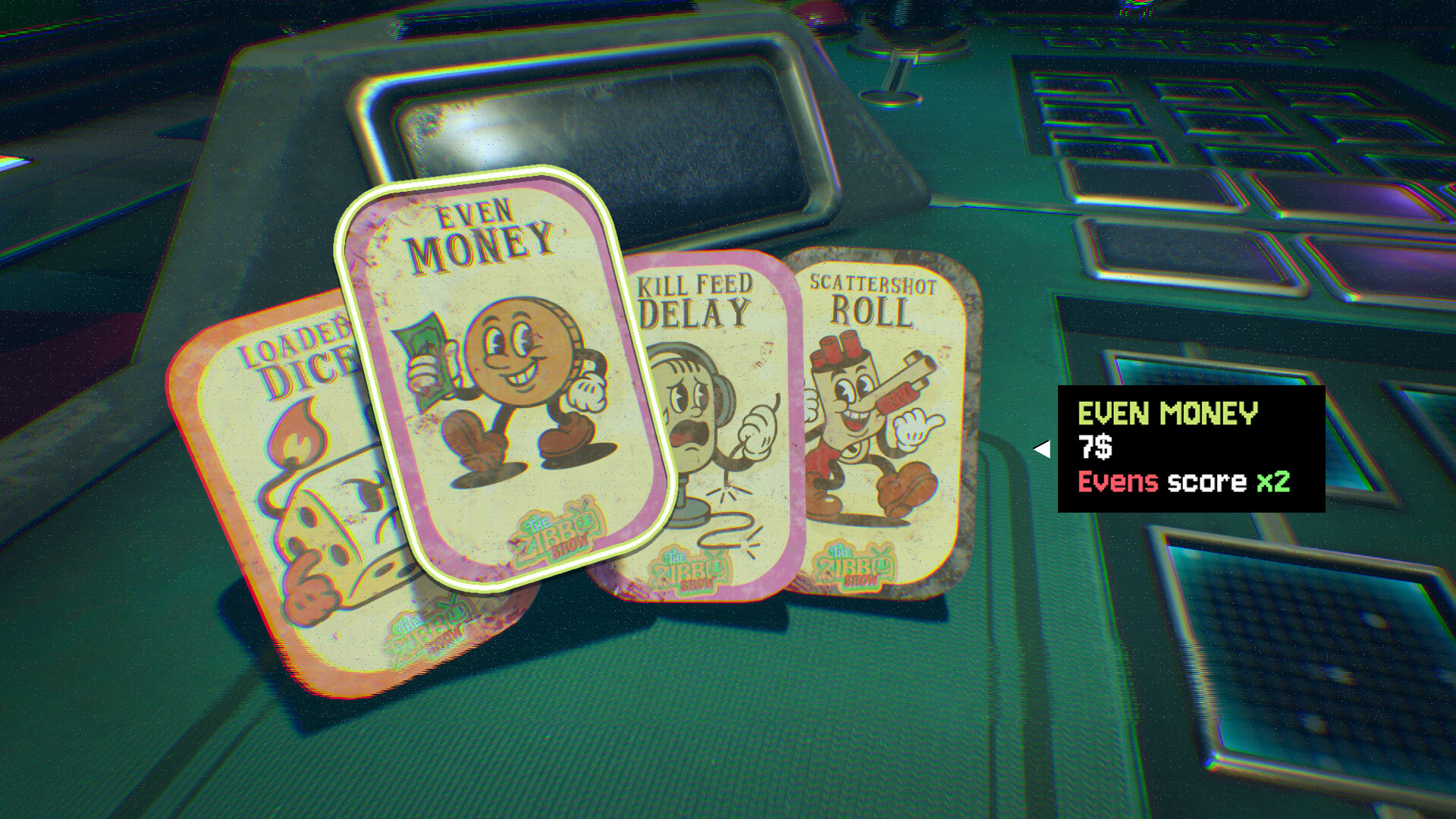
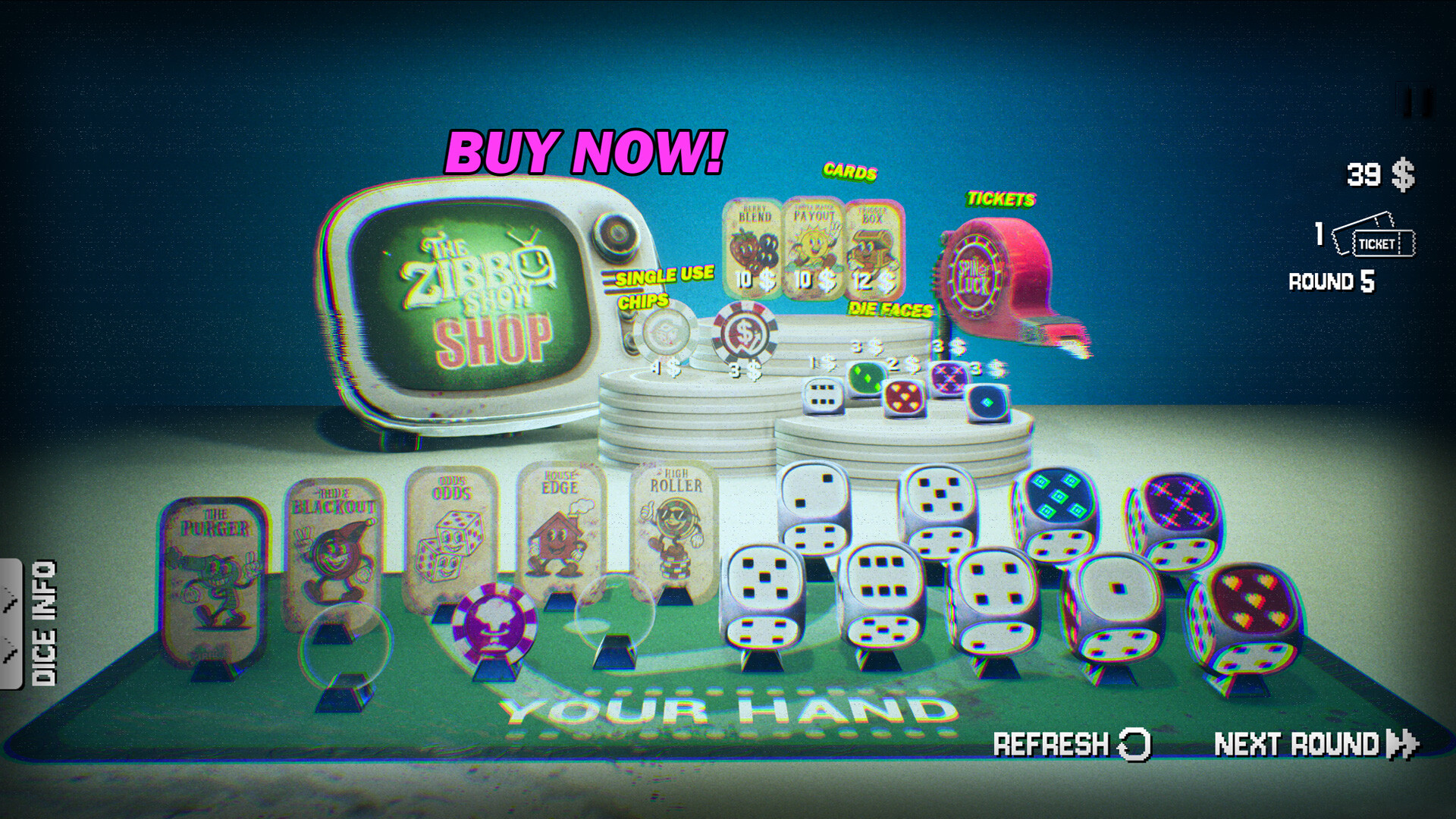
Between matches the shop sells cards, dice upgrades, and chips. Cards trigger automatically, which means you build a passive engine rather than a hand of active abilities. They stack, and well-matched stacks produce score explosions that feel genuinely rewarding. With 48 cards available over the course of multiple runs, the collection itself becomes part of the progression.
The 12-Round Structure
A run has 12 rounds of increasingly dangerous opponents. Each opponent likely leans on a different tactic: some build tall columns, some attack your board aggressively, some force you to react. The final round is the grand finale against Zibbo himself. The run structure is punishing if you tunnel on one strategy, because later opponents punish your blind spots.
Spin of Luck
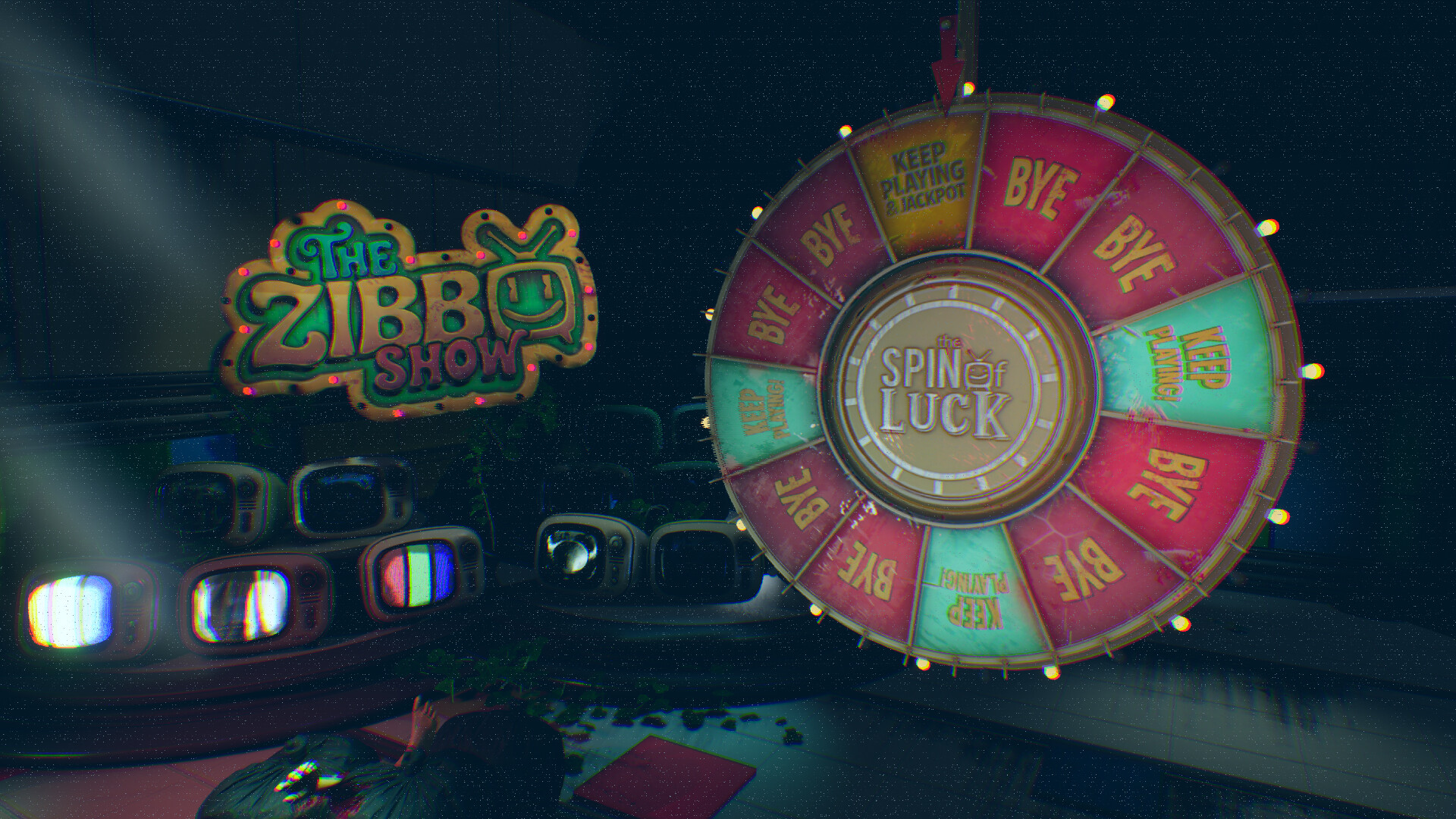
The Spin of Luck is the run's panic button. Spend a ticket and you get another shot at the same opponent, with time to revisit the shop and adjust the build. It does not refund chips or reset RNG, so it is a strategic retry, not a free win. Using it wisely means recognizing a counter matchup before it ends your run.
Meta-Progression
Each run unlocks new cards to discover and new combinations to try. Because there are 48 cards, the early runs will show only a slice of the total build space. The meta-progression rewards repeated play with new options, so even a failed run usually exposes a card or synergy you have not seen.
Advanced Strategies
The Single-Column Engine
Pick one column as your primary scorer and feed it every matching die you can. Opponents who waste turns attacking scattered columns let this engine generate huge multipliers. Keep a secondary column as a distraction target so the enemy board spends resources breaking it instead of your main line.
The Mirror Breaker
When an opponent starts stacking a column, place dice directly opposite it to destroy their pieces. This works best mid-match, before their multiplier locks in. The tradeoff is that every die spent breaking their board is a die not spent building yours, so reserve this for columns that are already at three values or more.
The Late Bet Pivot
If your build is clearly stronger going into a later round, raise your bet size for that match. The chip influx funds a shop visit that can snowball. This only works when you have already confirmed a card synergy; raising bets on a weak build just accelerates the loss.
The Card-Synergy Stack
Look for cards that trigger off the same action class. Dice upgrades that boost specific values pair with cards that multiply those values. Building around one theme beats grabbing one of everything. By round eight you should have a clear identity: column multiplier, die destruction, or value booster.
The Anti-Build Reaction
When an opponent's board pattern becomes clear, build against it instead of committing to your usual plan. If they destroy dice aggressively, spread your columns to minimize damage. If they build tall, mirror them early. Adaptive play beats rigid builds in the back half of a run.
FAQ
When does The Zibbo Show release?
The Steam page lists 2026 for Windows, Mac, and Linux. No exact date yet.
Is there a demo?
Not currently listed on Steam. Check the store page for updates as the release window approaches.
What platforms are supported?
Windows, Mac, and Linux are all listed.
Is it single-player only?
Yes. The Steam categories list single-player with full controller support and no multiplayer modes.
Does it have controller support?
Yes. The store page lists full controller support, DualShock, and DualSense support.
Are there accessibility options?
Yes. The store page lists captions, color alternatives, custom volume controls, and a mode that is playable without timed input.
How many cards are there?
48 collectible cards that unlock across runs.
How long is a full run?
A run is 12 rounds plus the final against Zibbo. With shop visits, expect a substantial session, though individual matches are quick.
Can I play at my own pace?
Yes. The game is listed as playable at your own pace with no timed input required.
Is there a wiki or community yet?
Very little exists yet, consistent with a 2026 release window. The official site is tesserastudios.com.
What is the price?
To be announced.
Do failed runs progress anything?
Yes. Runs unlock new cards and new combinations, so failure still expands the build space for future attempts.
Final Tips
The habit that wins runs is column discipline. Decide early which column will score, feed it, and only break the enemy board when they threaten to out-multiply you. The players who spread their dice evenly across the board are the players the audience watches lose. Commit to an engine before round three and you will be in the finale more often than not.
Verdict: strong pick for dice-strategy fans and accessibility-minded players. If the thought of another Slay the Spire-style loop with a game show coat of paint sounds good, this one is worth the wishlist. If you need fast cinematic action, it is not for you.
Last reviewed by Game How To Editorial. We play each game, verify controls against official sources, and update guides when game mechanics change.
Screenshots