Official game
Play HEXCRAWL
This game is hosted by Steam. Continue to the official page to play or download it.
View on SteamOverview
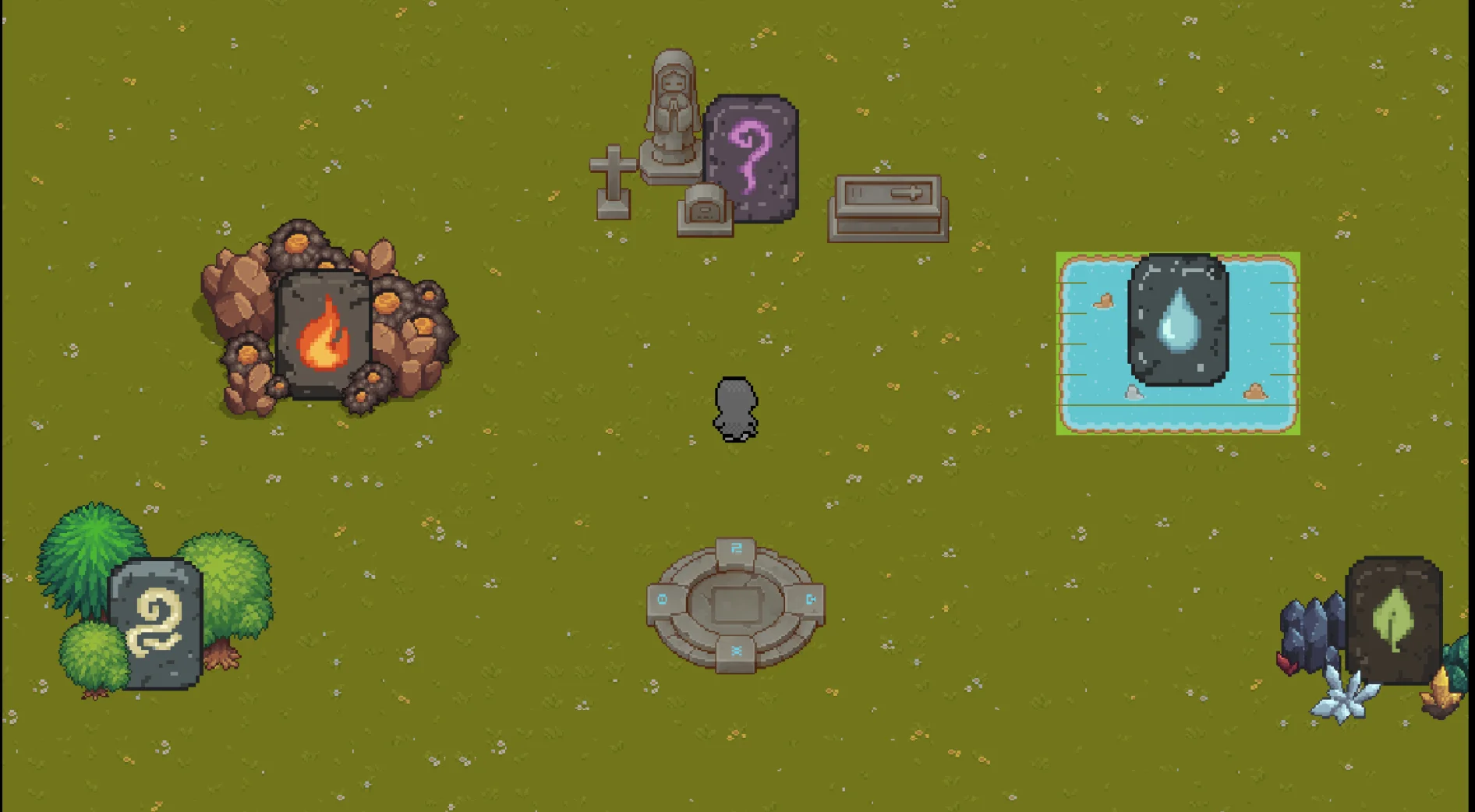
HEXCRAWL is a turn-based dark fantasy RPG about crossing a hostile world one hex at a time. There are no character levels, no experience points, and no skill trees. Power comes entirely from what you carry — weapons, armor, trinkets, consumables, temporary boons, and lingering hexes define every run from moment to moment. Inventory space is limited, so every item you pick up means leaving something else behind.
The world is procedurally generated with over 20 terrain types — plains, forests, deserts, jungles, swamps, mountains, frozen tundras, and more. Scattered across the map are ruins, temples, abandoned forts, shipwrecks, cities, and other sites. Some offer shelter or loot. Others promise death. The game launched in Early Access on July 10, 2026, developed by Polymorph Self, and already shows a robust roadmap including mounts, crafting, factions, and a creator mode.
This isn't a game where you grind levels until you're strong enough. You're never strong enough. You make judgment calls and live with the consequences.
Game Details
| Field | Value |
|---|---|
| Genre | Turn-Based Dark Fantasy RPG / Roguelike |
| Developer | Polymorph Self |
| Platform | Windows |
| Price | $13.49 |
| Players | Single-player |
| Release | July 10, 2026 (Early Access) |
| Difficulty | Hard — procedural difficulty scaling |
| Engine | Proprietary |
| File Size | 3 GB |
| Controller Support | Planned (not yet implemented) |
| AI Generated Content | AI-assisted for some visual and audio assets |
Target Audience
HEXCRAWL is for players who liked the exploration pressure of Darkest Dungeon, the hex-map strategy of Battle Brothers, and the inventory Tetris of Resident Evil. If you enjoy games where preparation matters more than reflexes and every decision has a visible cost, this one will click. The "one more hex" pull is real — you'll constantly push just a little further, and sometimes that push ends the run.
Skip this if you hate losing progress when you die, prefer action combat over turn-based, or want a guided story experience. HEXCRAWL gives you a world and tells you to cross it. There's no hand-holding.
Getting Started — First 30 Minutes
Your first run in HEXCRAWL will probably end quickly. That's expected. Here's how to survive longer than five hexes.
1. Understand your starter gear. You begin with basic weapons, a few rations, and maybe a trinket. Check everything in your inventory before moving. Know what each item does — hover for tooltips. Some items are more valuable than they look.
2. Stick to easy terrain first. Plains and grasslands cost less movement and stamina than mountains or swamps. Stay on forgiving terrain until you have enough supplies to risk the hard stuff. Each terrain type has different movement costs, visibility ranges, and encounter rates.
3. Ration your food. Hunger sets in fast. You can carry maybe 5-8 rations at start. That's maybe 15-20 hexes of travel before you're starving. Don't move at full speed — conserve energy by not sprinting. Check every site you come across for more supplies.
4. Pick your fights carefully. Not every encounter needs to end in combat. Some random encounters let you trade, flee, or talk your way out. Read the situation before committing to violence. Combat costs resources (weapon durability, health, consumables) that you might need later.
5. Use the environment. Forests provide cover, hills give sight range, rivers are obstacles but also sources of water. Each terrain type has tactical implications in both movement and combat. Learn them.
6. Identify escape routes. Before entering a tough hex or a dangerous site, note which adjacent hexes you can retreat to. Getting cornered is how runs end. Always leave yourself an out.
7. Build your loadout around your next goal. Going into a desert zone? Drop heavy armor and pack water. Heading for a mountain pass? Bring climbing gear if you have it. Adapting your inventory to the terrain ahead is the difference between life and death.
Tips and Tricks
| Mistake | Why It Hurts | Fix |
|---|---|---|
| Sprinting everywhere | Drains stamina and hunger faster. You'll run out of supplies before reaching any destination. | Walk as default. Sprint only when fleeing or trying to escape a closing threat. |
| Fighting everything | Every combat costs durability on weapons and health. Some fights reward nothing but a broken sword. | Check the encounter description. If it doesn't mention loot or progress, consider fleeing. |
| Ignoring terrain costs | Moving into mountains without enough food or gear means you might not make it out the other side. | Check the terrain legend before plotting your route. A longer path on easy terrain is often faster than a direct line through hell. |
| Overloading inventory | You can't carry everything. Picking up junk means leaving behind something essential later. | Prioritize: rations > healing items > weapons > armor > trinkets. Drop anything you haven't used in 10 hexes. |
| Not reading encounter text | The game gives you context clues about what you're facing. Skipping them leads to bad decisions. | Read every encounter popup. The one that says "something glints in the dark" is very different from "you hear heavy breathing." |
| Pushing too far | The world gets harder the further you go. Trying to cross a high-difficulty zone with starter gear is suicide. | Turn back when enemies start one-shotting you. Explore a different direction instead. |
Core Mechanics Deep Dive
The Hex Economy
Every step costs something. Moving onto a new hex consumes stamina, which is restored by food. Different terrain costs different amounts — a plains hex might cost 1 stamina, while a mountain hex costs 3. Some hexes also have environmental effects: swamps can poison you, deserts dehydrate you, tundras freeze you. Managing your movement economy across 20+ terrain types is the primary strategic layer of the game.
Time also passes with each hex. Day/night cycles affect visibility, encounter rates, and what enemies appear. Some enemies only emerge at night. Some sites are only accessible during certain times. The calendar matters.
Combat System
Combat is tactical, turn-based, and designed to be fast and lethal. You'll face over 100 monster varieties and 100+ unique bosses. Each enemy has a specific behavior pattern, weakness, and loot table. There are no random damage rolls — damage is deterministic based on equipment, buffs, and positioning.
The key combat decision is engagement range. Some weapons excel at distance (bows, crossbows), others up close (swords, axes). Entering combat at the wrong range means wasting turns closing the gap. Terrain also affects combat — high ground gives accuracy bonuses, cover reduces incoming damage.
Bosses are unique encounters that permanently change the risk/reward balance of the area. Each drops specific loot that can define your build for the rest of the run.
Inventory Tetris
Inventory space is the real endgame boss. You start with maybe 10 slots. Every item takes one slot — weapons, armor, potions, quest items, junk. You'll constantly make decisions about what to keep and what to abandon.
Items also have weight, which affects movement stamina costs. Carrying a full suit of heavy armor might protect you in combat but costs extra stamina per hex. Every item is a trade-off.
Some items are "bundled" — carrying multiple of the same type stacks. Food stacks to 5, arrows to 20. But weapons and armor are always single-slot, single-item.
Encounter Variety
Random encounters in HEXCRAWL aren't just combat. You'll find traders, refugees, riddles, traps, environmental hazards, and narrative events. Some encounters offer permanent stat boosts or unique items. Others are deathtraps. The game gives you context clues — read them.
Non-combat encounters are often more rewarding than combat ones. A trader might sell you a map that reveals hidden hexes. A refugee might give you a quest that leads to a unique boss weapon. Don't assume violence is always the answer.
Advanced Strategies
The Supply-Line Method. Never venture more than 10 hexes from your last known safe zone without establishing a supply cache. Drop excess rations and non-essential items at a marked location (use map pins) to create a fallback position. This lets you push deeper without the terror of being stranded. It costs time to backtrack, but it saves runs.
Terrain-Weave Navigation. Instead of crossing a single difficult terrain type (like a 5-hex mountain range), weave between easier hex types. If the mountain pass has plains valleys between peaks, route through those. The path is longer but costs less total stamina and has fewer deadly encounters. Plot your route three hexes ahead and adjust as terrain reveals.
The Boss Gate Technique. When you find a boss hex, don't engage immediately. Camp on an adjacent safe hex and study the boss's patrol pattern (visible from the preview). Identify which of your current items counter the boss's mechanics. If you don't have the right gear, mark the hex and come back after looting sites that drop the appropriate weapon type. Rushing a boss is the number one cause of lost endgame progress.
Loadout Specialization. Don't try to be good at everything. Specialize your inventory for one or two combat roles. A "ranged" loadout carries bows, perception-boosting trinkets, and light armor for mobility. A "tank" loadout carries heavy armor, shields, and healing consumables. Trying to carry both means you're mediocre at both and run out of inventory slots twice as fast.
FAQ
Q: What platforms is HEXCRAWL available on? A: Currently Windows only (64-bit). Mac and Linux versions are not confirmed.
Q: Is HEXCRAWL a roguelike? A: It has roguelike elements — procedural generation, permadeath (your character dies, progress is lost), and turn-based gameplay. But the focus is on overland exploration rather than dungeon crawling.
Q: Does it have controller support? A: Not yet. Controller support is on the planned features list but not implemented. Mouse and keyboard only for now.
Q: How long is a typical run? A: A successful run that crosses multiple zones might take 2-4 hours. Most early runs end in 15-30 minutes. The game is designed for replayability with procedural generation.
Q: Is there an ending or goal? A: Yes — the goal is to cross the procedurally generated world. Clearing zones unlocks deadlier regions. The "final" zone contains the ultimate challenge. Future updates will add more structured objectives.
Q: Can I save mid-run? A: Yes, the game supports "Save Anytime" — you can save and quit at any point. But there's no manual save scumming; the save is deleted on death.
Q: What are the system requirements? A: Minimum — Windows 10 64-bit, dual-core 2.0 GHz CPU, 2 GB RAM, DirectX 11 GPU with 512 MB VRAM (integrated graphics works), 3 GB storage.
Q: Is there a demo? A: Not currently. The game is in Early Access at $13.49.
Q: Will progress carry over between runs? A: No — each run starts fresh. However, knowledge of terrain types, enemy behaviors, and item synergies carries over to you, the player. Future updates may add meta-progression systems.
Q: Is the AI-generated content noticeable? A: The developer notes AI assistance was used for some visual and audio assets. The gameplay and procedural systems are code-driven. In practice, the art style is cohesive and the AI use doesn't detract from the experience.
Final Tip / Verdict
The single most important skill in HEXCRAWL is knowing when to turn back. The world doesn't get easier the further you go — it gets harder. Every hex deeper is a gamble. The players who survive are the ones who recognize when their current loadout has hit its ceiling and retreat to try a different direction.
Verdict: HEXCRAWL is a punishing but fair hex-crawler that rewards preparation over reflexes. If you love inventory management, tactical combat, and the tension of "just one more hex," this is your jam. Not recommended for players who want a guided story, casual progression, or action combat. At $13.49 in Early Access, it delivers solid content already and has an ambitious roadmap ahead.
Score: 4/5 — Recommended for genre fans, with the caveat that Early Access means some planned features are still coming.
Last reviewed by Game How To Editorial. We play each game, verify controls against official sources, and update guides when game mechanics change.
Screenshots