Official game
Play Endless Rails
This game is hosted by Steam. Continue to the official page to play or download it.
Buy on SteamOverview
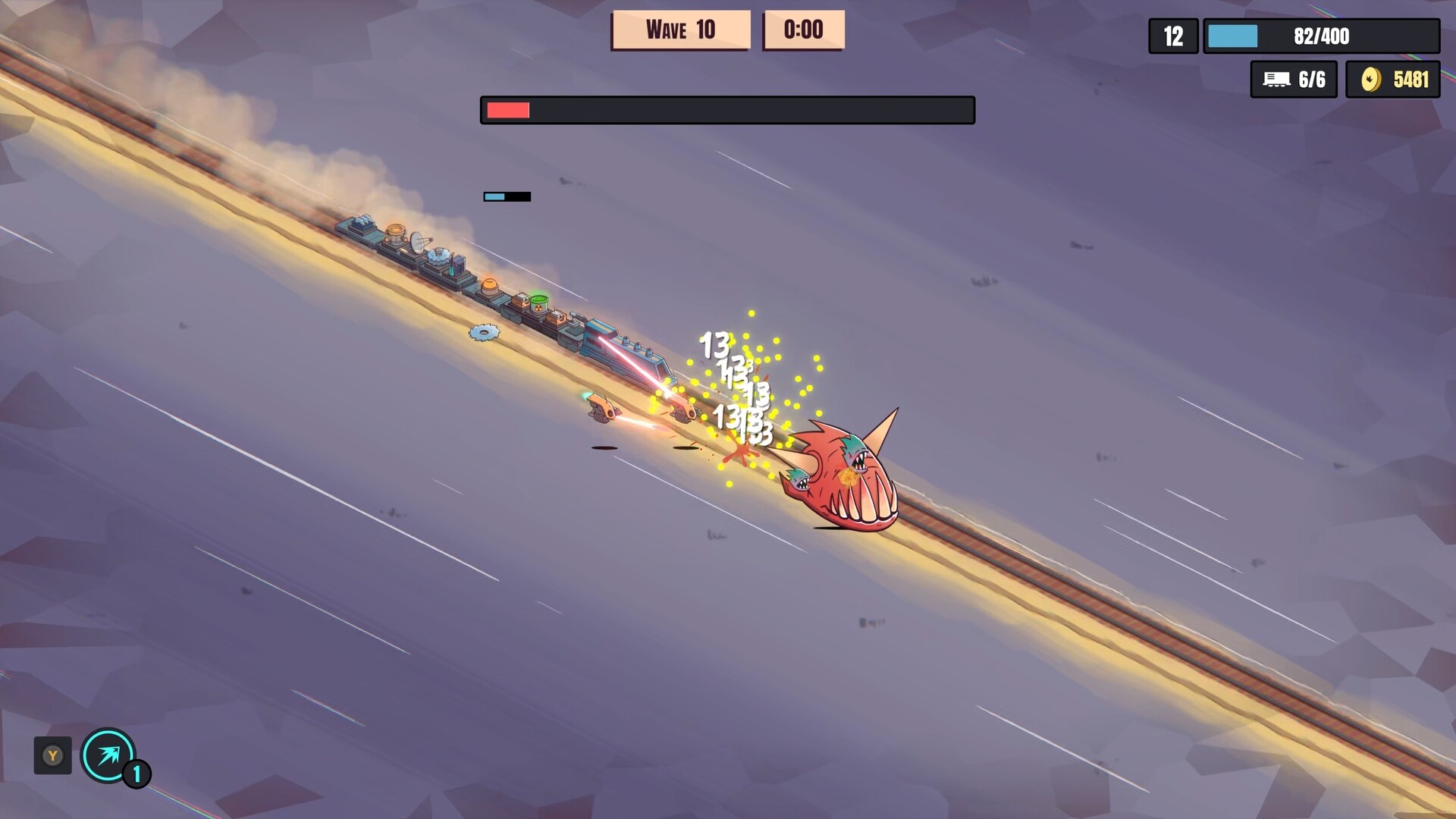
Endless Rails is an isometric bullet-heaven roguelite from Studio Monoblok, a two-person team of Erik and Marcell who turned their last project's failure into 10,000 wishlists by asking an inner-kid question: what if the roguelite build was a train? The answer shipped on September 29, 2026 for $6.99, and it plays exactly like the pitch sounds. Your train rolls through a monster-swarming wasteland, a swarm of auto-firing drones tears down everything chasing you, and every 20 to 30 seconds you pull into a station where coins become new cars, weapons, drone slots, and buffs.
The hook is the merge system. Two cars of the same type combine into one stronger car with more module slots, which turns shop inventory into a puzzle about what to buy, what to stack, and what to fuse. Runs are short by design, a permanent upgrade tree persists between attempts, and the game's own milestone is honest: reaching Station 20 means you are doing well. The tracks keep going after that. It is called Endless Rails for a reason.
| Fact | Detail |
|---|---|
| Developer / Publisher | Studio Monoblok / Maple Whispering Limited |
| Genre | Isometric bullet-heaven roguelite |
| Platform | Windows (Steam), full controller support |
| Price | $6.99, 30% launch discount |
| Release | September 29, 2026 |
| Session length | 20-30 seconds between stations, runs built on "just one more" |
| Achievements | 27 |
| Demo pedigree | 6,000+ demo plays and 45+ demo reviews before launch |
Who it is for: Vampire Survivors fans who want a lane-holding twist, Brotato players who like tight shop decisions, and anyone who ever arranged toy train cars and thought "this could shoot harder."
Who it is not for: players who want long sessions, deep story, or handcrafted levels. The wasteland is procedural, the loop is the point.
Getting Started: Your First Three Runs
Run 1: Learn the Two-Stick Split
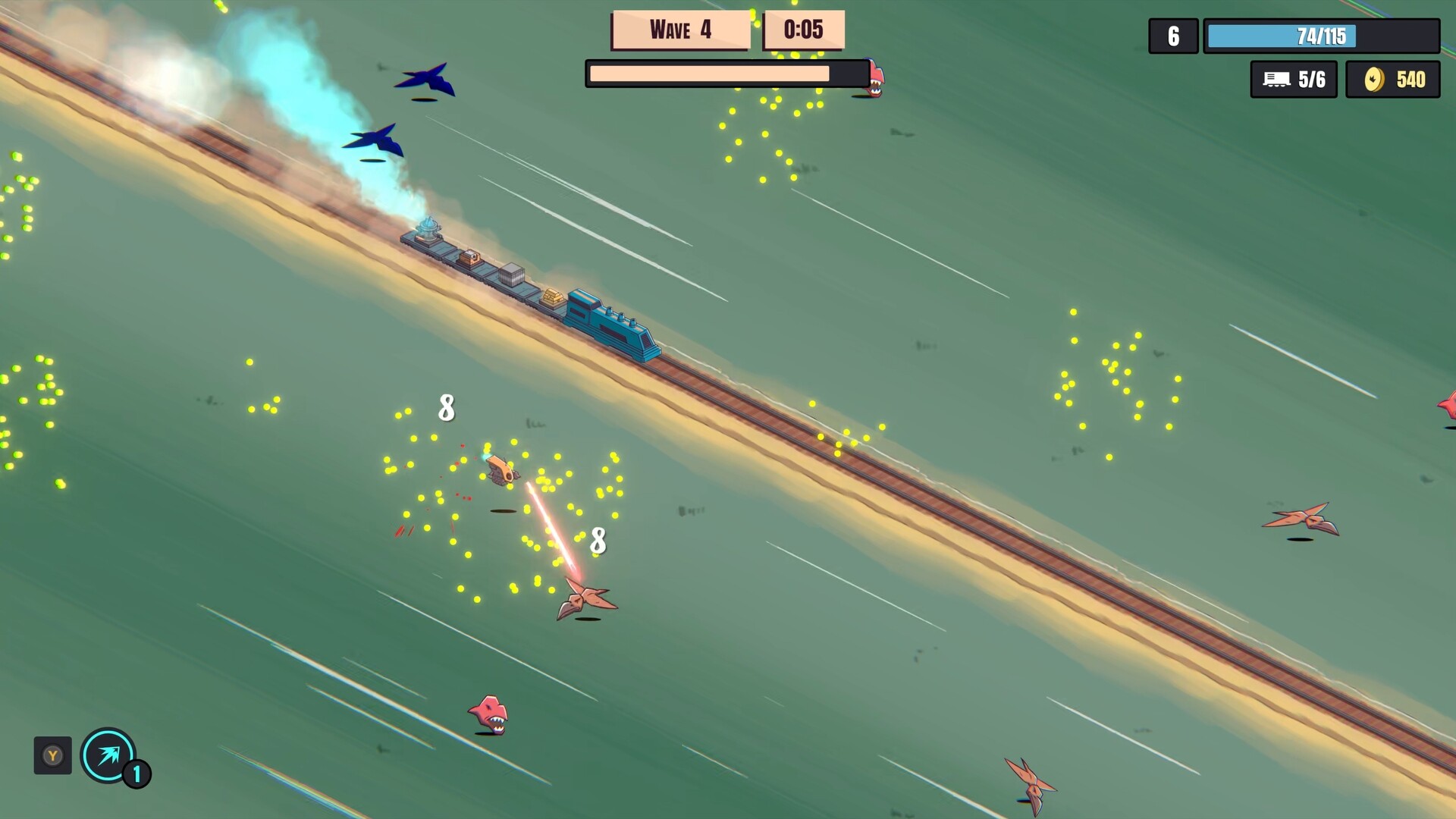
The core control skill is managing two things at once: the train's lane position and the drone reticle. Drones fire on their own, but your aim decides what they shoot and, critically, what coins they vacuum up. On the first run, ignore optimization. Steer the train away from the horde's thickest edge, sweep the drone cursor across the pack, and watch what happens when a station arrives. The tutorial achievements (So It Begins at 96.5% ownership, Not Bad at 79%) tell you most players survive this far; Getting Serious at 44% is where the real game starts.
Run 2: Buy Your First Merge
Your second run should end with the Associate Mechanic achievement, held by 73.3% of players: merge two cars. The mechanic is the heart of the game and costs nothing to try. When the shop sells a duplicate of a car you already own, buy it, drag one onto the other, and watch the merged car gain module slots. That slot count is the real currency. A merged Level 2 car holds more modules than two separate Level 1s ever will, and module density is what turns a shooter into a bullet screen.
Run 3: Put Coins Into the Tree, Not the Ego
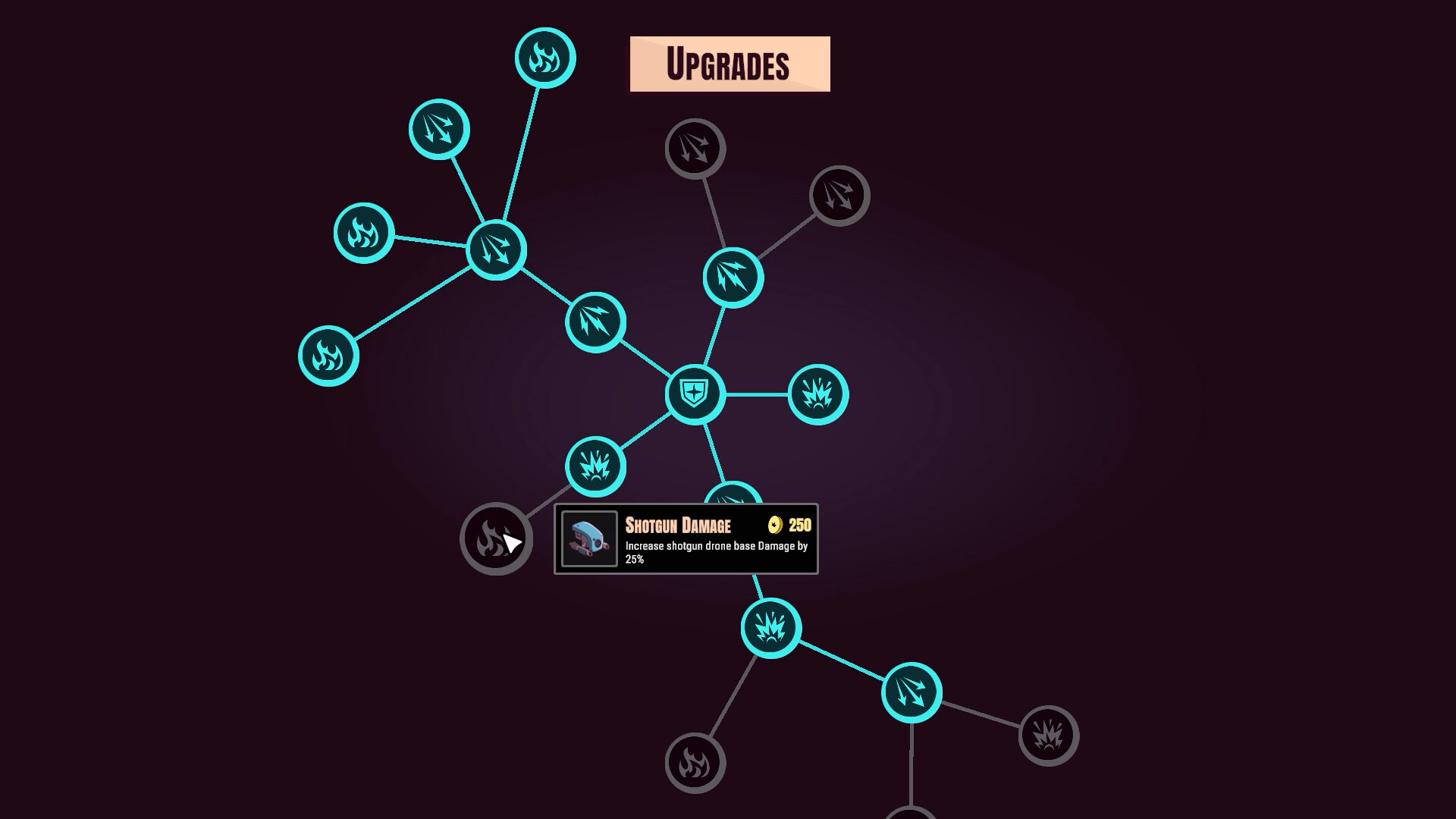
Meta upgrades look overpriced until you notice the re-spec: you can rearrange spent upgrade points at will between runs. The first big purchases that matter are firepower and speed, the two stats the shop cannot easily sell you. One reviewer's note is the right lesson: they refunded nothing and respec'd everything, calling the tree "really lackluster" after five runs, which is exactly why you want to re-spec into experiment mode rather than grind for a perfect layout.
Beginner Mistakes to Avoid
| Mistake | Why it costs you the run |
|---|---|
| Spending coins on a third drone slot before your second drone | Rule of Two (42.9%) unlocks a second drone before the fifth; the third slot is a trap until drones double |
| Ignoring the Disposal option | Selling a module frees a slot for a better one. 72.4% of players never touch it |
| Chasing Station 20 on run three | Old Train Good Train (10.4%) is a milestone achievement, not a run-two goal. Greed deaths waste the meta-XP that would have gotten you there |
| Letting coins pile up | Coins only convert at stations. Dying with 8,000 unspent is donating to the wasteland |
| Fighting the camera to aim every shot | Drones auto-fire. Your cursor is a gentle herding tool, not a trigger. Relax the micro-management |
Core Mechanics Deep Dive
The Station Economy
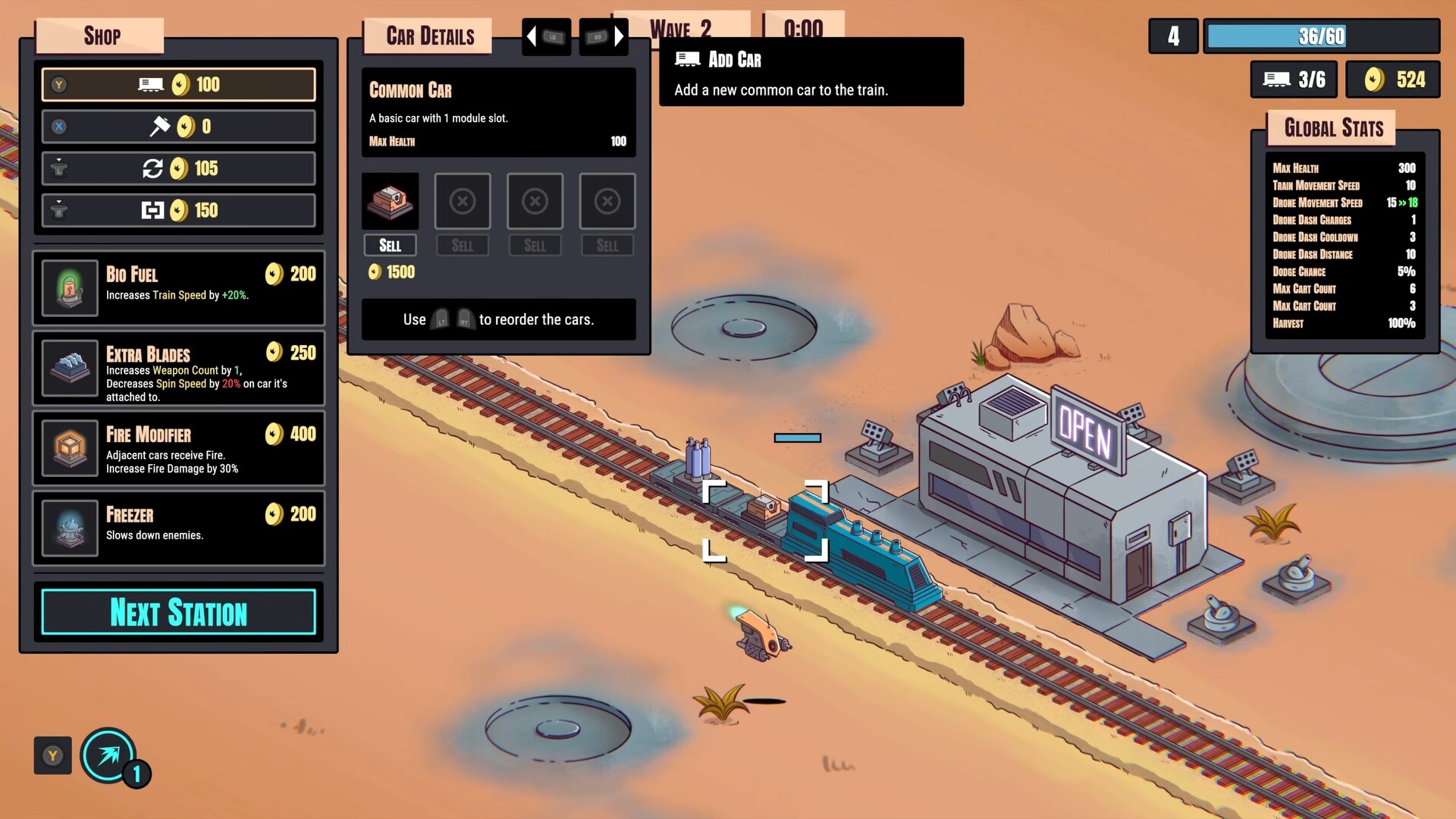
Every 20-30 seconds the train stops and a shop opens. The stock rotates through cars, weapons, drone types, and buffs. Three actions matter:
- Buy the piece that fills an empty slot or duplicates something you own.
- Reorder cars along the train. Front cars eat damage first; the fragile gun car belongs mid-convoy.
- Merge duplicates into upgraded versions with more module slots.
The shop also has a reroll, and Picky (15.2% of players reroll ten times in a lifetime) hints at how little most players use it. Rerolling early, when your build has one clear missing piece, beats rerolling late, when every shop slot is a gamble.
Cars, Weapons, and the Merge Ladder
Cars are the frame, weapons are the payload. Merging follows a simple rule: same car type plus same car type equals next level. The Trader achievement (5.6% of players) asks for trading in a Level 3 car, which tells you the ladder has at least four rungs and that almost nobody climbs it in a week. Practically, one Level 2 car with three well-chosen modules outperforms two Level 1s, but two Level 2s with overlapping weapon types create the bullet density the genre lives on.
The three starter models play differently. Model R is the durable default and the one the Station 20 achievement is tied to. Model S trades armor for dash speed, and Dashmaster (3.0%) rewards getting to Station 20 with it alive. Model T is the slow money train, and Slow But Steady (1.3%) is the rarest of the three completions.
Drones and the Screen-Clearing Curve
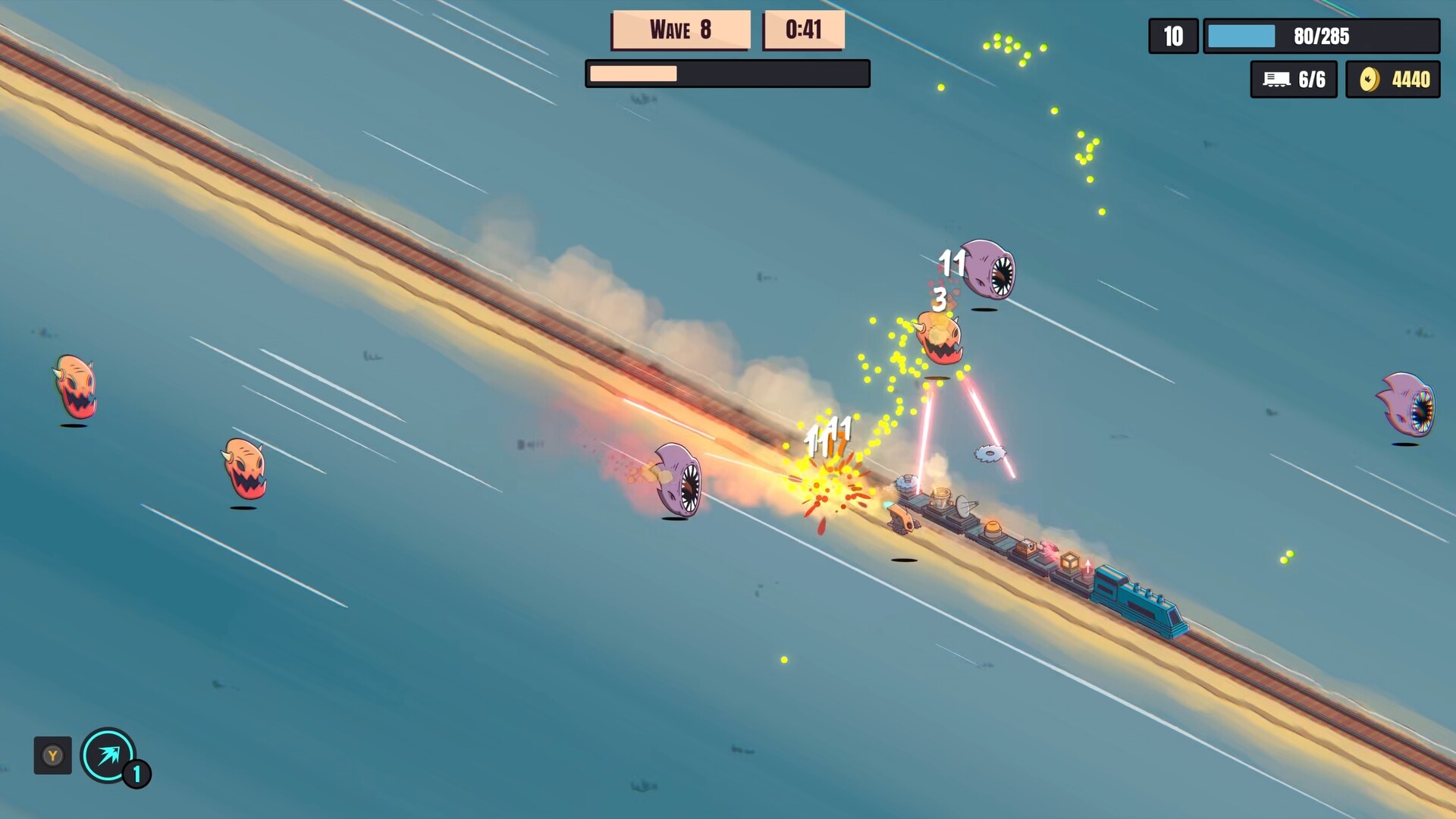
Drones are your damage, your collection service, and your screen-fill engine. Life Insurance (15.6%) asks for five drones, which is the realistic end-state for a strong run. Drone types differ in fire pattern and pickup radius, and mixing types creates overlapping zones that keep the screen saturated. The Protector (63.7%) and The Terminator (0.2%) bracket the kill-count spectrum: 500 enemies by mid-game, 10,000 for the true grinders.
The Wasteland, Bosses, and Grandma
The horde escalates in waves, and named bosses interrupt the rhythm. Crocodile Tears (41.2%) is Gator, an early gate that teaches you bosses punish static trains. Mrs Baker? (11.7%) is Grandma, a mid-run check. The Outside (0.1%) is the white whale: survive ten waves out there, off the standard route, and you join the 0.1%.
Death, Meta, and the Long Game
Death ends the run but banks progress. The upgrade tree converts run earnings into permanent bonuses: firepower, speed, extra starting cars, and utility nodes. Unlimited Power (1.8%) marks a full tree, and I reach everything. (0.3%) marks 500 dashes, which is a lifestyle. The respec option turns the tree into a lab: stack firepower for a burst run, then re-spec into economy for a coin-farm run, no penalty.
Advanced Tips & Strategies
The two-lane economy. Position the train along the lane edge closest to dense coin drops. Drones vacuum in a radius around your cursor, so holding the reticle between the horde and the track sweeps kills and coins in one motion. Players who chase kills lose coins; players who chase coins get kills for free.
Merge denial shopping. When the shop offers a duplicate you cannot afford, remember the enemy does: the AI inventory rotates. Buying nothing for one station is often the correct play, banking coins for the guaranteed merge next stop. A skipped purchase is not lost tempo if it becomes a Level 2 car.
The repair train. I Repair My Stuff (37.3%) rewards repairing ten times, and repair items are the quiet MVP of long runs. A mid-convoy repair module converts one bad wave from a run-ender into a scare. Prioritize it the moment you notice the front car dropping below half.
Boss pre-positioning. Gator and Grandma both telegraph their approach lane. Two stations before a boss (the wave cadence is consistent), sell speed, buy armor. Bosses punish kiting mistakes, not low DPS; a tanky train with a repair module beats a glass cannon that dies to one lunge.
The Station 20 checkpoint plan. Old Train Good Train is the realistic first-week goal: Model R, five drones, two merged Level 2 weapon cars, one repair module, respec'd tree into firepower and speed. Everything past Station 20 is bonus; the achievement is the meta-XP engine that funds all future experiments.
FAQ
How much does Endless Rails cost? $6.99 on Steam, with a 30% launch discount active since the September 29, 2026 release.
Is there a demo? The demo has left the station for good, as the launch announcement phrased it. It gathered 6,000+ plays and 45+ reviews before the full game replaced it.
Does it have controller support? Full controller support, and the store page recommends a gamepad. Keyboard and mouse work, and the game is flagged playable without timed input.
How long is a run? Stretches between stations run 20 to 30 seconds. A full run to Station 20 takes most players a few evenings of attempts, and the endless tail after that is open-ended.
What happens after Station 20? The tracks keep going. The game's own description: keep rolling until you or the game crashes.
Does progress carry between runs? Yes. The permanent upgrade tree persists and can be re-specced at will between runs.
Is it on Mac or Linux? No. Windows only, per the Steam page.
What are the minimum specs? Windows 10, i5-9600 or Ryzen 5 2600X, 4 GB RAM, GTX 970 or R9 390, and just 1 GB of storage.
How many achievements are there? 27, from First Buck (10,000 coins) to The Outside (0.1% of owners).
Is Endless Rails multiplayer? No. Single-player, with Steam Cloud, stats, and Family Sharing.
Last reviewed by Game How To Editorial. We play each game, verify controls against official sources, and update guides when game mechanics change.
Screenshots