Official game
Play Wishseeker
This game is hosted by Steam. Continue to the official page to play or download it.
Wishlist on SteamWishseeker: Complete Strategy Guide
Overview
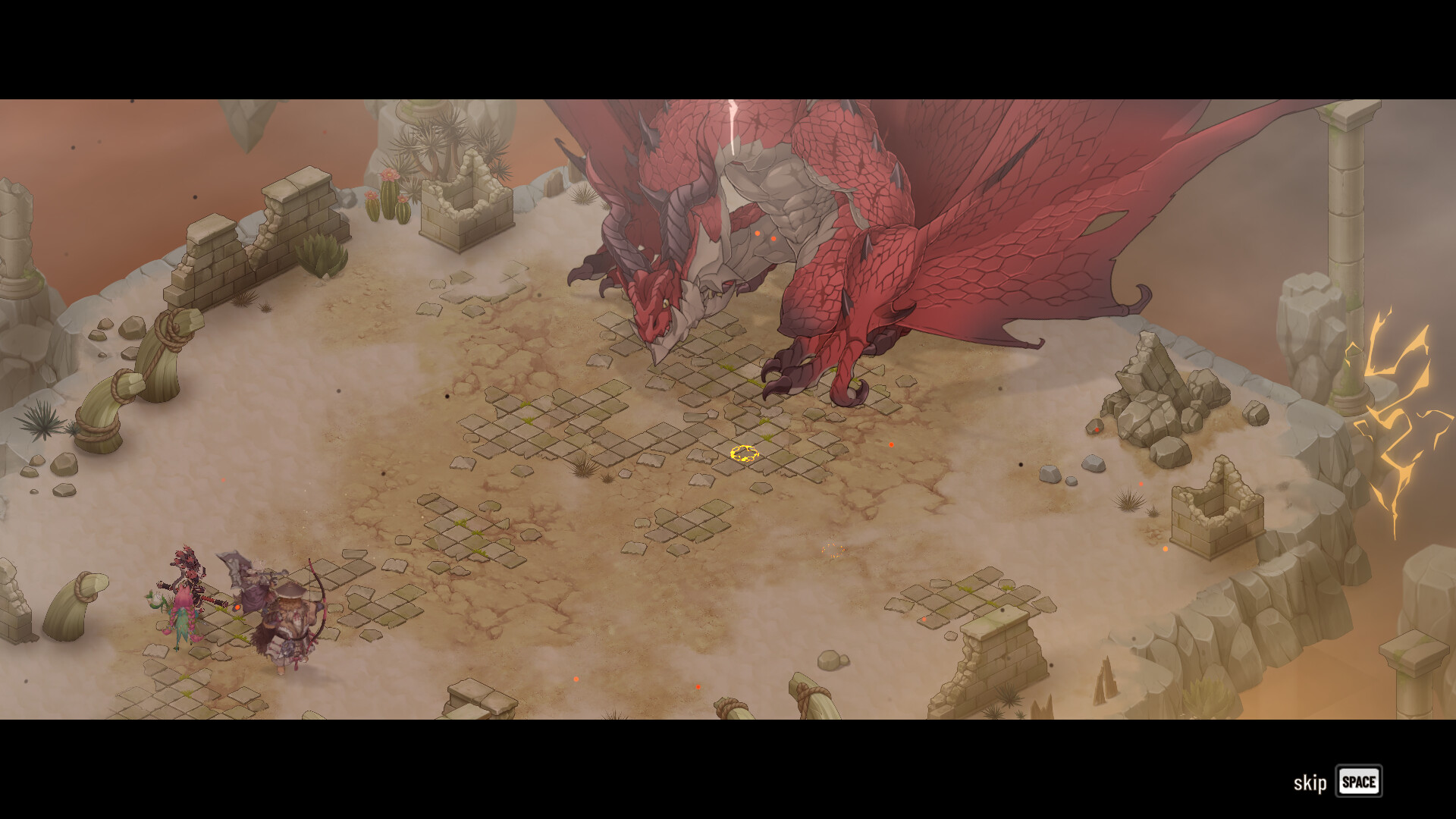
Wishseeker is a turn-based tactics roguelite from studio MelonCat, published by Soft Source, where a party of four dive into the Hollow Vault, a dungeon that changes with every playthrough. The Steam page is upfront about the design goal: keep the depth of turn-based tactics without the waiting. Enemy turns resolve fast, turns play out near-simultaneously, and a run constantly hands you new characters, skills, and artifacts to build around.
The game sits in the niche between traditional grid tactics and roguelite runs. You lead four Wishseekers, fight grid-based battles, and every run reshuffles the characters and gear you get to work with. It supports solo play, where you control all four characters yourself, and online co-op for up to four players, with simultaneous turns so nobody sits around waiting.
Announced quietly ahead of gamescom 2026, Wishseeker got immediate press pickup from Gematsu and Niche Gamer. The Steam page went up for gamescom, and the developer is running a playtest waitlist through their official site. No release date or price has been announced yet.
| Fact | Detail |
|---|---|
| Developer | MelonCat |
| Publisher | Soft Source |
| Genre | Turn-based tactics, roguelite, RPG |
| Platforms | Windows, macOS |
| Price | To be announced |
| Players | 1-4, online co-op |
| Party | 4 Wishseekers per run |
| Characters | 8 playable, 20+ unique skills each |
| Biomes | 5+ distinct biomes with multiple bosses |
| Systems | Skills, artifacts, stat scaling upgrades |
| Combat | Fast grid-based, low downtime, simultaneous turns |
Getting Started
Wishseeker is in pre-launch, with a playtest waitlist open on the MelonCat site. The framework below maps the announced mechanics onto the roguelite-tactics formula the developer has confirmed.
First Session Plan
- Treat every run as a draft. The roguelite core means you do not build one team; you re-draft a team every run. Start by learning which characters click together rather than trying to force one perfect comp.
- Learn the four-character baseline. Everything is balanced around a party of four. Learn to think in terms of four roles, because solo play expects you to run all four characters at once.
- Move before you attack. Grid tactics reward positioning. The fast combat is built around low downtime, but low downtime does not mean no positioning; it means decisions resolve quickly.
- Read artifacts as build directions. Artifacts hand you the run's identity. When an artifact drops, re-read your party and let it tell you which direction to build.
- Sign up for the playtest. The waitlist is live on meloncat.games. Getting in early gives you first drafting reps before launch.
Beginner Mistakes to Avoid
| Mistake | Why It Hurts | Fix |
|---|---|---|
| Ignoring enemy turns | Simultaneous turns mean enemies act with you, not after you | Plan for what the board looks like after both sides move |
| Sticking to one favorite character | Roguelite runs reshuffle the roster; over-specializing breaks adaptability | Draft for the run you are in, not the run you wish you were in |
| Tunnel vision on one enemy | Multiple bosses and swarming grids punish focus fire without awareness | Check the whole board every turn |
| Skipping skill variety | 20+ unique skills per character exist to be combined | Experiment with unfamiliar skills every run |
| Hoarding artifacts | Artifacts are build-defining; saving them wastes their value | Commit to artifact directions early |
| Waiting in co-op | Simultaneous turns mean hesitation slows the whole party | Decide before your turn starts |
Core Gameplay Mechanics
Turn-Based Grid Combat
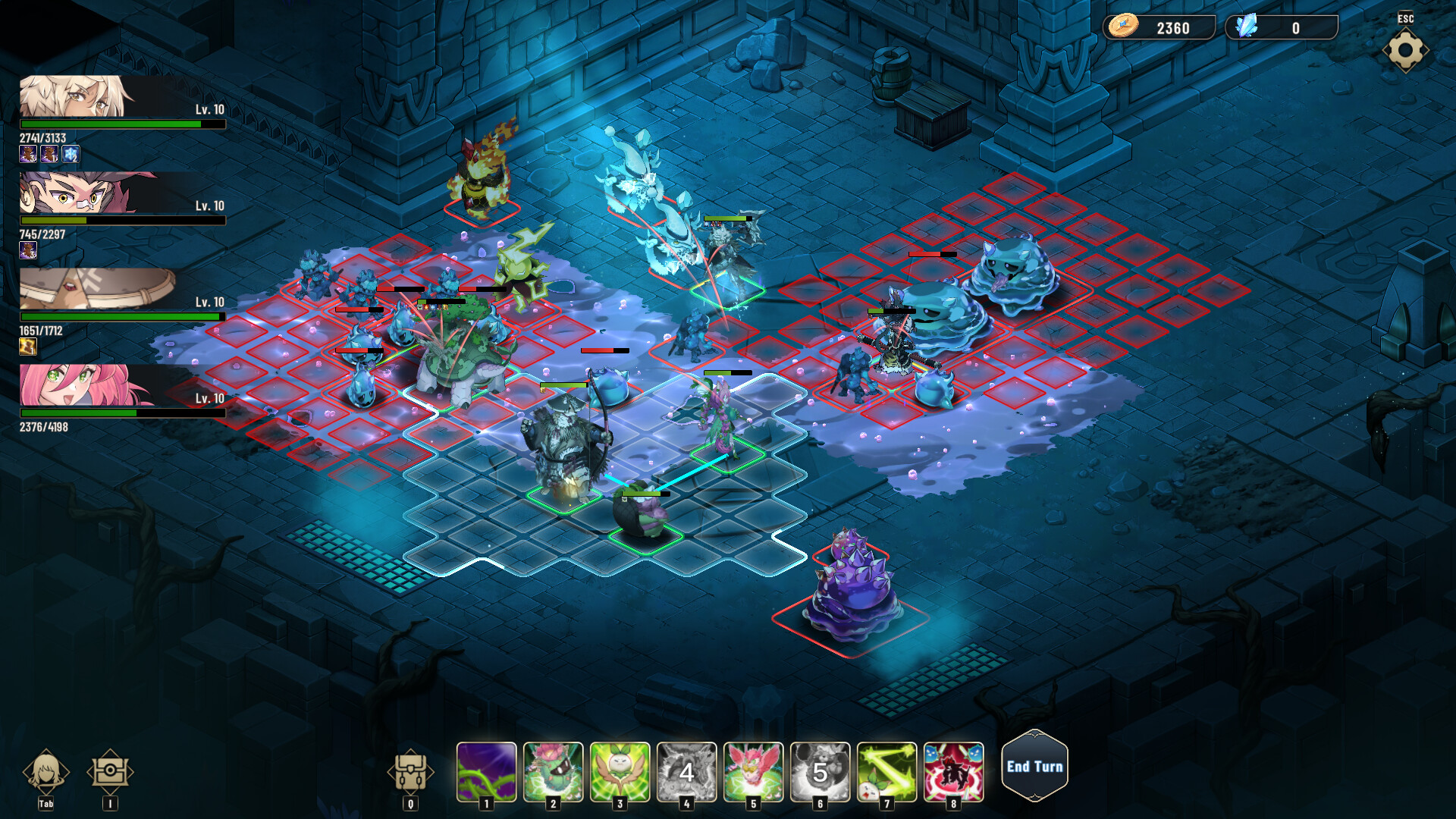
Combat is the heart of Wishseeker. The developer describes fast, grid-based battles with a focus on low downtime. That is a specific design promise: the tactical depth of a grid tactics game, but with turns that snap along. In practice, that means abilities resolve quickly, animations do not drag, and the turn order moves against you without long pauses.
The Four-Party Structure
Every run leads a party of four Wishseekers. The four-character baseline is the game's unit of design: encounters, skills, and co-op are all built around four slots. In solo, you play all four; in co-op, you share them, with up to three friends taking control alongside you.
Simultaneous Turns
The co-op model is unusual. Turns play out simultaneously, so no one sits waiting. That is a coordination mechanic as much as a convenience one: in solo, simultaneous turns mean you are juggling four characters whose actions all resolve together, and you need to read the board as a single system rather than four sequential turns.
Characters and Skills
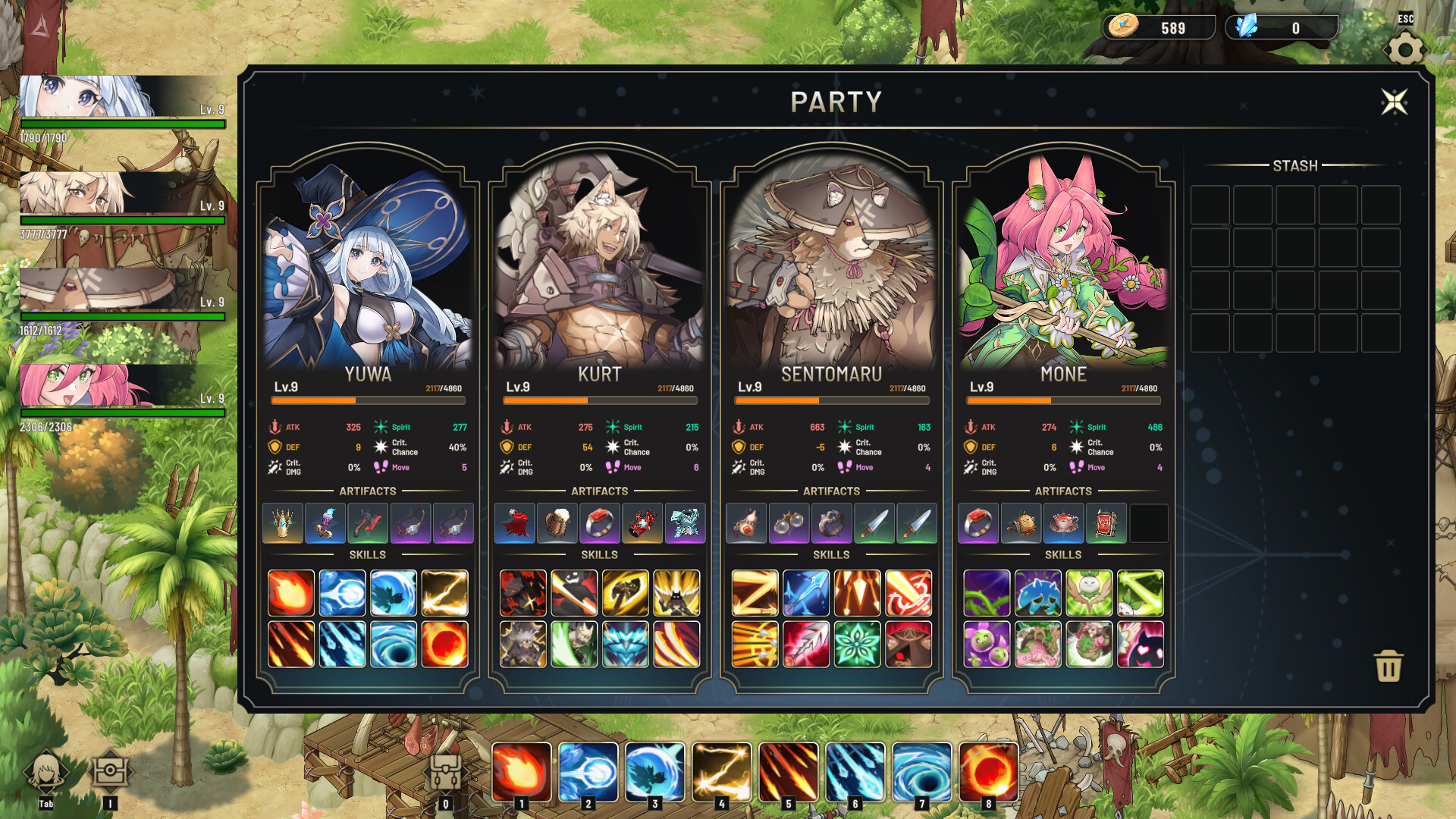
The roster is eight playable characters, each with 20+ unique skills. That claims a large decision space: 160+ skills across the roster, with per-character kits rather than a shared skill pool. The roguelite layer means each run gives you a subset, so mastery comes from knowing how kits interact when drafting changes what is available.
Artifacts and Upgrades
Artifacts are the run-defining layer, the roguelite equivalent of relics or boons. The Steam page also mentions ways to upgrade character stats and scaling. The builds are the point: skills define what a character does, artifacts define how far those skills scale, and upgrades stretch the numbers.
The Hollow Vault and Biomes
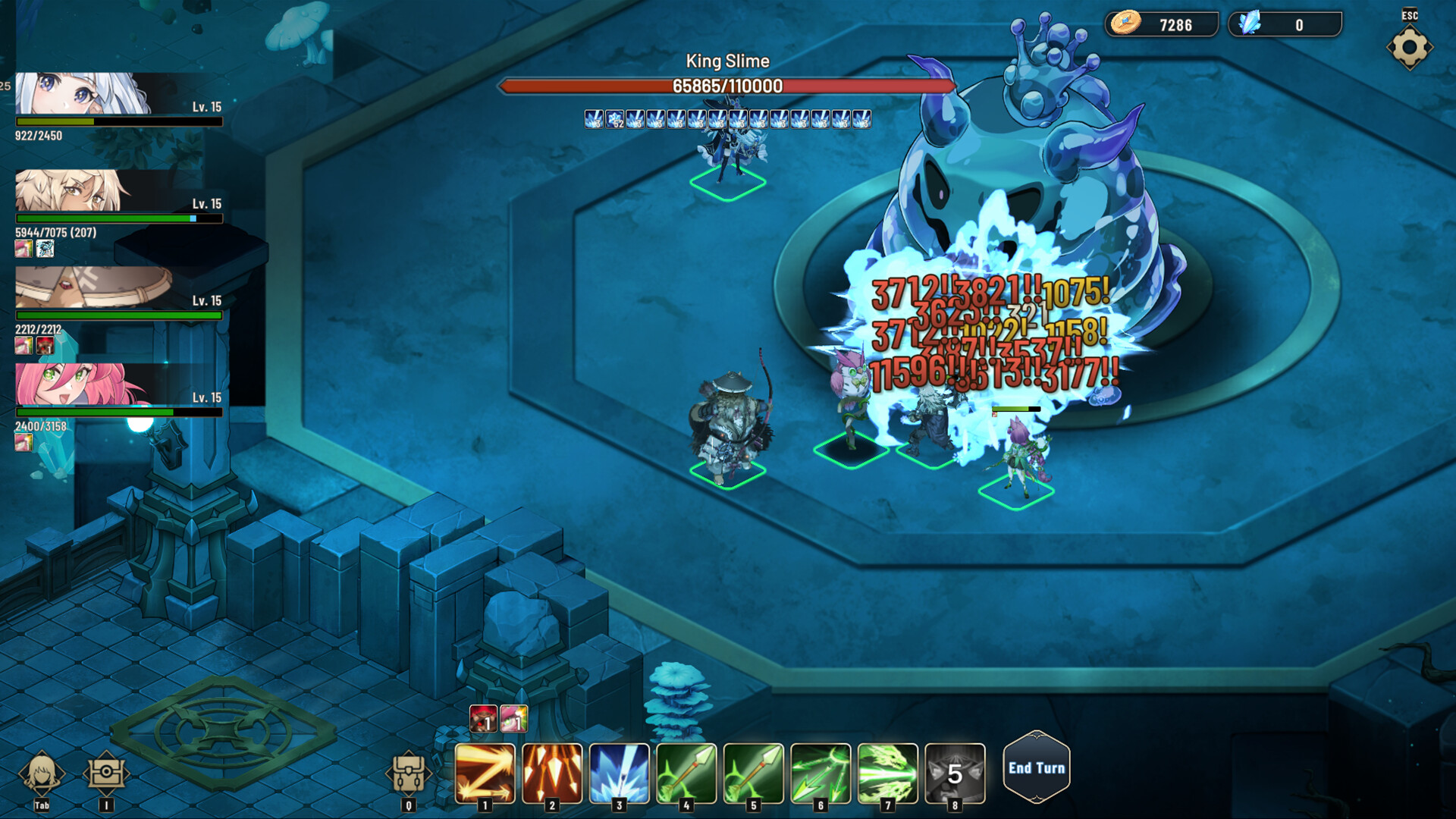
The dungeons are procedural, changing with every playthrough. The Steam page lists 5+ distinct biomes, each with multiple bosses. Biome variety matters because different biomes pressure different party builds; a run that cruises through one biome can stall in the next if the draft cannot adapt.
Advanced Strategies
The Simultaneous Turn Lens
When all four of your characters act at once, the correct way to read the board is as one combined move. Think in waves: this turn, your party's four actions should create a board state, not four independent kills. Group actions that push enemies into kill zones, then pair finishers with the setup.
Draft for Biomes, Not Power
Since biomes vary, do not draft the strongest-looking characters in a vacuum. If you know which biome you are entering, draft for its pressure profile: swarming biomes want area control, boss biomes want single-target burst, corridor biomes want mobility.
Artifact-First Drafting
In roguelites, the first artifact that drops often defines the run. Draft your party around the artifact direction instead of collecting artifacts that fit an imagined party. The game hands you characters, skills, and artifacts every run; treat the earliest strong artifact as the thesis statement of that run.
The Four-Role Baseline
Balanced parties cover four roles: damage, control, support, and utility. In Wishseeker, where runs reshuffle the roster, the best parties are not the ones with four damage dealers. Identify which role is weakest in your draft and double up there.
Co-op Party Split
With up to four players, split the party by board region, not by player preference. Assign each player a quadrant or a lane and coordinate around simultaneous turns. The team that pre-plans each turn's combined move beats the team that plays four solo games at once.
Advanced Tips
- Read the whole board every turn. Simultaneous turns punish tunnel vision harder than sequential tactics.
- Commit to artifacts early. Every turn you hold an un-equipped artifact is value you are not using.
- Learn one character kit a run. With 20+ skills per character, spread practice is shallow practice. Deep-dive one kit per run.
- Waves over kills. In a simultaneous-turn game, board control beats individual eliminations.
- Coordinate co-op decisions out loud. The party that calls its combined move before resolving wins the low-downtime game.
- Use the playtest to learn draft patterns. Pre-release practice on drafting is the best way to spend your time right now.
FAQ
When does Wishseeker come out? No release date has been announced. The game was announced before gamescom 2026 and a playtest waitlist is open.
What platforms will it support? Windows and macOS per the Steam page.
Is it single-player? Yes, solo play is fully supported; you control all four characters yourself.
Is there multiplayer? Yes, online co-op for up to four players, with simultaneous turns.
How many characters are there? 8 playable characters, each with 20+ unique skills.
Does it have artifacts and builds? Yes. The roguelite progression centers on skills, artifacts, and stat scaling upgrades.
How is the combat different from other tactics games? The developer emphasizes low downtime and simultaneous turns: combat keeps moving, enemy turns resolve fast, and co-op turns play out together.
Is it a roguelite? Yes. Runs reshuffle characters, skills, and artifacts, with 5+ biomes and multiple bosses per biome.
Does it have controller support? The Steam page does not list controller support; expect mouse and keyboard as the primary input at launch.
Is there a demo? No demo yet, but the developer runs a playtest waitlist through meloncat.games.
Final Tip
Draft for the board, not the roster. Wishseeker is a roguelite where every run hands you a new hand, and the players who win are the ones who read the run they were given instead of forcing the run they wanted. The first strong artifact is your thesis; build the four-character party around it, watch the wave of the board every single turn, and let the simultaneous-turn engine do the rest.
Wishseeker is firmly on the radar for tactics fans. The low-downtime pitch is a real differentiator, and the 4-player simultaneous co-op is a fresh take on a crowded genre.
Last reviewed by Game How To Editorial. We play each game, verify controls against official sources, and update guides when game mechanics change.
Screenshots