Official game
Play Project Tomorrow
This game is hosted by Steam. Continue to the official page to play or download it.
Play on SteamOverview
Project Tomorrow entered Steam Early Access on November 9, 2026 from Advance Nine, a one-person studio whose devlog video "How To Make A Big Game (Alone)" pulled close to 900,000 views on YouTube. The game's demo drew 21,000 wishlists by September, and the $6.99 launch price makes it one of the cheapest serious base-building survivals on the platform right now.
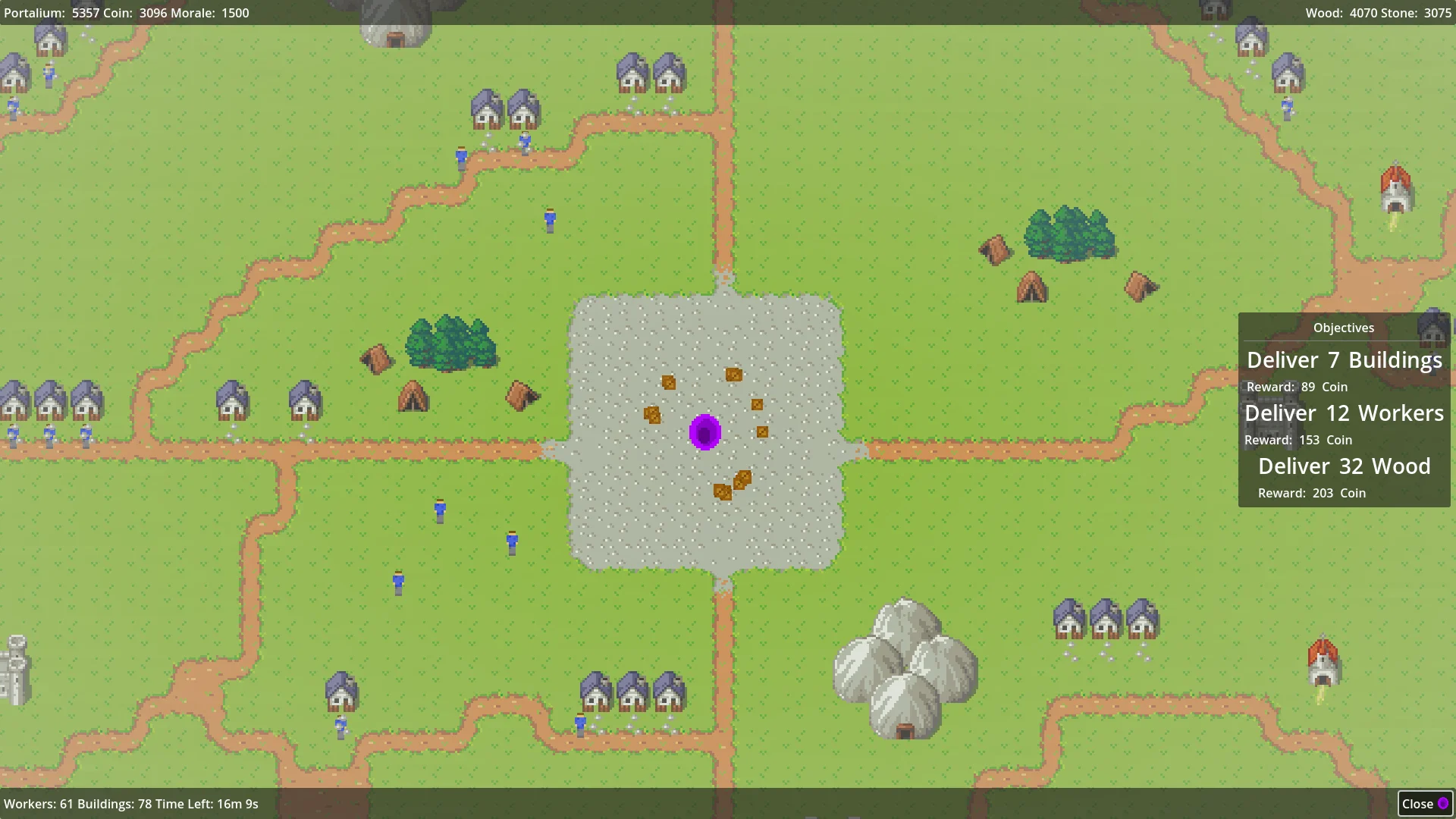
The premise: Earth, ten thousand years after an alien invasion poisoned it. You wake from stasis with a fragile foothold and one goal: make the planet habitable again. Gather, build, terraform, defend. Every terraforming machine you deploy makes the planet greener and angrier, because restoration attracts escalating alien attack waves.
| Fact | Detail |
|---|---|
| Developer / Publisher | Advance Nine (solo developer) |
| Genre | Base-building survival, terraforming, tower defense |
| Platform | Windows |
| Early Access date | November 9, 2026 |
| Price | $6.99, 15% launch discount ($5.94) |
| Players | Single-player |
| Achievements | 10 |
| Extras | Full controller support, Steam Cloud, adjustable difficulty |
Who it is for: Factorio and They Are Billions players who want both systems in one box, fans of solo-dev projects, and anyone who wants a deep strategy loop for less than $7.
Who it is not for: players who need hand-holding tutorials or polished UI; Early Access shows its edges.
The Core Loop, Precisely
Everything in the game serves one five-stage loop:
- Explore and gather. Search the wasteland around your base for minerals, scrap metal, organic material, and abandoned supply caches holding food, clean water, and seeds.
- Build infrastructure. Production buildings, storage, generators, defenses, research stations.
- Automate. Collection drones harvest basic resources so your units stop hand-carrying scrap.
- Terraform and defend. Deploy restoration machinery; alien waves arrive to destroy exactly those machines.
- Expand. Hit the region's population target, power up the Teleport Relay, move to the next biome.
The trap beginners fall into is treating these as separate. They are one system. A factory you cannot power is wasted infrastructure, and a terraformer you cannot defend is a countdown to losing the run.
Getting Started: Water, Food, Power
The planet's water is contaminated, natural food is gone, and everything runs on electricity. Three survival pillars come before any optional expansion:
- Water purification is the first major build. Contaminated sources cannot be drunk raw; purification infrastructure gates everything else, including population growth.
- Greenhouses turn seeds found in supply caches into a dependable food supply, ending your dependence on exploration luck. Irrigation keeps them producing.
- A protected power grid. Keep generators inside your perimeter, keep spare capacity, and never add a building without checking whether the grid supports it. The community guides all say the same thing: a defense grid that browns out during a wave is how colonies die.
Organize Your Colony Into Districts
Freeform bases turn into logistics nightmares once drones start shuttling materials across the whole map. The layout that works:
| District | Purpose | Key structures |
|---|---|---|
| Industrial | Manufacturing | Production, assembly |
| Energy | Power | Generators, distribution |
| Agricultural | Food | Greenhouses, irrigation |
| Logistics | Distribution | Storage, Resource Uplinks |
| Defensive perimeter | Protection | Walls, turrets |
| Research | Progression | Engineer Outposts |
Functional districts cut drone travel time and make every future expansion obvious: a new building has a place to go.
Drones: Your First Real Automation
Manual gathering works for the first hour and falls apart after. Collection Drones automate scrap, mineral, and organic harvesting. Two upgrades matter and both are worth prioritizing over most early production tech:
- Movement speed: faster collection cycles, less dead travel time.
- Cargo capacity: more per trip.
Leaving drones at stock capability is one of the documented beginner mistakes; the whole mid-game economy assumes upgraded logistics.
The Region System Is the Real Strategy Layer
This is where Project Tomorrow separates itself from other survival builders, and where most players waste hours.
Equipment carries over between regions. Your weapons, protective gear, and tools stay with you when you move on. There is no biome-entry gear reset.
Later regions sell upgrades dramatically cheaper. Community data from the demo recorded Region 1 vs Region 2 requirements:
| Upgrade | Resource | Region 1 cost | Region 2 cost |
|---|---|---|---|
| Pistol 2 | Water | 51.8k | 200 |
| Pick Axe 2 | Heat | 52.1k | 100 |
| Shield Unit 1 | Oxygen | 71.2k | 10k |
| Backpack 2 | Heat | 150k | 150k |
Pistol 2 drops by a factor of 250. Backpack 2 does not drop at all. The discounts are per-item and unpredictable, so before farming anything optional, check what it costs in the next region.
Fewer waves means a higher region score. Every extra wave you survive to grind materials dents your final regional rating. The intended rhythm is: reach the population target, power the Teleport Relay, leave.
The decision table:
| Situation | Move |
|---|---|
| Relay not powered | Focus on population and settlement objectives |
| Defenses failing | Farm only what fixes the defense hole |
| Relay active, defenses stable | Leave now |
| Need one specific weapon for your build | Farm it, accept the score hit |
| Chasing max region score | Avoid all optional waves |
Terraforming Timing: The Central Risk Decision
Terraforming machines restore the environment, which is the entire point of the game, and each step of restoration raises alien aggression. The documented pattern: activating terraforming too early, before your defense perimeter is real, is the single most common run-ending mistake.
The working order:
- Water and food secured.
- Power grid stable with spare capacity.
- Defensive perimeter holding against current waves without panic repairs.
- First terraforming projects online, defenses upgraded to match the new aggression level.
- Only then: push restoration intensity.
Balance expansion against defense at every stage. A colony that terraforms aggressively with paper defenses loses machines faster than it builds them.
Tips: Common Beginner Mistakes
- Activating terraforming too early. Establish defenses first; restoration is a provocation.
- Ignoring power consumption. Every factory and machine adds load. Check the grid before, not after.
- Neglecting agriculture. Exploration caches run out; greenhouses do not.
- Freeform building without logistics planning. Scattered storage turns drones into couriers.
- Relying on basic turrets forever. Early defensive gear falls off against armored waves.
- Expanding into unsuitable biomes. Check regional requirements before committing materials.
- Growing population faster than housing, food, and water. Citizens cost more than they earn at first.
- Skipping drone upgrades. Stock drones strangle the mid-game economy.
What's In and What's Next
Early Access launched with the core loop: base building, defense waves, drone automation, terraforming, region progression, 10 achievements, adjustable difficulty, and full controller support. The developer's "big game alone" roadmap has consistently emphasized terraforming depth and additional regions as the EA horizon. The game changes between patches, and the fan-run projecttomorrow.online explicitly warns that exact costs and stats shift between the demo and the release build, so treat hard numbers in older guides as historical.
FAQ
When did Project Tomorrow release? November 9, 2026 in Steam Early Access for Windows.
How much does it cost? $6.99 with a 15% launch discount ($5.94). It is the cheapest entry point in the base-building survival genre right now.
Is there multiplayer? No. It is a single-player game.
Who made it? Advance Nine, a one-person studio. The developer documented the whole process in YouTube devlogs, including the 859k-view "How To Make A Big Game (Alone)".
Should I fully upgrade before leaving a region? No. Equipment carries over, later regions price upgrades far cheaper (Pistol 2: 51.8k Water to 200), and extra waves lower your region score. Leave when the relay powers on and defenses hold.
Is it like Factorio or They Are Billions? It mixes both: factory-style production chains and automation, plus timed defense waves against escalating alien assaults, with terraforming as the connective goal.
Quick Reference Card
| Priority | Action |
|---|---|
| Hour 1 | Explore for caches, secure water purification |
| Hour 2 | Greenhouses, protected power grid, drone basics |
| Early waves | Perimeter walls + turrets before any terraformer |
| Mid-game | Drone speed + cargo upgrades, research district |
| Region exit | Population target met, relay powered, leave |
| Never | Farm optional upgrades after the relay is live |
Screenshots