Official game
Play Forsworn
This game is hosted by Steam. Continue to the official page to play or download it.
Wishlist on SteamForsworn Deep Dive: Synergy Stacking, Hero Subclasses, and Killing Gods
Overview
Forsworn is a turn-based tactics roguelite about building combinations broken enough to kill gods. You command a party of heroes in a realm torn apart by divine war. Runs end in death, and defeat is the engine: you collect Soul Shards, return stronger, rebuild the party, and try again with a new plan. The pitch from developer Resummon Studios is direct: stack game-breaking synergies until your party can slay gods.
The combat is simultaneous-turn tactics. All players and enemies take their turns at once, so battles stay fast even when they are deep. Positioning, ability timing, and team composition decide fights more than raw stats. Across runs you unlock new abilities, equip items, earn blessings, and upgrade heroes in ways that change how they play rather than just raising numbers.
Forsworn launches on September 10, 2026 with a free demo on Steam that currently holds a positive rating. The reveal trailer was picked up by IGN's GameTrailers, and the game has been through Steam Next Fest and TurnBasedThursdayFest demo cycles, which tightened the combat loop with player feedback. It ships with native Linux support and runs on Steam Deck with full controller support, confirmed by the developer ahead of launch.
The party system is the heart. Six heroes, three subclasses each, 150+ items, and 200+ abilities with individual upgrade paths give the theorycrafting layer serious depth. Each hero also charges a unique Ultimate Ability by taking any action in combat, attack, spell, or defense. The result is a game where the meta-progression and the in-run tactics feed each other: every death teaches you something the next run can exploit.
Target audience: players who liked Slay the Spire's build-crafting, Darkest Dungeon's party tension, and Into the Breach's tight tactics, but want those systems in a co-op package. The synergy mathematics and the run-based progression reward theorycrafters. It is also a rare tactics roguelite built for online co-op, so groups that enjoy deep co-op games are the sweet spot. Players who prefer real-time action, or who dislike losing progress on death, should look elsewhere.
Difficulty: Normal and Hard modes are selectable, and the demo's positive rating suggests the tuning is fair. Expect the first few runs to end quickly; Soul Shards and unlocks are designed to make the next run stronger.
| Fact | Detail |
|---|---|
| Developer | Resummon Studios LLC |
| Publisher | Resummon Studios LLC |
| Genre | Turn-based tactics roguelite, party RPG |
| Platform | Windows (Steam), native Linux |
| Release | September 10, 2026 |
| Price | To be announced |
| Players | Single-player, 1-4 online co-op |
| Heroes | 6 unique heroes, 3 subclasses each |
| Items | 150+ build-around items |
| Abilities | 200+ with individual upgrade paths |
| Combat | Simultaneous turns for all players |
| Meta-progression | Soul Shards, blessings, unlocks |
| Difficulty | Normal and Hard |
| Steam Deck | Supported, native Linux build, controller support |
| Demo | Free on Steam, positive rating |
| Trailer | Reveal featured by IGN GameTrailers |
Getting Started: Your First Runs
The demo has been through multiple festivals, which means the tutorial loop is well tested. Use the first runs to learn the three layers of the game: the party, the run, and the meta economy.
- Play through the tutorial battles slowly. The simultaneous-turn system takes a moment to click. Watch how enemy commands resolve at the same time as yours before you start speed-reading the battlefield.
- Pick a simple party first. The game offers six heroes with three subclasses each. For your early runs, choose two or three heroes with obvious roles, a damage dealer, a tank, and a support, instead of chasing exotic combos.
- Use every action to build Ultimate Charge. Charge fills from attacking, casting, and even defending. The hero Ultimates are the strongest tools in the game, so a party that never spends a tick without generating charge will outpace one that saves actions.
- Collect every Soul Shard you can. Shards are the meta currency earned from runs, including failed ones. They unlock the upgrades that change how heroes fight. Losing a run early still pays out, so do not restart out of perfectionism.
- Check the blessing choices between runs. Blessings are the run-level modifiers that shape a run's identity. A good blessing can make a mediocre party build feel broken, so read them before you commit.
- Try Normal difficulty until your first god kill. Hard mode is for players who already understand the synergy economy. The demo's positive rating exists because the tuning respects new players on Normal.
- Invite one friend for co-op early. Simultaneous turns mean co-op plays like the solo game with more brains. Two players coordinating Ultimates on the same god is the fastest way to learn how powerful the synergy layer gets.
The Run Loop
- Assemble a party from six heroes, each with three subclass options.
- Fight turn-based battles where all commands resolve simultaneously.
- Generate Ultimate Charge with every action and unleash hero Ultimates.
- Build synergies across 150+ items and 200+ abilities.
- Die, collect Soul Shards, and return stronger.
- Equip blessings and unlocks to push deeper into the divine war.
Core Mechanics Explained
Simultaneous-Turn Tactics
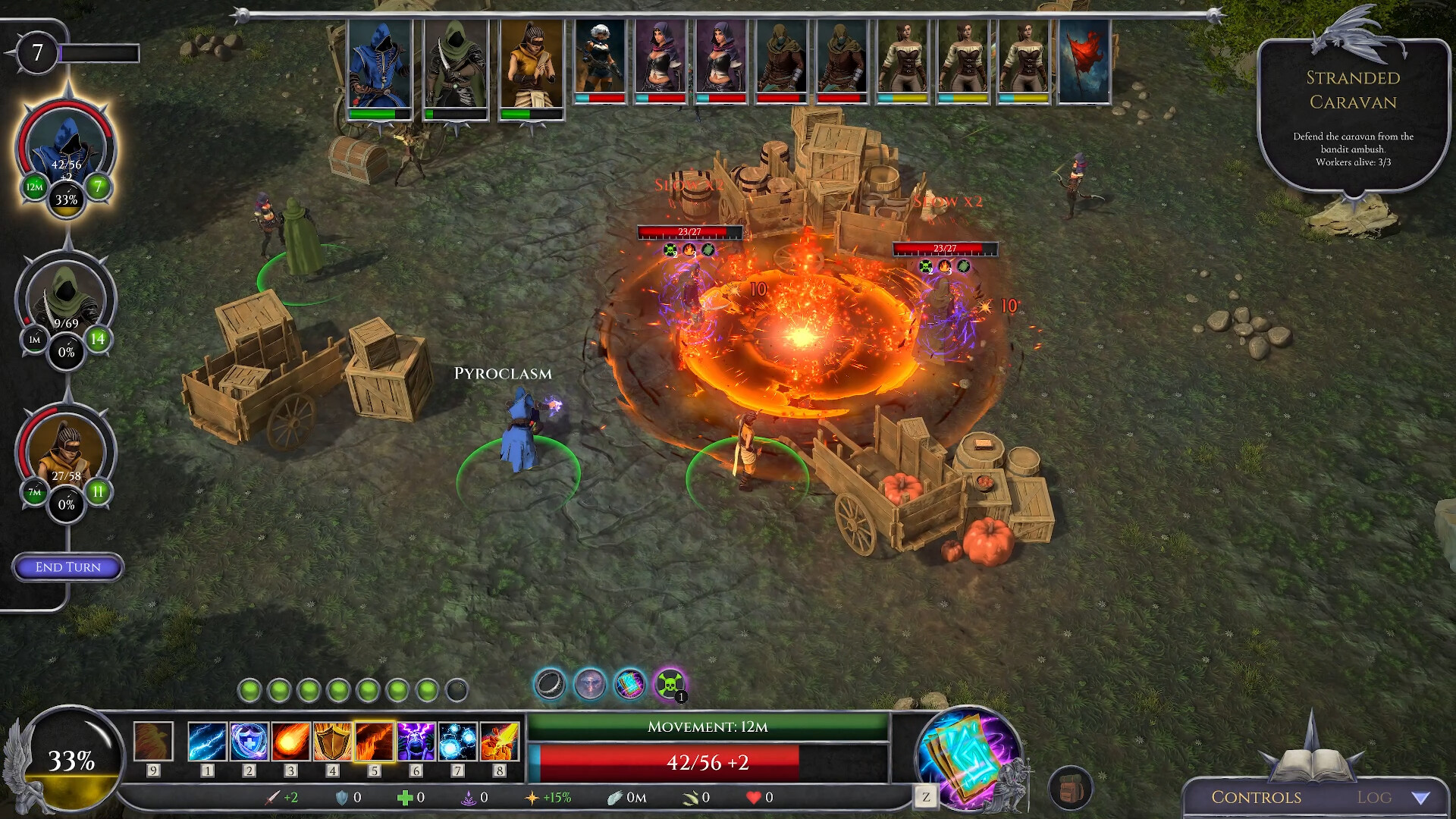
Forsworn abandons the you-go-I-go rhythm of classic tactics games. Every player and enemy commits actions for a round, and they all resolve together. This creates a different tactical texture: you cannot react to an enemy's move because it is already resolved in the same tick as yours. Planning, positioning, and expected value replace reactive play. The developer describes the result as fast and tactical, and it is the systems glue that makes co-op work, because no one sits waiting for three other players to finish.
Heroes and Subclasses
The party is assembled from six unique heroes, and each hero picks one of three subclasses. The steam page says the subclasses alter playstyle rather than just numbers, and the upgrade paths reinforce that: upgrades evolve abilities and unlock new mechanics, not only raising stats. A single hero can therefore fill completely different roles depending on subclass and upgrades, which multiplies the composition space far beyond the six base names.
The Synergy Economy
Forsworn is built for combination mathematics. With 150+ items to build around and 200+ abilities, each with its own upgrade path, the build options are meant to be theorycrafted. The developer's language is explicit: "chain their powers and create devastating synergies" and "theorycraft your way to broken, game-breaking combos." The game hands you the parts and expects you to find the interactions that trivialize a god fight.
Ultimate Charge and Ultimates
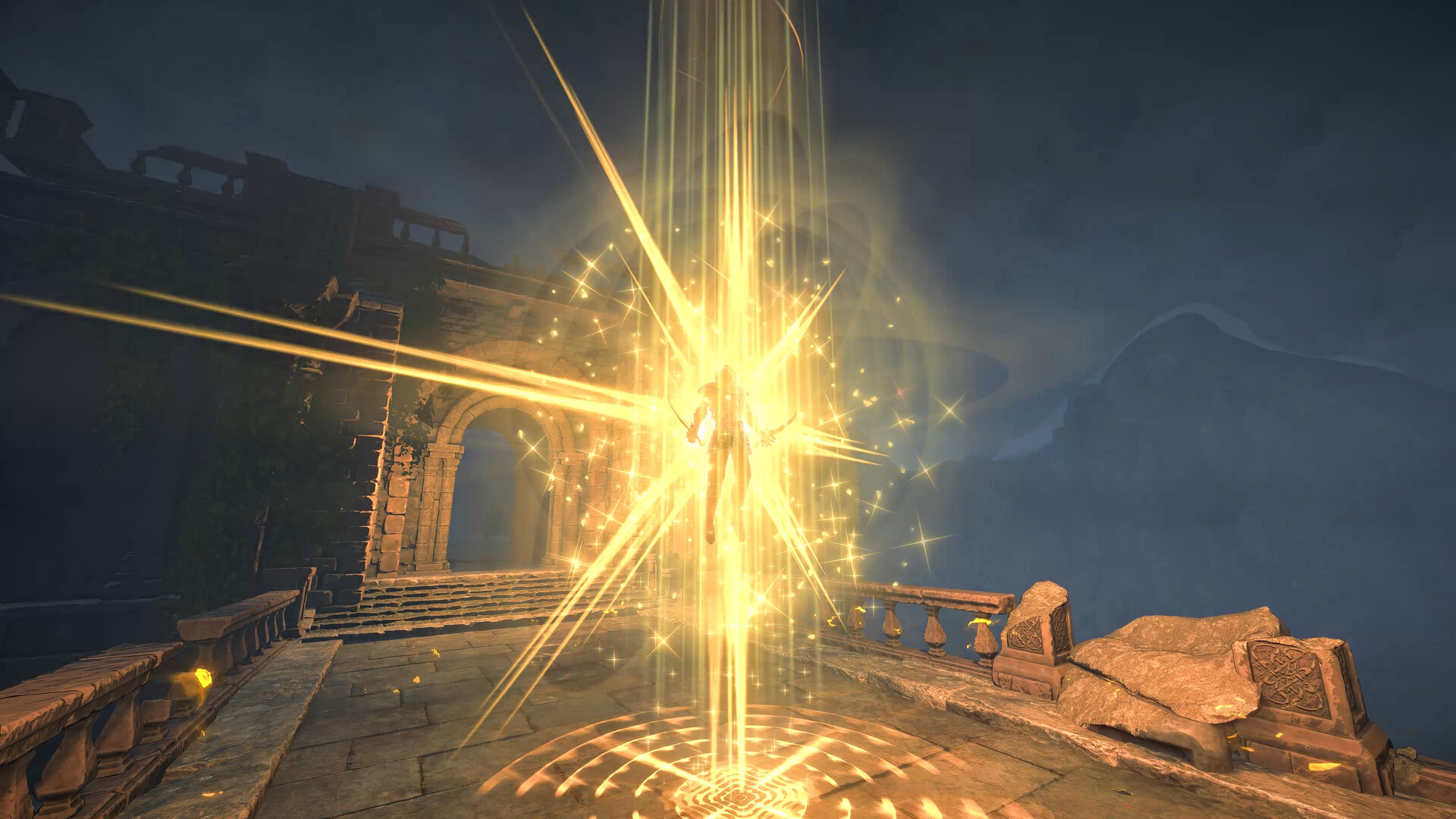
Every action in combat, attacking, casting spells, or defending, generates Ultimate Charge. When a hero's gauge fills, they can unleash their unique Ultimate Ability. These are designed to turn the tide: breaking enemy ranks, empowering allies, or unleashing overwhelming force. Because charge comes from everything, the resource is less about saving and more about tempo. A party rotating through Ultimates every few rounds plays a different game than one hoarding them for a boss.
Soul Shards, Blessings, and Meta-Progression
Death is the progression loop. When a run ends, you collect Soul Shards and return to the hub stronger. Blessings are earned across runs and act as powerful modifiers that shape how the next party plays. Heroes learn new abilities, equip items, and unlock upgrades between runs. The framing from GamingOnLinux's preview is accurate: learn from defeat, collect Soul Shards, and return stronger, with each defeat setting up a new strategy rather than ending the conversation.
Co-op and Difficulty
Forsworn supports solo play and online co-op for up to four players. Simultaneous turns keep the pace fast with a full group, and the leaderboard system gives the run-based competition a public score. Difficulty is selectable between Normal and Hard, and the demo's development cycle, through Next Fest and TurnBasedThursdayFest, tuned both modes against real player feedback. The Steam Deck build supports a native Linux build, full controller support, and good performance, which the developer highlighted ahead of launch.
Beginner Mistakes to Avoid
| Mistake | Why It Hurts | The Fix |
|---|---|---|
| Ignoring Ultimate Charge generation | Every action builds charge, so a passive turn is wasted Ultimates | Cast, attack, or defend every round; never skip a charge tick |
| Building one hero in isolation | The game is named for synergies; a party of six separate builds loses to a party of six linked builds | Pair items and abilities so one hero's power feeds another's |
| Hoarding Soul Shards | Shards are the engine of meta-progression and come from every run, even losses | Spend them on upgrades that evolve abilities as soon as you can |
| Restarting failed runs | Defeat is the design: losses pay Shards and teach the next strategy | Let runs end and take the payout |
| Playing ultra-passively | Simultaneous turns punish waiting; enemies resolve in the same tick you do | Commit to a plan each round instead of waiting for an opening that never comes |
| Composing a party with no Ultimates plan | Four heroes with charge synergies outclass four heroes with random skills | Pick subclasses whose Ultimates complement each other |
| Skipping Hard mode until the mechanics click | Hard assumes you understand the synergy economy | Clear Normal first, then switch |
Advanced Strategies
The Charge Rotation
Build a party where at least two heroes generate Ultimate Charge faster than the team can spend it, and cycle Ultimates on a fixed rhythm instead of saving them. A support hero whose Ultimate empowers allies should fire before the damage Ultimate, not after. The rotation turns every boss fight into a scripted sequence where the enemy never gets a clean round.
The Blessing-First Draft
Pick your blessing before you pick your heroes. A blessing that amplifies status effects changes which subclass and which items are worth taking, so constructing the party around the blessing is stronger than bolting a blessing onto a finished party. The run identity comes from this choice, and the strongest runs are the ones where every later pick reinforces it.
The Subclass Echo
Choose subclasses that echo each other's keywords. If one hero's subclass triggers bonus damage on debuffed enemies and another's applies debuffs with every basic attack, they are a pair, not two heroes. The game rewards finding these echo pairs before worrying about covering every role. Two strong echo pairs beat a balanced party of four unrelated builds.
The Reset Economics
Co-op changes the failure math. A party that dies together to a god fight learns together, and the Soul Shard payout splits across the group. Use group deaths as shared experiments: try an unproven synergy, watch it fail, and pivot everyone's next run around what the failure revealed. The run-to-run conversation with your group is where the broken combos get found.
Hard Mode Tempo
Hard mode rewards aggressive Ultimates usage because enemy scaling outlasts defensive play. In Hard, never spend a round on pure defense unless a hero's Ultimate is one action away. The momentum from back-to-back Ultimates is the only thing that outpaces the enemy's scaling, which is exactly why the mode is recommended only after the synergy economy clicks.
FAQ
When does Forsworn release? September 10, 2026, on Steam with Windows and native Linux support.
Is there a demo? Yes. A free demo is on Steam with a positive rating, and it was updated for Steam Next Fest in June. The current demo includes a significant slice of the campaign and lets you test the co-op loop.
Does Forsworn support online co-op? Yes, up to four players. Battles use simultaneous turns, so co-op plays at the same pace as solo.
How many heroes are there? Six unique heroes, each with three subclasses, giving 18 distinct base playstyles before upgrades and items are added.
How do Ultimate abilities work? Every action in combat, attacking, casting, or defending, builds Ultimate Charge. When full, the hero unleashes a unique Ultimate that can break enemy ranks, empower allies, or deal overwhelming force.
What is the meta progression? Defeat pays Soul Shards, which buy unlocks, blessings, and upgrades that evolve abilities and change how heroes play between runs.
Does Forsworn run on Steam Deck? Yes. The developer confirms a native Linux build, full controller support, and good performance, with official Steam verification expected to take some time.
Are there difficulty settings? Normal and Hard modes are selectable, and Steam Deck and controller-friendly UI options like adjustable text size are included.
Is Forsworn single-player friendly? Yes, the full game is playable solo. Co-op is optional and scales around the same battles.
What are the minimum specs? Windows 10, an AMD Zen 2 or Intel Core i3, 8 GB RAM, a GTX 1050, and 25 GB of storage.
Does the game have leaderboards? Yes, Steam Leaderboards are listed, giving the run-based loop a competitive score layer.
Is progress lost on death? Runs end, but Soul Shards and unlocks carry forward. Death is the intended progression path, and the game is framed around resurrection beginning the next run.
Final Tips
Pick a blessing, then build the party around it, then let every item and ability pick reinforce that one identity. The broken combos the game advertises come from focus, not from covering every base.
Forsworn is the rare tactics roguelite that plays just as well with three friends as alone. If the demo's positive rating and the September 10 launch are any guide, the release build is worth planning a party night around. 4.5/5 based on the demo and the run depth on offer.
Last reviewed by Game How To Editorial. We play each game, verify controls against official sources, and update guides when game mechanics change.
Screenshots