Official game
Play Dressmaker
This game is hosted by Steam. Continue to the official page to play or download it.
Play on SteamWhat Is Dressmaker?
Dressmaker is a cozy crafting simulation from Cozy Lives, released September 21, 2026 on Steam for $14.99 on Windows and Mac. Unlike decorating games that treat fashion as a menu of presets, this one puts every step of real dressmaking in your hands: choose the fabric, arrange and cut out the pattern pieces, sew the pieces together on a machine, then decorate the finished garment with buttons, bows, and appliqué.
The design follows real dressmaking practice. Whether your pattern sits aligned with the grain or cut on bias changes how the fabric falls on the final dress. You decide which fabric goes on which panel of the garment, so a two-tone dress or a contrast-lined skirt is a deliberate choice you make at the cutting table, not a palette option. Feed the cloth through a vintage sewing machine (bobbin infinite, no thread jams) and your seams take shape.
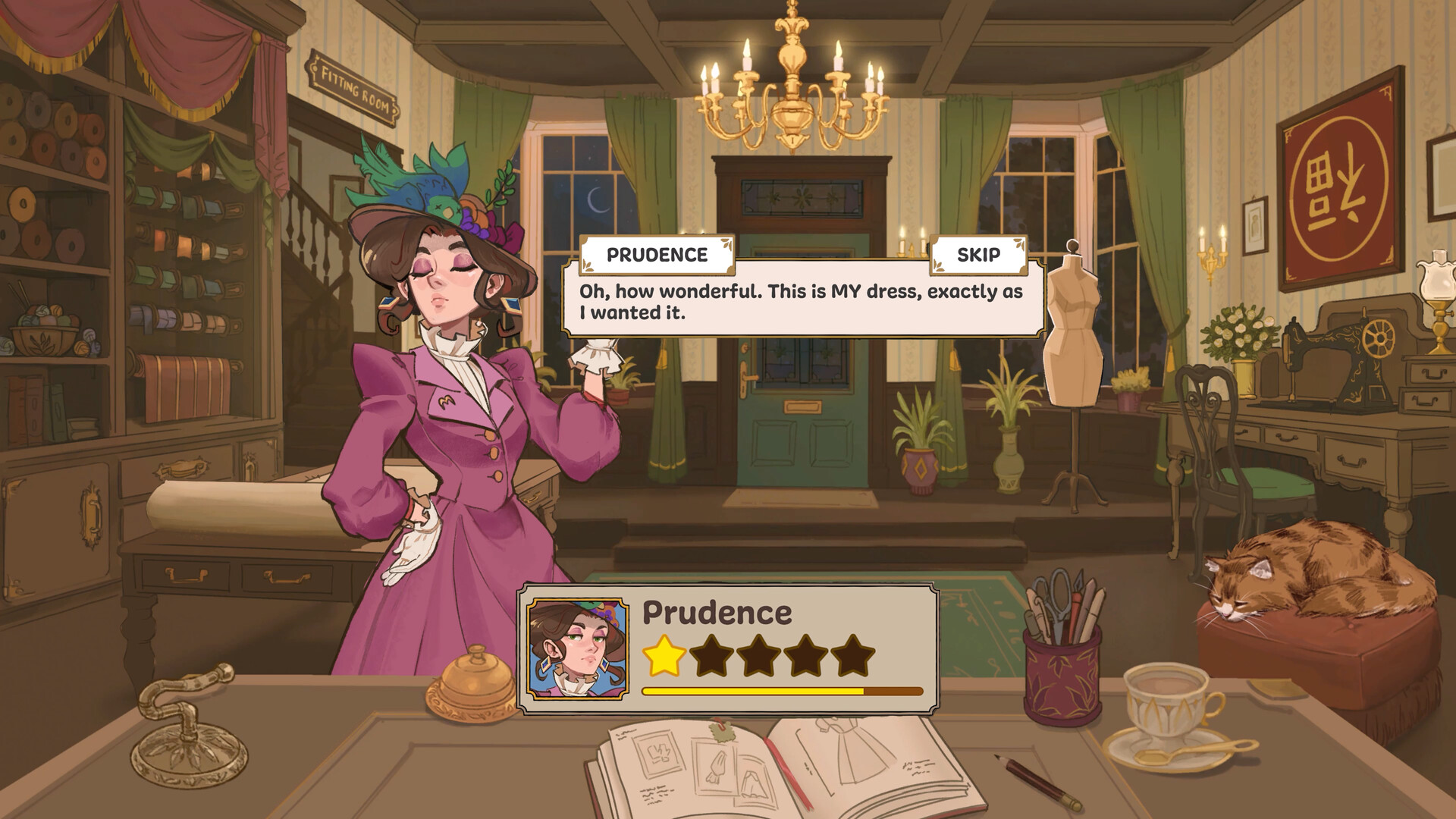
Then comes the sandbox half. Lace trims, buttons, bows, and appliqué can go anywhere you like. The store page calls it complete creative freedom, and the structure backs that up: there is no failure state, no client breathing down your neck, and no timer. The game includes a Mouse Only Option and Playable without Timed Input, which tells you exactly what kind of experience this is.
Dressmaker Details
| Detail | Info |
|---|---|
| Genre | Cozy crafting simulation |
| Developer | Cozy Lives |
| Publisher | Cozy Lives |
| Platforms | Windows, macOS (Steam) |
| Price | $14.99 |
| Players | Single-player |
| Release | September 21, 2026 |
| Steam features | 32 achievements, Cloud saves, Family Sharing |
| Accessibility | Mouse Only Option, Playable without Timed Input, custom volume controls |
| Store ID | Steam app 4019220 |
How to Play Dressmaker
The Crafting Pipeline
Every dress moves through four stations, and understanding what each one controls is the whole game:
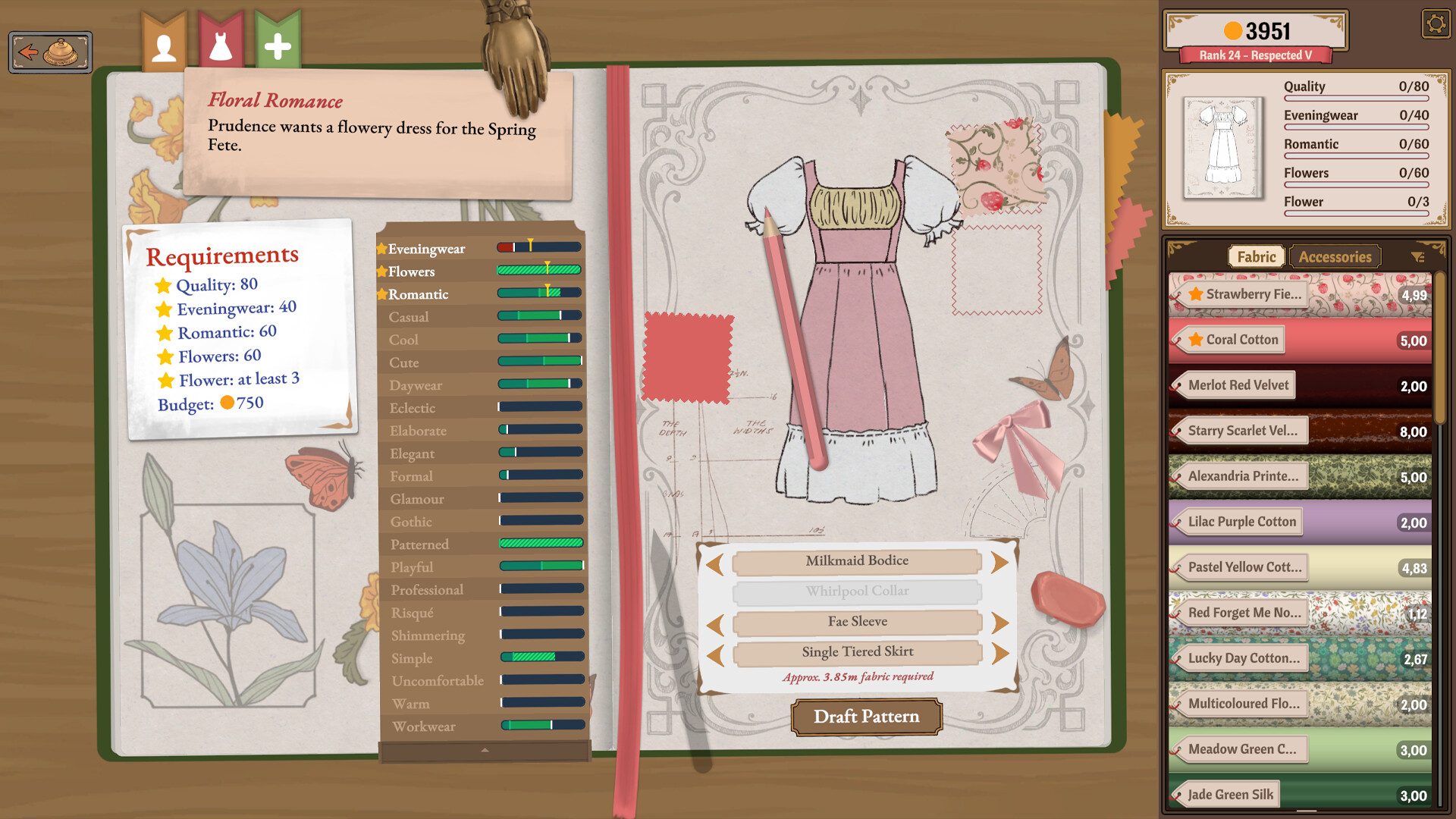
1. Fabric selection. Pick your material before anything else. Fabric choice ripples through every later step, because the pattern is cut from the rolls you chose and the sewing machine stitches what you cut. When planning a garment, decide your color story first: which fabric leads, which accents, which lining.
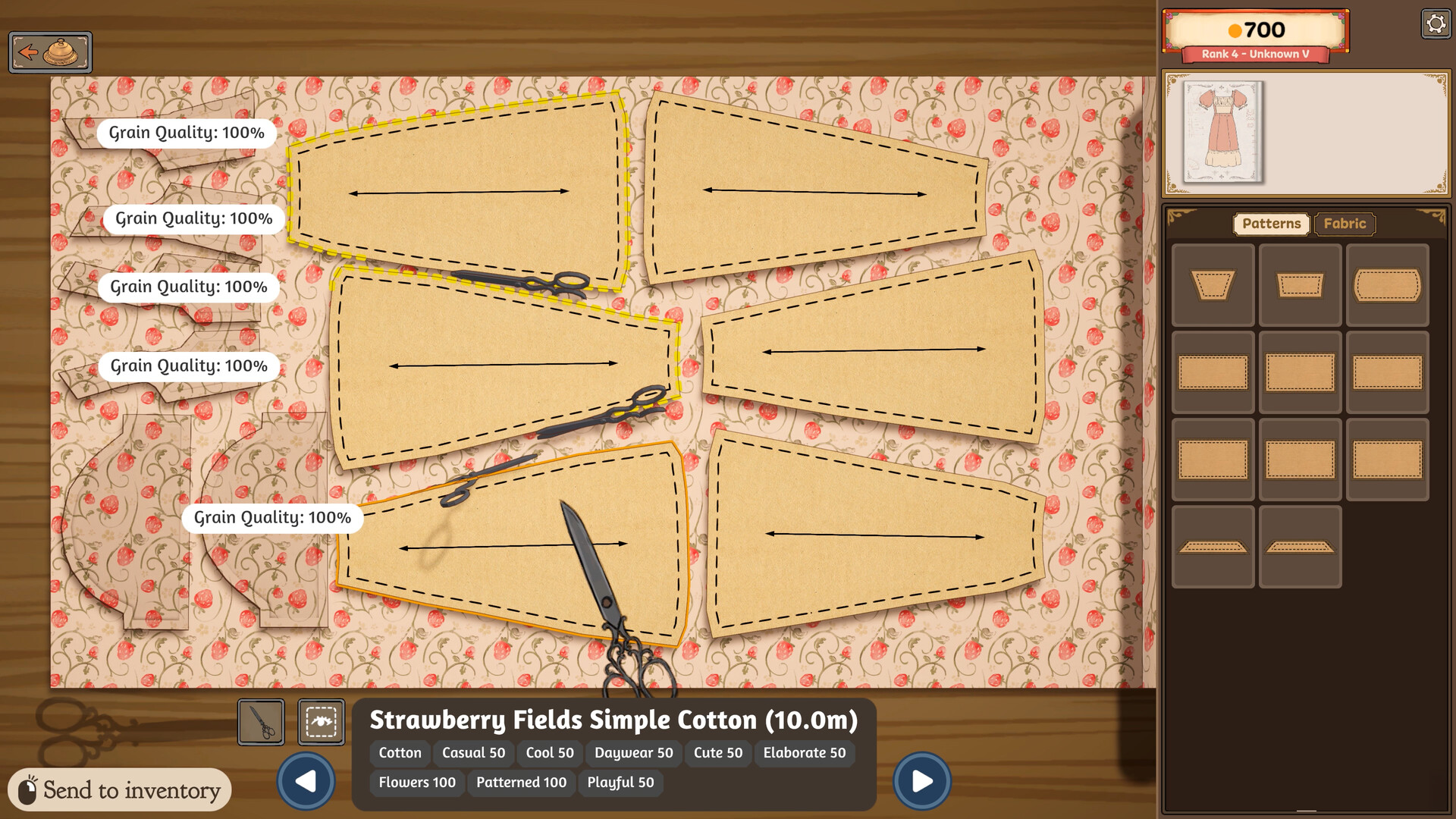
2. Pattern arrangement and cutting. Lay pattern pieces on the roll and cut them out. This is where the real-dressmaking detail lives. Grain-aligned cuts and bias cuts behave differently on the finished dress, so a piece placed diagonally drapes with a subtle stretch that a straight-of-grain piece lacks. The cut fabric goes straight into your inventory, and what you cut is what you sew.
3. Sewing. Feed fabric through the vintage sewing machine to stitch pieces together. It is a tactile, rhythmic minigame with no fail condition. The infinite bobbin means flow never breaks for a refill.
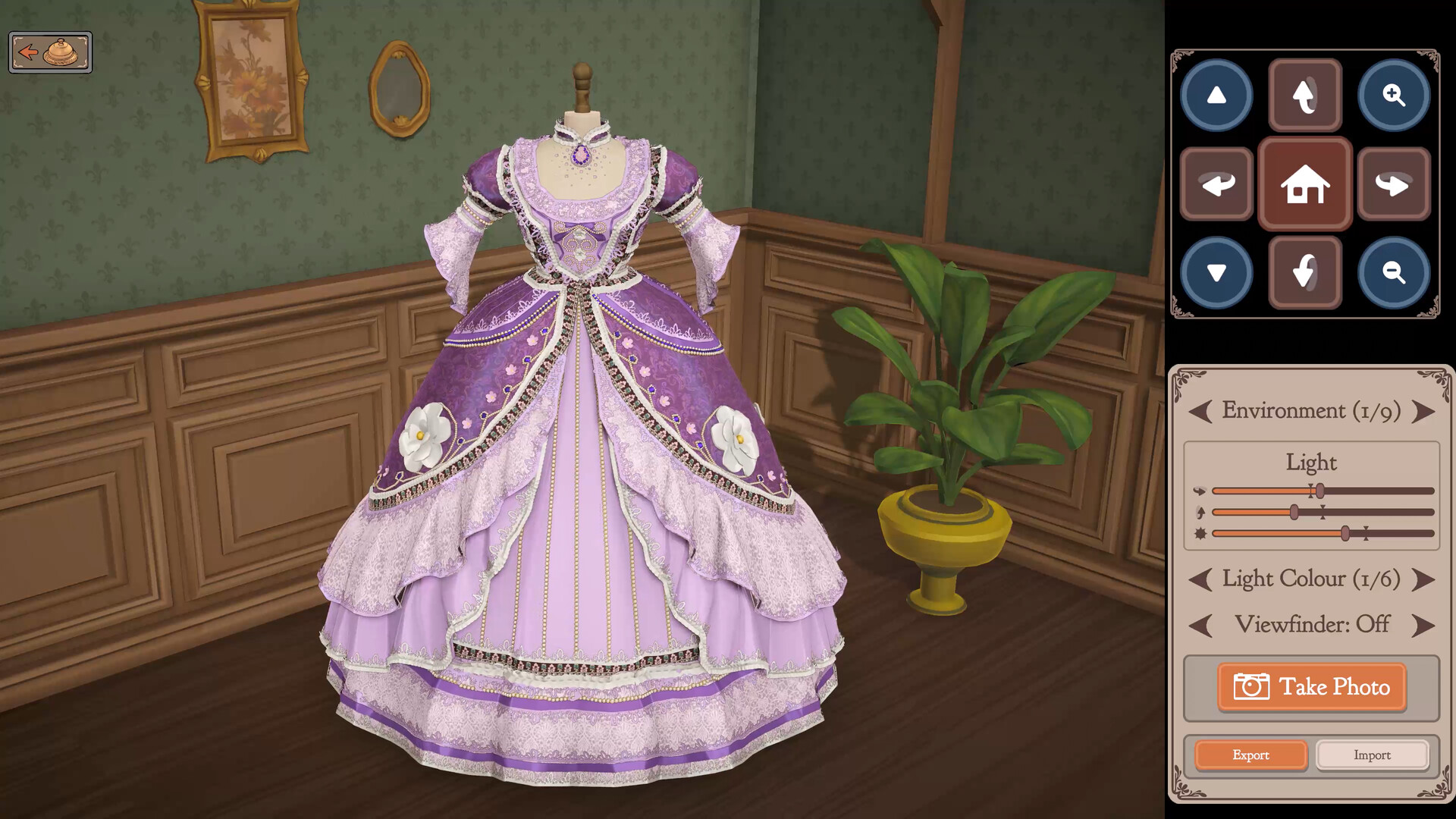
4. Decoration. Buttons, bows, appliqué, and lace trims attach wherever you want. This is the pure sandbox: a collar gets a single statement button or a whole row of pearls, and neither choice is wrong.
Getting Grain and Bias Right
The single most dressmaker-brained mechanic in the game is fabric orientation. Three practical takes:
Straight-of-grain is your default. Pieces aligned with the fabric's weave give stable, predictable panels. Bodices, waistbands, and structured elements want grain alignment.
Bias cuts are for movement. A piece cut at 45 degrees to the weave drapes and clings differently. Skirts and flowing elements come alive on the bias, which is why real bias-cut dresses from the 1930s still get referenced today.
Contrast on purpose. Since each garment panel takes its own fabric, mixing a bias-cut skirt panel in one fabric with a grain-aligned bodice in another produces a design that reads as intentional. That is the difference between a dress and an outfit.
Working the Cutting Table Efficiently
Pattern arrangement has a real-world logic you can import: nested pieces fit tighter when large pieces go down first and small pieces fill the gaps. You are not paying for fabric by the meter, but the habit still pays off because fewer rolls get consumed per dress, leaving more variety in your inventory for the next project.
The cutting table is also where complex garments become manageable. A full dress is many pieces. Lay out, cut, and sew one assembly group at a time (bodice pieces together, then skirt panels) instead of cutting everything at once and losing track of what belongs where.
Sewing Without Stress
The sewing machine sequences are the heartbeat of the game and the game explicitly ships without timed-input pressure. Playable without Timed Input means players who find rhythm prompts stressful can still complete every stitch. Take the slow path if you enjoy it; the dress comes out the same.
Tips and Tricks
Build a fabric library across projects. Every dress you make teaches you how a fabric behaves. Note which rolls drape well on bias and which hold structure on grain, and your second week of dresses will look deliberately designed rather than experimentally assembled.
Use the 32 achievements as a project list. The achievement list spans specific garments, techniques, and decoration styles. Treat it as a curriculum: chasing one achievement often teaches a combination you would not have tried otherwise.
Decorate last, but design first. Decide the dress's overall story before the first cut, then let decoration finish it. A lace-trimmed neckline changes how the bodice fabric should read; planning beats patching.
Cloud saves make it a laptop game. Steam Cloud and Family Sharing are enabled, and the game is fully mouse-driven, so it travels well to a trackpad machine. Slow evening session on the couch laptop, detailed decorating on the desktop.
Nothing is permanent. Decorations and fabric choices can be revisited as your collection grows. Early dresses are sketches, not commitments.
Who Is This Game For?
Dressmaker sits in the same shelf as cooking and crafting sims, but its mechanical honesty about the craft is unusual. If you have ever watched a sewing channel and wondered why grain lines matter, this game demonstrates it interactively. If you just want a calm mouse-only sandbox with pretty results, it works as that too. The 2 GB storage footprint and Intel UHD 630 minimum mean almost any machine runs it, including older laptops and Macs.
System Requirements
| Tier | Specs |
|---|---|
| Minimum | Windows 10 or later / macOS, Intel Core i5 or AMD Ryzen, 8 GB RAM, Intel UHD 630 or better, DirectX 11, 2 GB storage |
The Intel UHD 630 floor means integrated graphics qualify. This is one of the most accessible system requirements in the genre.
FAQ
Do I need to know anything about sewing? No. The game teaches its systems as you play, and every mechanic that comes from real dressmaking (grain, bias, pattern nesting) is presented visually. Players who already sew will recognize the logic; players who do not will pick it up by their second dress.
Is there a time limit or scoring? No. There is no failure state. The Mouse Only Option and Playable without Timed Input settings remove every pressure valve the genre usually installs.
Can I make pants or shirts, or only dresses? The game's focus is dresses, which is where its pattern system shows its depth: bodices, skirts, panels, and linings each take independent fabric choices.
Does it have achievements? Yes, 32 Steam achievements, plus Cloud saves and Family Sharing.
Mac support? Yes. Dressmaker ships for Windows and macOS on Steam.
Quick Reference Card
| Goal | Do This |
|---|---|
| Flowing skirt | Cut skirt panels on the bias, let the fabric drape |
| Structured bodice | Keep bodice pieces on straight-of-grain |
| Two-tone design | Assign different fabrics per panel at the cutting table |
| Faster sessions | Cut one assembly group at a time, sew it, then move on |
| Calm play | Enable Playable without Timed Input, sew at your own pace |
| Long-term goals | Chase the 32 achievements as a project curriculum |
Screenshots