Official game
Play Nivalis Nights
This game is hosted by Steam. Continue to the official page to play or download it.
Wishlist on SteamNivalis Nights Deep Dive: Business, City Life, and Curfew Risk
Overview
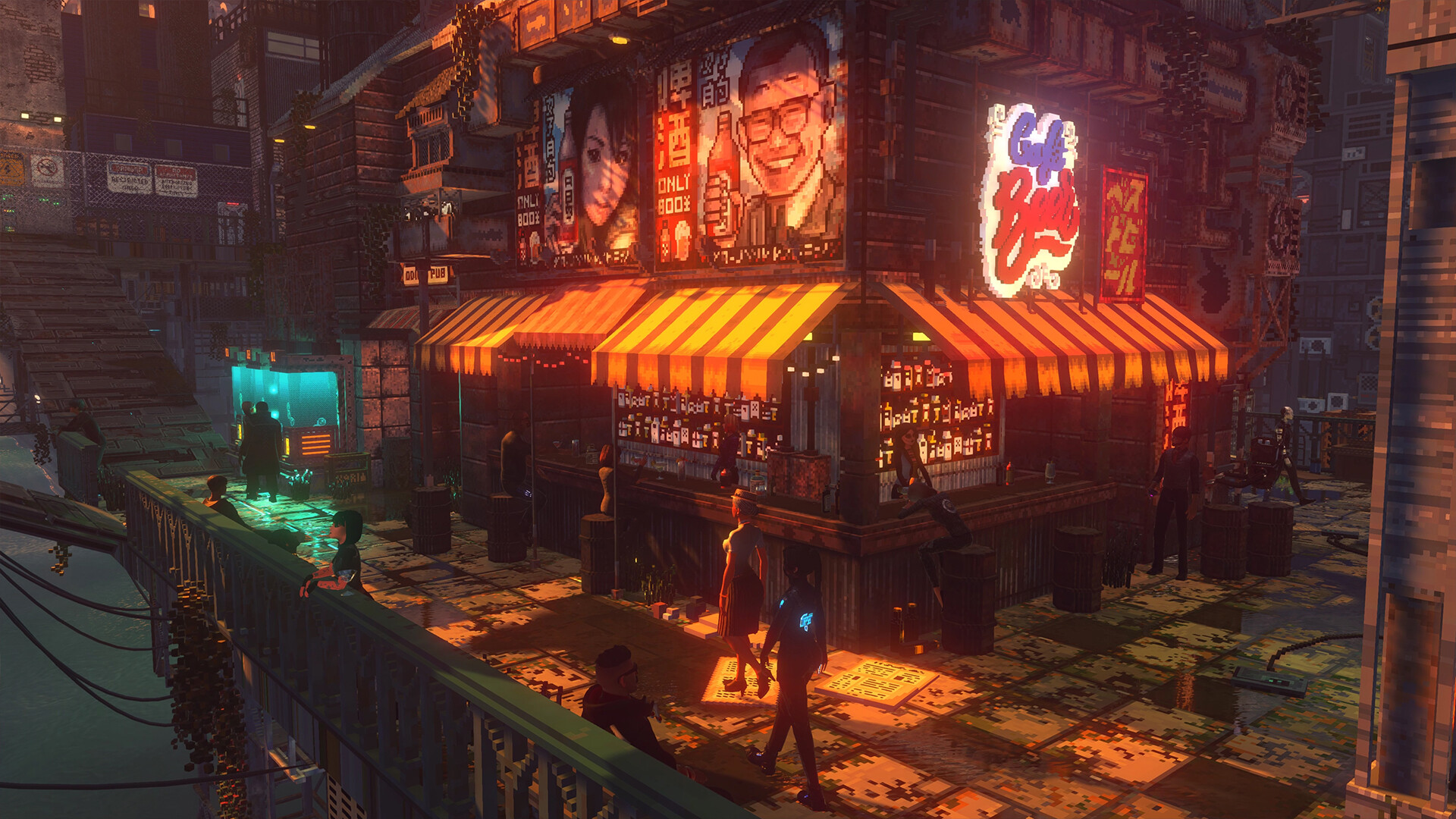
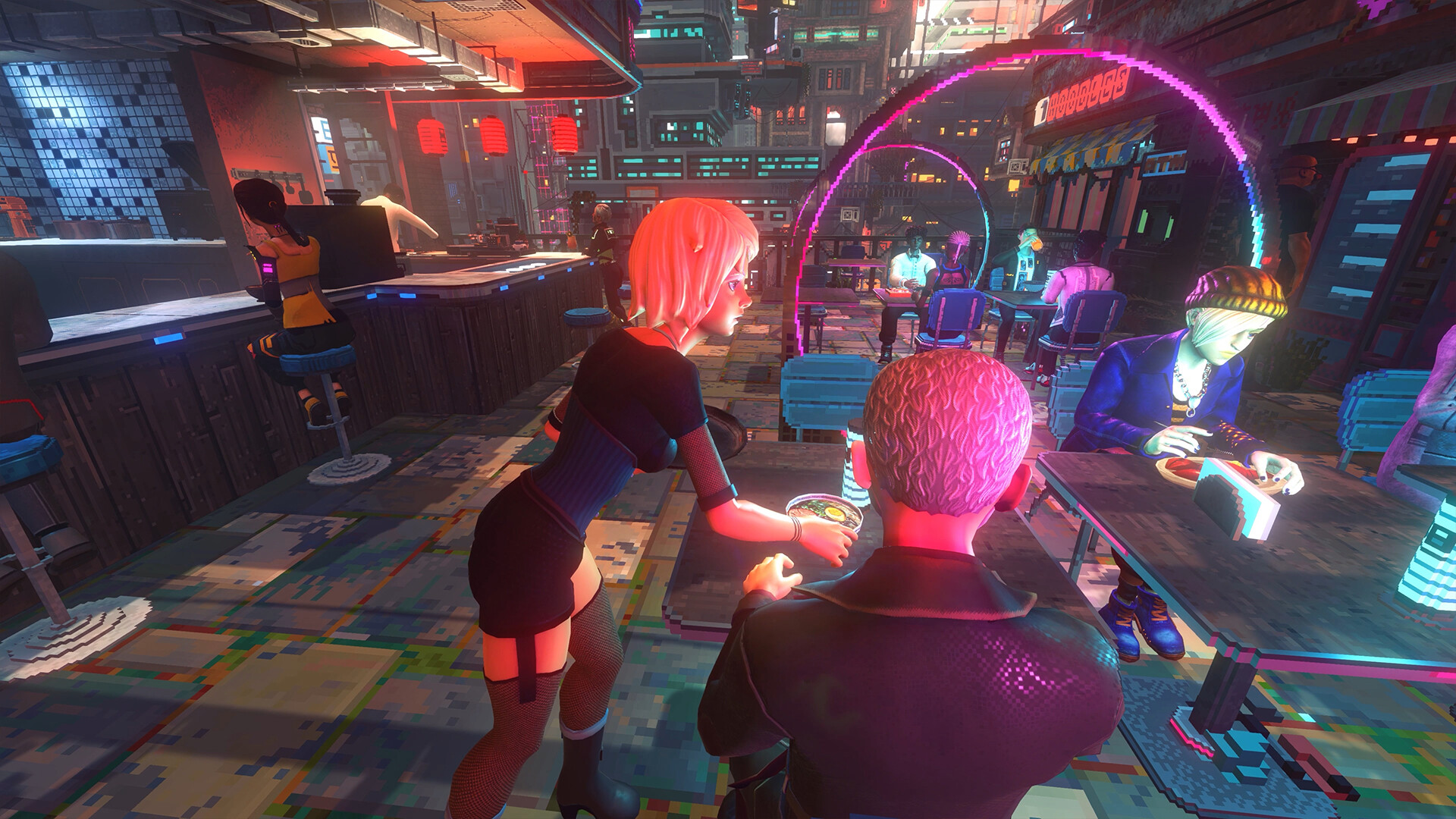
Nivalis Nights is a first-person slice-of-life sim set in Nivalis, the vertical cyberpunk city that ION LANDS built for Cloudpunk. You play a newcomer with a modest apartment and bigger plans. The stated arc runs from a humble noodle stand to owning the city's top restaurants and premier nightclubs, and everything you do in between is a choice about how your day gets spent.
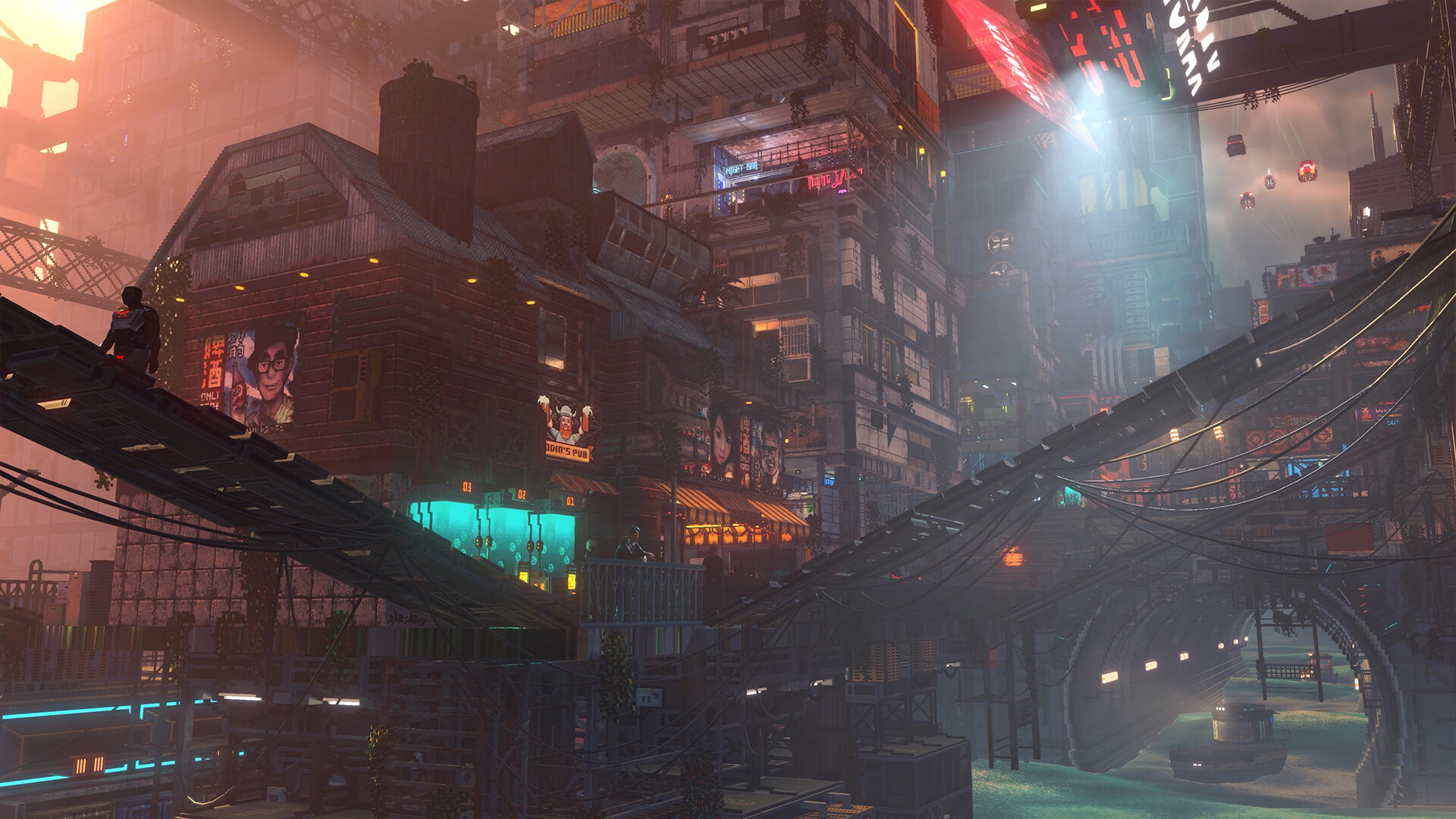
The city itself carries the premise. Nivalis stretches from ocean districts up into the clouds, and your district is under pressure from CorpSec crackdowns while a mysterious serial killer works the news cycles. A curfew locks the city down at night, and that curfew is where the cozy surface cracks: under its cover you can sabotage rivals, and what you do to them can be done to you.
ION LANDS ships this one with 505 Games publishing, and the Steam page carries a September 29, 2026 release date. The studio's previous game, the delivery sim Cloudpunk, built its reputation on vertical cityscapes and quiet conversations with strangers, and the fan wiki and Reddit community carried that momentum into this sequel-adjacent project. The original title was announced as Nivalis; the player-facing name is now Nivalis Nights, so older articles using the short title still point at the same Steam app, 1488490.
Target audience: players who want a management layer under their city vibes. If you liked the mood of Cloudpunk but wanted to own something instead of delivering for it, this is that game. It is single-player, playable at your own pace, with no timed input demands. If you want combat or high-stakes action, the only danger here is what you choose to risk after curfew.
| Fact | Detail |
|---|---|
| Developer | ION LANDS |
| Publisher | 505 Games |
| Genre | Life sim, business management, adventure |
| Platform | Windows (Steam) |
| Release | September 29, 2026 |
| Price | To be announced |
| Players | Single-player |
| Setting | Nivalis, a vertical cyberpunk city from ocean to cloudline |
| Core loop | Run venues, grow relationships, decide how each day is spent |
| Businesses | Noodle stands, ramen bars, restaurants, nightclubs |
| Side activities | Boat travel, fishing, home decorating, chess tournament |
| Risk layer | Curfew, security systems, rival sabotage, retaliation |
| Controller | Full controller support, camera comfort options |
| Save | Save Anytime, Steam Cloud |
| Languages | 11 including English audio, full CN/JP/KR/PT-BR text |
| Min specs | Win 10/11, 16 GB RAM, 6 GB VRAM GPU, 30 GB storage |
| Recommended | GTX 2070 or newer with 8 GB VRAM, SSD, DirectX 12 |
What Makes Nivalis Nights Different From Cloudpunk
Cloudpunk put you in a delivery driver's seat and let you listen to the city. Nivalis Nights hands you keys instead of a route. The studio's own news posts frame it as "a day in the life" where what you do and when you do it stays entirely up to you, at your own pace.
How to Play: The Daily Loop and Where to Start
Three structural differences from Cloudpunk matter:
- Ownership. You climb from noodle stand to nightclubs. Your venues, your ingredients, your staff decisions.
- Persistent social stakes. Residents remember you. Relationships, friendships, and romance tie into the city network instead of sitting in side-dialogue.
- A risk layer the first game never had. Curfew turns night into a decision. Sabotage a rival and the security systems become your problem. Retaliation flows both ways.
The serial killer thread and CorpSec crackdowns give the city a background tension. Official material has not detailed how either intersects with your businesses, so treat both as atmosphere until launch shows otherwise.
The Daily Loop: How a Day Breaks Down
Every system ION LANDS has announced competes for the same day. The practical skill at launch will be priority management. A day can plausibly contain:
- Preparation. Check ingredient stock, plan menus, set up your apartment or grab gear from home storage.
- Business hours. Open the noodle stand or venue, serve customers, manage the flow.
- City errands. Buy or grow ingredients, deliver supplies, meet someone who matters.
- Social time. Friendships and stories advance through the people you meet. Some of them are customers. Some become something else.
- Home time. Decorate, customize, or work on a friend's place.
- Night risk. After curfew, the city belongs to security systems and anyone willing to break the rules. Sabotage lives here.
Food anchors the economy. The studio's menu preview named dishes like Cola Chicken, Summer Salad (strictly seasonal, banned the rest of the year), Meridian Pizza, and VegCoffee, spread across categories: meat, fish and seafood, salads, sandwiches, pizza, soups, desserts, snacks, and drinks. Recipes plus the right ingredients decide what you can offer, and offering the right variety affects both wallet and customer experience.
Ingredient Strategy Before Launch
Two supply paths exist: buying and growing. The economic logic each creates differs.
- If buying is cheap and instant, expansion beats farming. Reinvest revenue into the next venue.
- If growing is cheap but slow, a stable home supply may outperform sticker revenue. Stability wins because spoiled nights and stockouts cost more than margin.
- Fishing may be a third path if catches feed food businesses. Watch for whether fish is an economy input or a collection activity at launch.
No revenue formulas, staffing rules, or menu prices are public yet. Any money guide written before September 29 is guessing. The first week of real play should answer the only question that matters: which activity converts time into progress fastest, and which one just looks busy.
Business Progression: Noodle Stand to Nightclub
The venue ladder is the spine of the game. Official text confirms three tiers by name:
| Tier | Venue | What it likely demands |
|---|---|---|
| Entry | Noodle stand | Small menu, cheap ingredients, fast service, low overhead |
| Mid | Ramen bars, restaurants | Recipes across categories, supply planning, staff |
| Top | Premier nightclubs | Reputation capital, city connections, higher risk exposure |
Expectations to carry into launch:
- Each tier should gate on more than money. A nightclub that sells the same bowls as your noodle stand would make the ladder decorative. Watch for reputation, relationship, or story gates.
- Menu breadth matters mid-game. The category list is wide, and the official food post stresses matching variety to customer experience. A restaurant with four dishes is a noodle stand with chairs.
- Nightclubs sit closest to the curfew economy. Nightlife and a night curfew share a clock. How the game resolves that tension is the single most interesting design question going into release.
Getting Around: Boats, Districts, and the Vertical City
Nivalis spreads across multiple districts, and the studio's Q&A series dedicated an entire video to travel. Confirmed options:
- On foot for street-level errands and venue work.
- Your own boat for water routes between districts, with fishing available on the water.
- Vertical transit through the layered city, from ocean districts up toward the cloudline structures.
Boat ownership is listed as a feature, not a taxi service. That distinction usually means travel routes matter: a district reachable faster by water may as well not exist for a player who never bought the boat. Early money priorities should treat the boat as infrastructure, not a toy, if district errands and fishing both feature in your day.
Relationships: Friends, Customers, and Romance
The social layer is systemic, not decorative. Official feature text links the people you meet to stories, relationships, friendship, customers, enemies, and romance, all inside the same city network.
What that means in practice:
- A resident can be both a customer and a friend. Serving their table and their storyline uses the same interaction.
- Choices are remembered. The studio's Q&A material repeats that every decision shapes your influence, and the Steam description warns that influence grows with every choice.
- Romance exists. Thresholds and route details remain unknown pre-launch.
A practical launch habit: when a new character appears, note where they connect. Someone who only exists in one venue is scene dressing. Someone who appears across districts, mentions your business, or reacts to curfew events is part of the network, and those people reward investment.
Curfew, CorpSec, and Sabotage
The risk layer deserves its own plan because it is the only system that can take things away from you.
Official text is specific about the shape of it: during curfew you avoid security systems and can commit sabotage against competitors, and the description ends with a warning that what happens to them can happen to you. Retaliation is confirmed as a mechanic by the game's own store copy.
Tips and Tricks: Priority Management for Launch Week
Working principles until launch details arrive:
- Sabotage is a tempo play. Slowing a rival matters most when they are about to pass you. Early-game sabotage risks retaliation while you have nothing to defend with.
- Security systems are the cost curve. Getting caught is the stated downside. Whether the penalty is fines, business damage, or story consequences changes the whole calculus, and that is a first-week answer.
- CorpSec crackdowns set the mood. A district already under crackdown pressure may run stricter curfew enforcement. Treat increased patrol presence as a signal to stay home.
- The serial killer thread may intersect with night activity. Being out during a killing spree window is speculative, but the city's background crime and your night activity share a clock by design.
The safe pattern is asymmetry: take night risks when the upside is concrete (a rival's grand opening, a supply shortage you can exploit), stay in when the upside is vague.
Side Activities: Fishing, Chess, and Home Decorating
Three side systems carry their own loops:
- Fishing works from your boat. If catches feed restaurants, it is an economy activity. If not, it is a mood activity. Both are fine; budget day time accordingly.
- The chess tournament is a high-stakes mini-game against NPCs. Mini-games also exist as challenges you can take from residents. Tournament stakes have not been detailed, but "high-stakes" plus a prize structure suggests it gates something.
- Home decorating covers multiple homes, plus customizing spaces for friends. Expect storage, recovery, or social functions from a life sim this size; if it turns out purely cosmetic, the feature list would say so.
The realistic advice for launch week: sample each side loop once, measure what it pays in money, relationships, or access, and then decide which two earn a permanent slot in your daily rotation. A day that tries to do everything finishes nothing.
System Requirements and Performance
The official minimum spec is unusually demanding for a life sim, mostly because of the vertical city rendering:
| Spec | Minimum | Recommended |
|---|---|---|
| OS | Windows 10/11 64-bit | Windows 10/11 64-bit |
| CPU | AMD / Intel CPU | AMD / Intel CPU |
| RAM | 16 GB | 16 GB |
| GPU | Dedicated card, 6 GB VRAM | GTX 2070 or newer, 8 GB VRAM |
| DirectX | Version 11 | Version 12 |
| Storage | 30 GB | 30 GB, SSD |
| Input | Controller or keyboard + mouse | Controller or keyboard + mouse |
Two things to note:
- 16 GB RAM is the floor. Players on 8 GB machines will want to upgrade before launch, not troubleshoot after.
- The SSD note appears only under recommended. The city streams a lot of geometry across vertical layers, and an HDD install is the first suspect if you see asset pop-in on the cloudline tiers.
Accessibility support is visible in the Steam features list: camera comfort options, custom volume controls, playable at your own pace, and no timed input requirements. Save Anytime plus Steam Cloud means a day can end wherever you want it to.
Language Support and Accessibility
Steam lists eleven languages. English carries full audio support. Interface and subtitles cover French, German, Spanish (Spain), Japanese, Korean, Portuguese-Brazil, Russian, Simplified Chinese, Traditional Chinese, and Turkish.
For a management-heavy game, interface language matters more than audio, because menus, recipe lists, and relationship text carry the decisions. Chinese and Japanese players get full text support on day one, which matters given the game's strong wishlist presence in those regions.
Full controller support is confirmed, and the features list calls out DualSense support. No console version is listed yet; 505 Games mentions a later Epic Games Store release without a public date.
Launch Roadmap: What to Watch Before September 29
The studio's news cadence gives a checklist for the final weeks:
- Q&A video series. ION LANDS has released episodes on what the game is, what you can do, and how travel works. Expect more before launch; each one answers a system question without a press cycle.
- Food and menu deep dives. The menu post came three weeks before launch. Recipe or staffing posts would fill the last economy gaps.
- A day-in-the-life walkthrough. The most recent news post walks a typical day from your first apartment. Comparing it against real gameplay in week one will show exactly where time pressure lives.
- Price reveal. Still unannounced. The store page is the only source that counts.
- Launch-window patch notes. Save Anytime plus a city sim usually means a day-one stability patch. Check the news hub before reporting performance issues.
FAQ: Frequently Asked Questions
When does Nivalis Nights release? September 29, 2026 on Steam. Japanese store pages may show September 30 because of time zones.
Is it related to Cloudpunk? Same city, same studio. ION LANDS built Nivalis for Cloudpunk, and this game returns to that city with an ownership fantasy instead of a delivery job. The project was originally announced as Nivalis and renamed Nivalis Nights.
Is there a demo? No demo is listed on the Steam page as of this writing.
How much will it cost? Unannounced. Watch the store page.
Is it multiplayer? No. Single-player only.
Can I play with a controller? Yes, full controller support including DualSense, with camera comfort options.
Does it have achievements? Yes, Steam Achievements are listed, plus Steam Cloud and Family Sharing.
What are the consequences of sabotage? The official description confirms retaliation: what you do to rivals can be done to you. Exact penalties are unknown pre-launch.
Will it come to consoles? No console version is listed. 505 Games notes a later Epic Games Store release with no public date.
How big is the download? 30 GB of storage space, per the official requirements.
Quick Reference Card
| Question | Answer |
|---|---|
| Release date | September 29, 2026 (Steam) |
| Developer / Publisher | ION LANDS / 505 Games |
| Genre | Cyberpunk life sim, business management |
| Venue ladder | Noodle stand → ramen bars/restaurants → nightclubs |
| Supply paths | Buy, grow, possibly fish |
| Social systems | Friendship, customers, enemies, romance, stories |
| Night layer | Curfew, security systems, sabotage, retaliation |
| Side content | Boat travel, fishing, chess tournament, home decorating |
| Save system | Save Anytime + Steam Cloud |
| Controller | Full support, camera comfort, no timed input |
| Min GPU | 6 GB VRAM dedicated |
| RAM | 16 GB |
| Storage | 30 GB, SSD recommended |
| Languages | 11, English audio |
| Price | TBA |
Screenshots