Daily Pick
One deeply researched guide worth reading today.
A practical route through the systems that matter most, written to help new players make confident decisions quickly.
Overview: What Kind of Game Is Danchi Days?
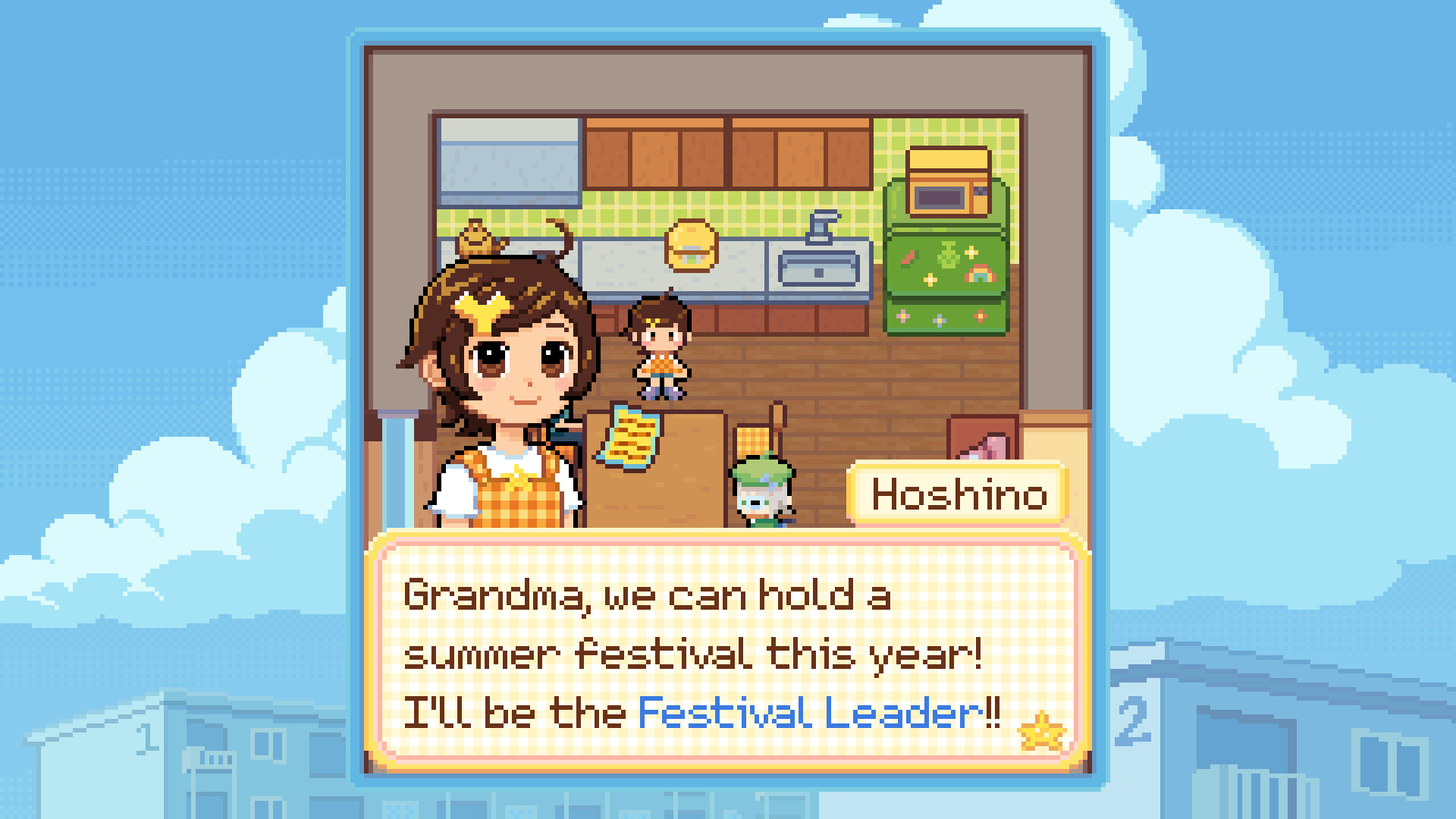
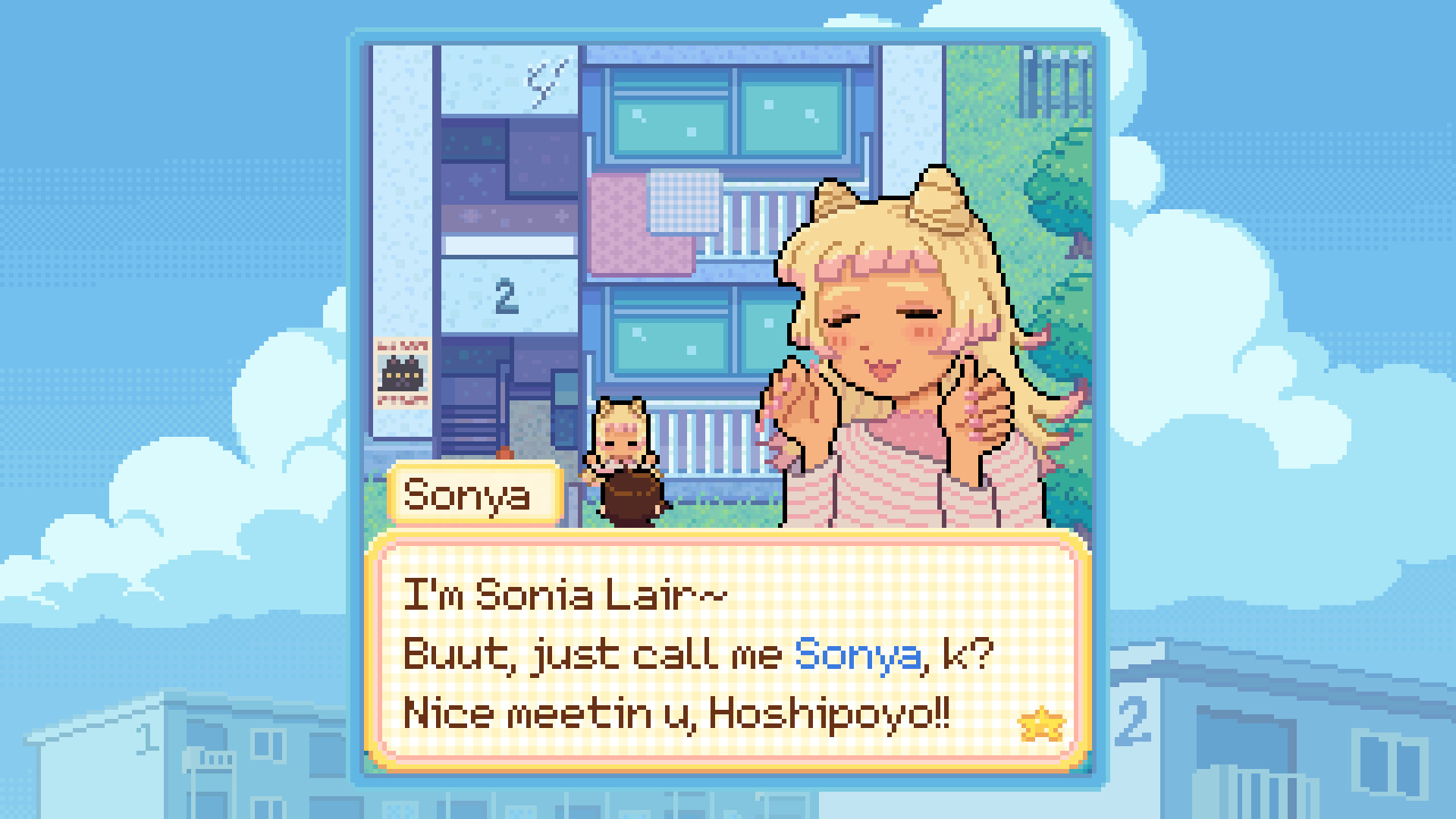
Danchi Days is a comedic-yet-bittersweet slice-of-life adventure set in a 2000s Japanese danchi (mass housing complex), from developer gingham games and publisher Analgesic Productions. It launches on Steam October 29, 2026, with a free demo (Chapter 1) available now. You play Hoshino Kanaoka, a 12-year-old who moves back to her hometown to live with her grandma, now living with dementia. To cheer her up, Hoshino decides to revive the local summer festival by inviting her quirky neighbors.
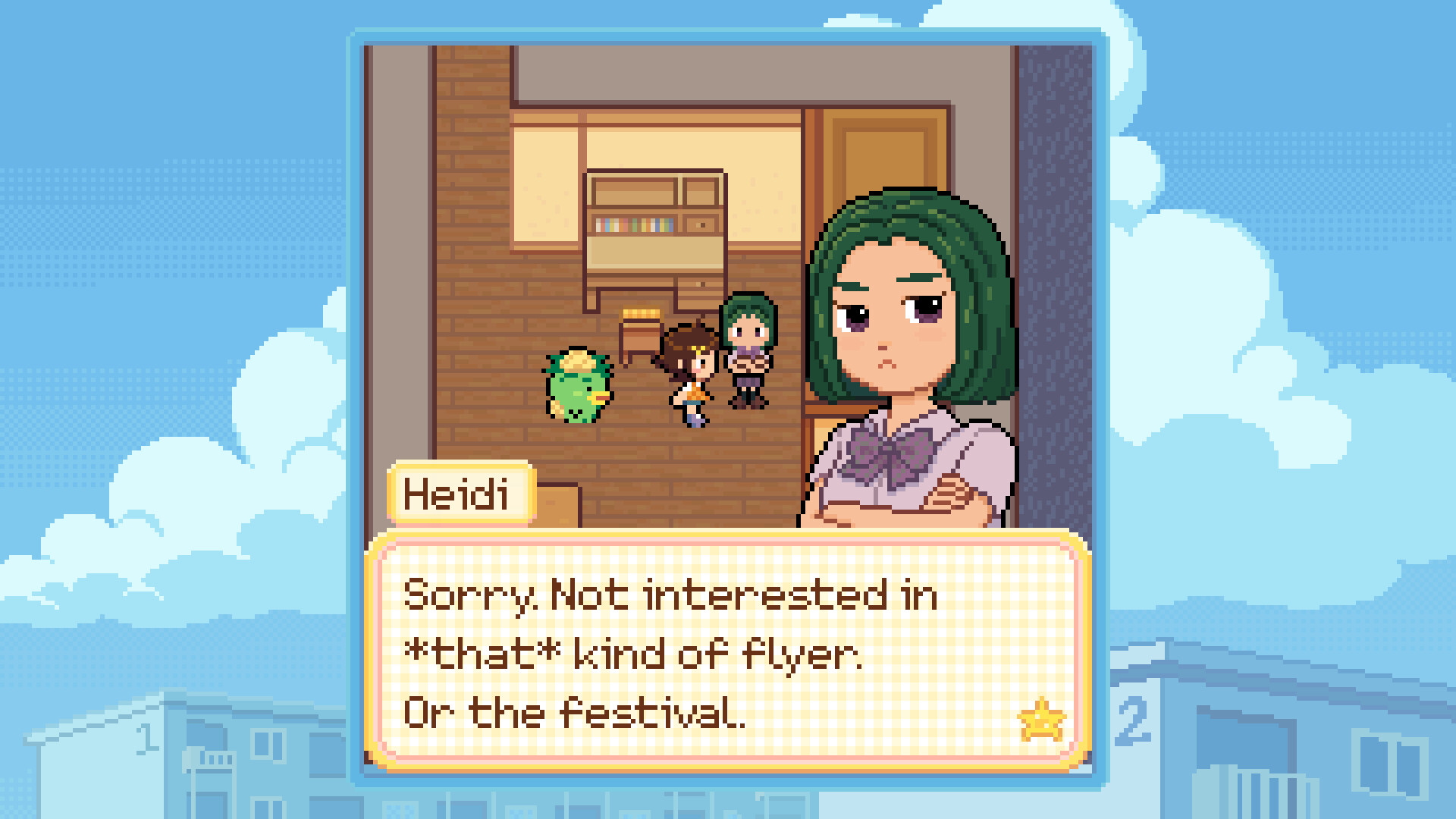
The game's emotional register is unusual: it is funny, warm, and unflinching. Neighbors range from friendly seniors to grumpy high-schoolers, and the game says plainly that "anger and sadness are as much a part of the danchi as joy and laughter." The in-game internet has darker corners, and the story asks you to uncover forgotten truths about Hoshino's neighborhood. This is not a pure cozy game, it is a cozy surface over a bittersweet core.
The team gives the game pedigree. sandy powder writes the story in Japanese and co-designs; Melos Han-Tani (Anodyne 1+2, Even the Ocean, Sephonie, Angeline Era) handles programming, music, game design, and English translation; mogumu is the artist. That combination, strong narrative writing plus an experienced indie designer, shows in the demo's confident pacing. The game is semi-autobiographical, drawn from the developers' own years living in a real danchi.
Who is this for? Players who liked Anodyne's surreal melancholy, Night in the Woods' small-town character work, or Yume Nikki-style exploration with a story anchor. If you want a gentle game about community and memory, with minigames and an in-game internet to explore, Danchi Days fits. If you need combat or high-stakes gameplay, this is a narrative adventure, not an action game.
| Field | Detail |
|---|---|
| Genre | Slice-of-life adventure / narrative |
| Developer | gingham games (sandy powder, Melos Han-Tani, mogumu) |
| Publisher | Analgesic Productions |
| Platform | Windows, macOS, Steam Deck (Steam) |
| Price | $14.99 (10% launch discount at release) |
| Players | Single-player |
| Release | October 29, 2026, 8 AM PST / 3 PM UTC (Oct 30 JST in Japan) |
| Languages | English, Japanese, Simplified Chinese |
| Controller | Full controller support (DualShock, DualSense, keyboard-only option) |
| Save | Save anytime, Steam Cloud |
| Accessibility | Camera comfort, color alternatives, no timed input required, text speed option |
| Steam | store.steampowered.com/app/3107530 |
| Demo | store.steampowered.com/app/3312850 |
| Website | danchidays.com |
The Premise: One Summer, One Festival, One Danchi
Hoshino Kanaoka, a lively and headstrong 6th grader, lived in the USA for five years because of her dad's job. Now she and her dad have moved back to her Japanese hometown, a danchi named Another Danchi, to live with her grandmother, Kimiko. Kimiko is a former kindergarten principal who once led the organization of the summer festival. She has been living with dementia for a few years.
Hoping to cheer her up, Hoshino decides to revive the local summer festival by inviting her neighbors. Along the way she uncovers forgotten truths about the danchi, overcomes opponents who stand against the festival, and explores the everyday world of her neighborhood.
The emotional arc is deliberate: the festival is both a literal goal and a metaphor for memory and community. As you play, you learn the many connections Kimiko made around the danchi, and what the neighborhood meant before the dementia. The demo's mid-point pulls a sharp tonal shift that lands hard, so do not mistake the opening warmth for the whole story.
The Cast
| Character | Role |
|---|---|
| Hoshino Kanaoka | The protagonist. A lively, headstrong 6th grader, full of optimism, determined to talk to every neighbor and revive the summer festival. Her mother is gone, and her dad is often away, which drives her need to rebuild a family around herself. |
| Kimiko Kanaoka | Hoshino's grandma. Former kindergarten principal who once led the summer festival. Living with dementia. When she was healthy, Hoshino and Rio learned all sorts of things from her. |
| Rio Isshiki | Hoshino's close childhood friend, born and raised in Another Danchi, and a computer expert. Distant since Hoshino returned. Something happened while she was gone. Rio is a friend, not a relative, the game went out of its way to clarify. |
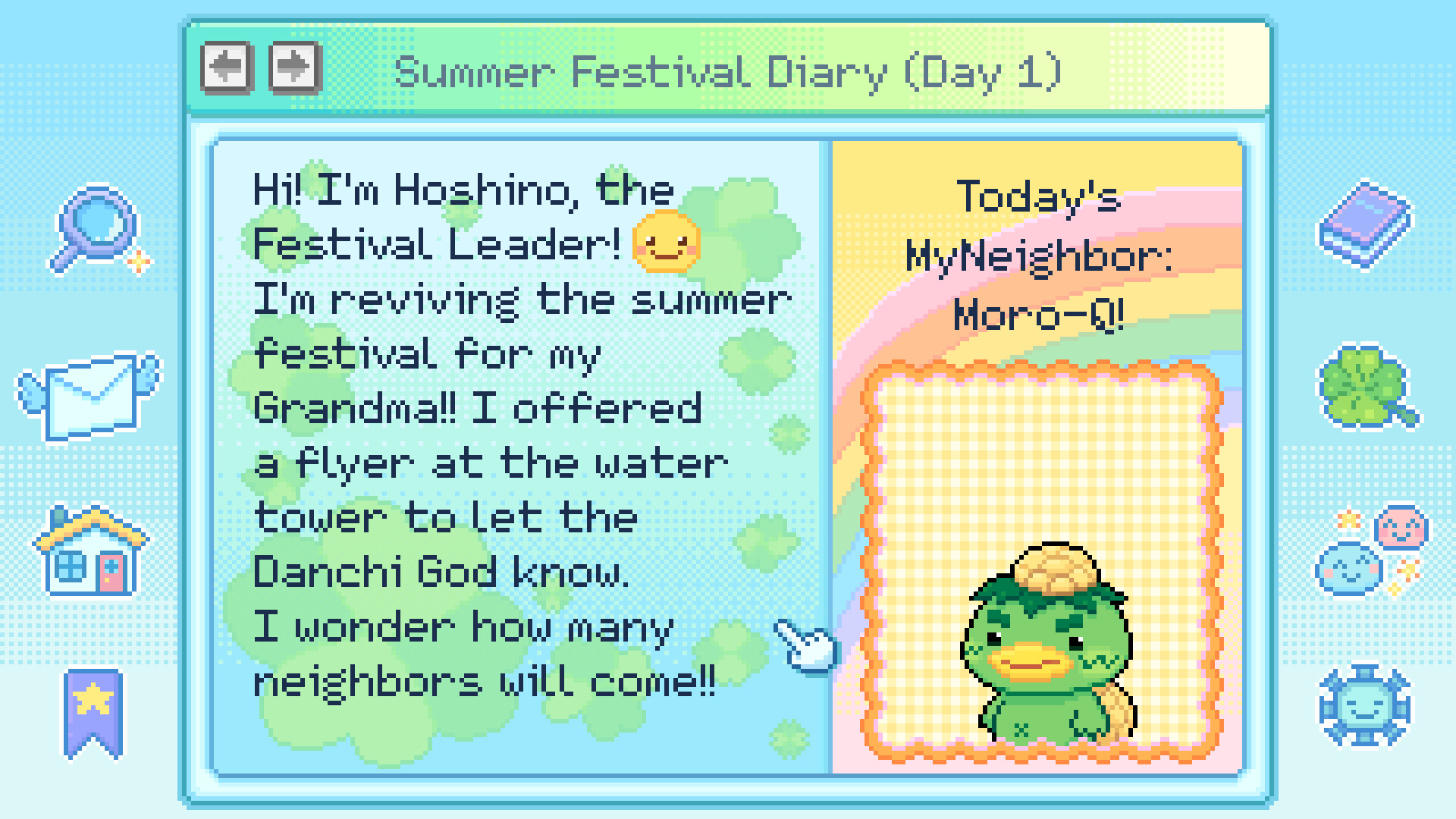
| Moro-Q | A kappa sidekick and avid poet who suddenly appeared to help organize the festival. Helps Hoshino find the five offerings needed to revive it. Remembers little of his past, and his amnesia is a slow-burn reveal. |
The neighbor roster is the game's texture: friendly seniors who love to chat, grumpy high-schoolers hoping to escape, adults just trying to get by. Each shows a different facet of danchi life, from the thrilling to the mundane.
Getting Started: Your First Hour
The demo (Chapter 1, free on Steam) is the definitive way to start. It covers the setup: Hoshino's return, meeting the cast, and the first steps of the festival quest. Expect 60 to 90 minutes for a normal playthrough, longer if you sweep everything. Demo saves do not carry into the full game, so treat the demo as training.
Your first loop, in order:
- Settle into the danchi. Get your bearings in the housing complex and meet the first neighbors. The game opens with the PC cursor hidden; press ESC to bring it back.
- Meet Moro-Q. The kappa sidekick appears early and explains the festival quest: find the five offerings.
- Talk to everyone, twice. Danchi Days rewards thorough social exploration. Neighbors open up over multiple conversations, and the second pass is where quest content starts.
- Try NeighborNet early. Rio is a computer expert, and the game's web is a real exploration surface, not a menu with three links.
- Play your first Sense Games. The minigames are where the game's humor lands: smell trees, hug plushies, listen to toilets, collect condensation from iced tea.
- Track the 13 RSVPs. In the demo, thirteen neighbors can be convinced to attend. Some of the hardest ones are found through the internet.
Beginner mistakes to avoid:
| Mistake | Why It Hurts | Fix |
|---|---|---|
| Rushing past neighbors | First contact opens conversation; repeated contact opens the quest | Talk to everyone multiple times per visit |
| Skipping the internet | The web holds neighbor secrets and darker corners | Browse every site; some pages matter |
| Ignoring Sense Games | Minigames are the festival's currency-gathering loop | Play every one you find |
| Expecting a happy-only tone | The story has real sadness; the game is honest about it | Let the bittersweet moments land |
| Treating it as a linear quest | Exploration and revisits matter | Return to areas after story beats |
| Burning through Sense Game steps | Each minigame runs on a step budget | Plan your grid moves, do not wander |
Core Mechanics Explained
The Festival Revival Quest
The spine of the game. Hoshino wants to revive the summer festival, which needs neighbors to participate and five offerings to be found. Moro-Q helps locate the offerings, which are scattered through forests and buildings.
The full game asks you to persuade roughly 100 residents to attend, gathering clues about their "quirks and desires." The demo covers the first thirteen. Each neighbor you invite adds a story thread, each offering advances the ritual, and each opponent who stands against the festival creates the game's conflict.
The loop is always the same shape: talk to a neighbor, hit a wall, find the missing context (usually online or in the world), return with new dialogue options, and close the invitation.
Sense Games: The Minigame System
Sense Games are the game's humor delivery system and its interactive texture. Hoshino hopes to become a "Sense Master" by focusing in on the mundane world around her. Little sparks appear in various, sometimes quirky, places to kick off a minigame. Those sparks are your signal to stop and interact.
Every Sense Game shares one rule: Hoshino's head sits on a grid, and within a certain number of steps you must complete the task. Movement consumes your step budget, so plan your path before you start walking. The demo adds a numeric display of your remaining Focus during each Sense Game, so you always know exactly how much budget you have left.
Known Sense Games:
| Sense Game | What you do | Strategy |
|---|---|---|
| Smell trees | Bump into trees and take in their scent | The scent hides clues: a mosquito's presence, a story behind the smell |
| Hug plushies | Embrace stuffed animals found around the danchi | Plushies appear in unexpected places; some gate dialogue |
| Listen to toilets | Press your ear to the plumbing | The game's most absurd gag; consistently funny |
| Poop-pipe notes | Hit enough notes emitting from a poop emoji going down a pipe | Rhythm task; hit notes early, do not chase them |
| Iced-tea condensation | Collect beads of condensation from the side of a cup | Move in a spiral around the cup to catch beads efficiently |
| Water droplets | Form large enough droplets on the side of a cup | Time your taps; bigger droplets merge faster |
| Festival prep games | Various mini-challenges tied to the festival | The currency-gathering loop for the revival quest |
Gold stars are awarded for clean Sense Game runs. You can earn them in the demo, and replaying a game after you understand its pattern is the way to get them. A player who clears the grid with steps to spare gets the star; one who wanders does not.
NeighborNet: The In-Game Internet, Explained
The standout mechanic has a name: NeighborNet. Hoshino's dad built a special kind of internet just for the danchi's neighbors, and the demo gives you a real browser to explore it with. This is not a menu with three links; it is a diegetic web with search keywords, pages, and hidden corners that update as the story moves.
How it works: you type keywords into the search box, and matching pages appear. Some keywords are handed to you by dialogue; others you infer from what neighbors say. The pages themselves are written like a 2000s-era web, with low-res layouts, guestbooks, and personal sites. The game never marks pages as "important," so the browser rewards genuine curiosity.
What the web is for:
| Use | Why it matters |
|---|---|
| Learn neighbor secrets | Pages reveal the context a neighbor will not say aloud |
| Unlock dialogue options | Browsing knowledge opens persuasion paths direct talk cannot |
| Find the darker corners | Some sites are malevolent; the story's mystery lives there |
| Track the festival | News pages and local sites update as the festival campaign progresses |
| Find hidden neighbors | At least one RSVP target is only reachable through a neighbor's personal site |
Browser habits that pay off:
- Search every name you hear. Neighbors, the grandma, even the kappa. Personal pages exist for more people than you expect.
- Re-search after every story beat. Sites update; an old keyword can surface a new page once the plot moves.
- Follow the links. Pages link to each other like the real web, and the linked page is often the one that matters.
- Do not ignore the unsettling pages. The game warns some websites are malevolent, and that warning is a hint, not flavor text.
- Note what you cannot find yet. If a search returns nothing, that is information too. It means the page unlocks later.
The demo's NeighborNet includes searchable keywords tied to the opening cast, and the full game expands the web considerably. Treat the browser as a second character: it knows things no one in the danchi will say.
Step-by-Step: Chapter 1 (Demo) Walkthrough
The free demo covers Chapter 1 and is the best way to prepare for launch. The intended sequence:
- Arrive at Another Danchi. Get your bearings in the housing complex, meet the first neighbors, and let Hoshino's setup land. Remember: ESC brings back the PC cursor.
- Meet Moro-Q. The kappa appears early, explains the five offerings quest, and becomes your festival guide.
- Sweep the danchi twice. First pass introduces everyone; second pass opens real conversation content. The grumpy characters are the ones with the longest arcs.
- Open NeighborNet. Search the names you have heard. Pages about the grandma and the neighbors unlock context you will need.
- Play your first Sense Games. Smell a tree, hug a plushie, listen to a toilet. The humor is the point, but completion matters.
- Hunt the 13 RSVPs. Keep a mental list of who has said yes. If you are stuck at twelve, the missing neighbor is on the internet: explore Pete's site to find the blue guy with the bandana.
- Solve the Daley lock. Daley tells you to check his homepage and message him with the link he provides. He emails back that you "lack an aura," then refuses to RSVP. The fix is not more talking: something needs to happen to Hoshino first. Explore the danchi, especially the forest area, then return and talk to him again.
- Track the offerings. Follow Moro-Q's hints in order. The offerings sit in forests and buildings, and the intended order matches how areas unlock.
- Revisit after each story beat. New dialogue, new pages, and new Sense Games appear as the chapter progresses.
- Reach the chapter's festival milestone. The demo ends at a natural breakpoint that sets up the full release.
Advanced Strategies
The Double-Talk Rule
Talk to every neighbor at least twice per area visit. Danchi Days fronts its character work with first-contact dialogue, then opens real quest content on the second or third conversation. The neighbors who seem grumpy or closed off are usually the ones with the longest story arcs.
Browse Before You Ask
When a neighbor refuses the festival invitation, check the internet before pushing harder. The game's web holds the context you need: a neighbor's secret, a past connection, a warning. Knowledge from browsing often unlocks dialogue options that direct persuasion cannot. The Daley puzzle is the purest example: no amount of conversation moves him until you have done the thing in the world that changes Hoshino.
The Five Offerings Order
Let Moro-Q's hints sequence your offering hunt. The offerings are spread across forests and buildings, and the game's intended order matches how areas unlock. Rushing ahead wastes time; following the kappa's poetry keeps you moving efficiently.
Sense Game Step Discipline
Every Sense Game runs on a step budget. Before you move, look at the whole grid and pick the shortest path that touches every target. In the condensation game, spiral around the cup instead of crossing back and forth. In the note game, position yourself where the notes converge rather than chasing each one. Clean runs are what earn gold stars.
Revisit After Every Beat
After each major story moment, sweep the danchi again. New dialogue, new internet entries, and new Sense Games appear as the festival campaign progresses. The game's density rewards the completionist sweep. If a search keyword returned nothing earlier, try it again after the next story event.
Use the Settings Early
Open the settings menu on your first session (there is a dedicated button that works outside conversations). Bump the text speed up; the default is slow, and the June 2025 patch added the option after player feedback. If the screen cuts off on your display, adjust it before you start exploring, some early players reported a weird first boot until they fixed their screen bounds.
Settings, Controls & Accessibility
| Setting | What it does | Recommendation |
|---|---|---|
| Text speed | Controls dialogue scroll rate | Set to fast; dialogue is dense |
| Camera comfort | Reduces camera motion | Enable if you feel motion sickness |
| Color alternatives | High-contrast color options | Enable if you need them |
| Timed input | The game is playable without timed input | Leave on if you want pure chill |
| Controller | Full DualShock/DualSense/keyboard support | Pick whatever feels natural |
Controls: Move with WASD or the left stick. Interact with neighbors and objects. Browse the in-game internet with the mouse or controller. ESC toggles the PC cursor when playing with a mouse. Save anytime from the menu.
Save files live at:
- Windows:
C:\Users\<NAME>\AppData\LocalLow\Danchi Days Devs\Danchi Days\ - Mac:
~/Library/Application Support/Danchi Days Devs/Danchi Days/ - Steam Deck:
~/.local/share/Steam/steamapps/compatdata/3312850/pfx/drive_c/users/steamuser/AppData/LocalLow/Danchi Days Devs/Danchi Days/
If you get stuck in geometry, the developer's debug tool can rescue you: press Shift+D to enable debug mode, then hold C while walking to fly through walls. Turn debug mode off afterward.
Developer Background
Danchi Days is a collaboration under the gingham games banner:
- sandy powder, writes the story in Japanese and co-designs the game
- Melos Han-Tani, programming, music, game design, English translation. Known for Anodyne 1+2, Even the Ocean, Sephonie, and Angeline Era
- mogumu, artist
- Olivia and ume, English and Japanese marketing support
The Analgesic Productions publishing label has history with thoughtful indie narrative games. The combination of Han-Tani's design experience and sandy powder's Japanese writing gives Danchi Days its distinctive voice. The setting is semi-autobiographical, drawn from the developers' own time living in a danchi, which is why the details of neighbor life ring so true.
Demo vs Full Game
The free demo covers Chapter 1, the opening of the story: Hoshino's return, the first neighbors, and the festival setup. The full game releases October 29, 2026, in English, Japanese, and Simplified Chinese.
Note the release date differs by region: October 29 worldwide, October 30 in Japan (JST). The demo is available now on Steam and will stay up permanently, though it will be updated before release in a way that breaks old demo saves. Demo progress does not carry into the full game. The full game expands the cast, the NeighborNet web, the Sense Games catalog, and the festival campaign, with roughly 100 residents to persuade.
Progression Strategy
Danchi Days is narrative-driven, so progression is measured in people, not levels. The festival revival quest is the spine, and everything else feeds it.
What to prioritize, in order:
- The five offerings. Moro-Q's quest is the critical path. Each offering advances the ritual and unlocks the next area. Follow his poetry in order; the game's intended sequence matches how the map opens up.
- Neighbor invitations. Each neighbor you invite adds a story thread. Invitations fail until you have the right context, which usually comes from NeighborNet or a prior conversation.
- Internet research. When an invitation stalls, the answer is a page you have not opened. Browsing knowledge is the game's key system.
- Sense Games. The festival's interactive currency. Play them as they appear; they are the texture between story beats, and clean runs earn gold stars.
The festival campaign loop: talk to neighbors → hit an invitation wall → browse NeighborNet for context → return with new dialogue options → invite the neighbor → repeat. The loop is the game, and it is deliberately paced.
Common Mistakes & Gotchas
| Mistake | Why it hurts | Fix |
|---|---|---|
| One-pass dialogue | First contact only introduces; quest content comes later | Double-talk every neighbor per visit |
| Skipping NeighborNet | The web holds the context that unlocks invitations | Search every name you hear, then re-search after beats |
| Ignoring Sense Games | Some gate dialogue or festival progress | Play each one when found |
| Assuming a pure cozy tone | The story is honest about anger and sadness | Let the bittersweet moments land |
| Treating it as linear | Areas and pages change after story beats | Revisit everything after each beat |
| Searching the same keyword once | Sites update as the plot moves | Re-search old keywords after story progress |
| Spamming a stuck neighbor | Some locks need a world event, not more talk | Explore first (the forest), then return |
| Forgetting demo saves reset | Demo progress does not carry to the full game | Treat the demo as practice, not a head start |
Comparison With Similar Games
| Game | How it compares |
|---|---|
| Anodyne 1+2 | Same developer's surreal melancholy, same willingness to sit in uncomfortable feelings. Danchi Days is more grounded, less abstract. |
| Night in the Woods | Small-town character work and a festival at the center. Danchi Days trades crime plot for family memory and adds the internet gimmick. |
| Yume Nikki | Dreamlike exploration with a mystery core. Danchi Days keeps the exploration spirit but anchors it in a real place with real people. |
| Earthbound / Moon Remix RPG | Direct inspirations, especially in the GBA-style presentation and the everyday-as-adventure tone. |
| Hamtaro: Ham-Ham Heartbreak | The "hangoutable" neighborhood vibe; press has compared the two directly. |
| Sakura Quest | The festival-organizing premise and the pleasure of haggling with residents over mundane logistics. |
| Persona's social links | The invitation-and-context loop resembles social link progression, minus the combat and calendar pressure. |
| The World Ends with You / Neo TWEWY | The in-game internet as a story surface. Danchi Days' NeighborNet is gentler, but the "the web knows more than people say" trick is the same. |
FAQ
When does Danchi Days release? October 29, 2026 (October 30 JST in Japan). A free Chapter 1 demo is available now.
How much does Danchi Days cost? $14.99 USD (€15.49 / £13.75 / CDN$17.99), with a 10% launch discount at release. The demo is free.
What platforms is Danchi Days on? Windows, macOS, and Steam Deck via Steam. The Steam news confirms all three for the October 29 release.
Does Danchi Days have controller support? Yes, full controller support (DualShock and DualSense), with save-anytime, camera comfort, color alternatives, and a keyboard-only option.
What languages are supported? English, Japanese, and Simplified Chinese at launch.
Does my demo save carry over? No. The demo's save data does not carry into the full game, and the demo will be updated before release in a way that invalidates old demo saves.
How long is the demo? 60 to 90 minutes for a normal playthrough, more if you hunt all thirteen RSVPs and every Sense Game.
Is Danchi Days multiplayer? No. Single-player only.
What are Sense Games? The minigames. They might require you to smell trees, hug plushies, or listen to toilets, and they run on a step budget with gold stars for clean clears.
Is there an in-game internet? Yes, NeighborNet. You can browse the in-game web to learn about neighbors, but some websites are darker than others.
Who made Danchi Days? Developer gingham games (sandy powder, Melos Han-Tani, mogumu), published by Analgesic Productions.
Update History & Roadmap
| Date | What happened |
|---|---|
| Dec 2024 | First press coverage; game revealed as a GBA-style festival quest |
| Jun 6, 2025 | Demo released during Steam Next Fest / Wholesome Direct |
| Jun 2025 | Patches add text speed option, settings button, Focus display, controller feel fixes |
| 2025-2026 | Wishlist milestones: 20,000, then 30,000, then 35,000 with the Simplified Chinese logo |
| Jun 6, 2026 | Summer Game Fest appearances at Wholesome Direct and Story Rich Showcase |
| Aug 2026 | Release date announced: October 29. New trailer on the store page |
| Oct 29, 2026 | Full release on Steam for Windows, macOS, Steam Deck. $14.99 with 10% launch discount |
The demo (Chapter 1) remains free on Steam and covers the opening of the story. The full game expands the cast, the NeighborNet web, the Sense Games catalog, and the festival campaign. The team's stated plan is a single complete story at launch; no episodic content has been announced.
Final Tips
Browse before you ask. The in-game internet is Danchi Days' hidden key: it holds the neighbor secrets, the darker truths, and the context that unlocks festival invitations. When a conversation stalls, the answer is usually a page you have not opened yet. Let Moro-Q guide the offerings, sweep the danchi after every story beat, mind your step budget in Sense Games, and let the bittersweet moments land, the game is better when you do not rush it.
Verdict: 4.5/5 for narrative-adventure fans. A confident, funny, honest slice-of-life game with real emotional weight and an inventive internet mechanic. Buy it if you want character-driven storytelling with minigames; skip it if you need action gameplay.
Last reviewed by Game How To Editorial. We play each game, verify controls against official sources, and update guides when game mechanics change.