Official game
Play Debt of Life
This game is hosted by Steam. Continue to the official page to play or download it.
Play on SteamWhat Is Debt of Life?
Debt of Life is a short narrative game from RedWolf Games, released on Steam on September 28, 2026 for Windows. It costs $3.99 and takes about the length of a film to finish one run. The studio also sells it on itch.io, where the project started before the Steam launch.
The premise is one sentence long and it does all the work. You are rich, you have a home, you have a family, and you are dying. An expensive treatment buys you one more week at a time. Every day of that week asks you where the money will come from.
Sell the painting. Give away the thing your daughter loves. Accept help from a person nobody in the family trusts. And then there is The Visitor, a character who always has an offer, and whose offers are never simple.
This is not a management game with fail states or timers. It is a chain of choices, each one small enough to click through in seconds and heavy enough to sit with afterward. Player response has been strong for a game this small: 93% of the first fifteen Steam reviews are positive, and the reviews that exist mostly talk about one thing, how personal the decisions started to feel by the second week.
Debt of Life Details
| Detail | Info |
|---|---|
| Genre | Narrative adventure, life simulation |
| Developer | RedWolf Games |
| Publisher | RedWolf Games |
| Platforms | Windows (Steam, itch.io) |
| Price | $3.99 |
| Players | Single-player |
| Release | September 28, 2026 |
| Store ID | Steam app 5058740 |
| Length | One run of a few hours, multiple runs for other paths |
| Controls | Mouse only, no timed input |
| Achievements | 8 |
The Core Loop
The game runs on a two-tier clock, and understanding it is most of what you need to play well.
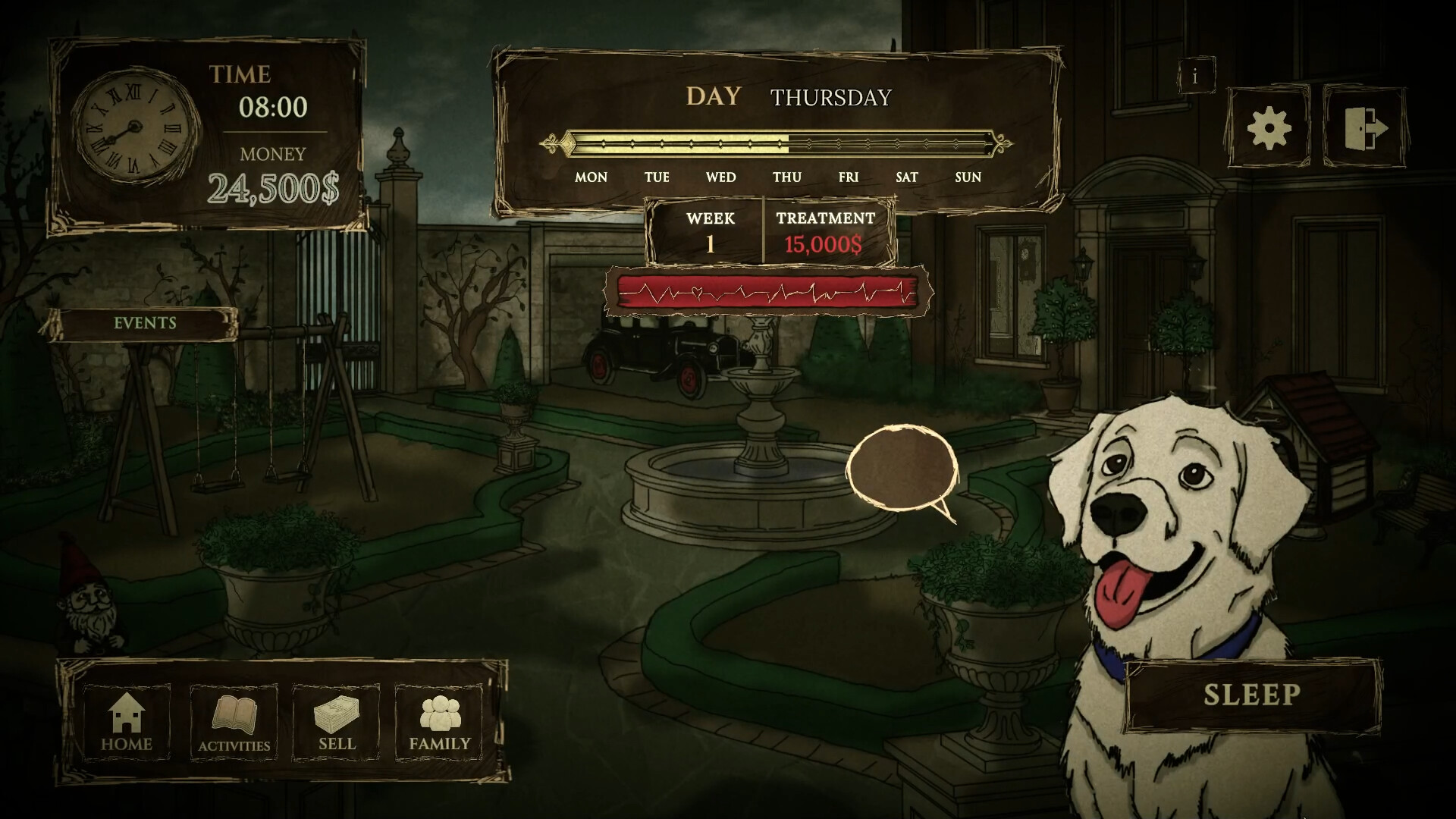
The week is the survival unit. Treatment is paid weekly. The moment you pay, you bought seven more days of story. The moment you cannot pay, the game starts moving toward its ending. Your whole strategy lives inside this rhythm: end every week with enough for the next payment, or be ready to accept what happens.
The day is the choice unit. Each day brings events, conversations, and opportunities. Some put money in your pocket. Some cost you something that never comes back. The game gives no warning about which is which, and that is deliberate. Debt of Life is testing whether you read the situation or just grab the cash.
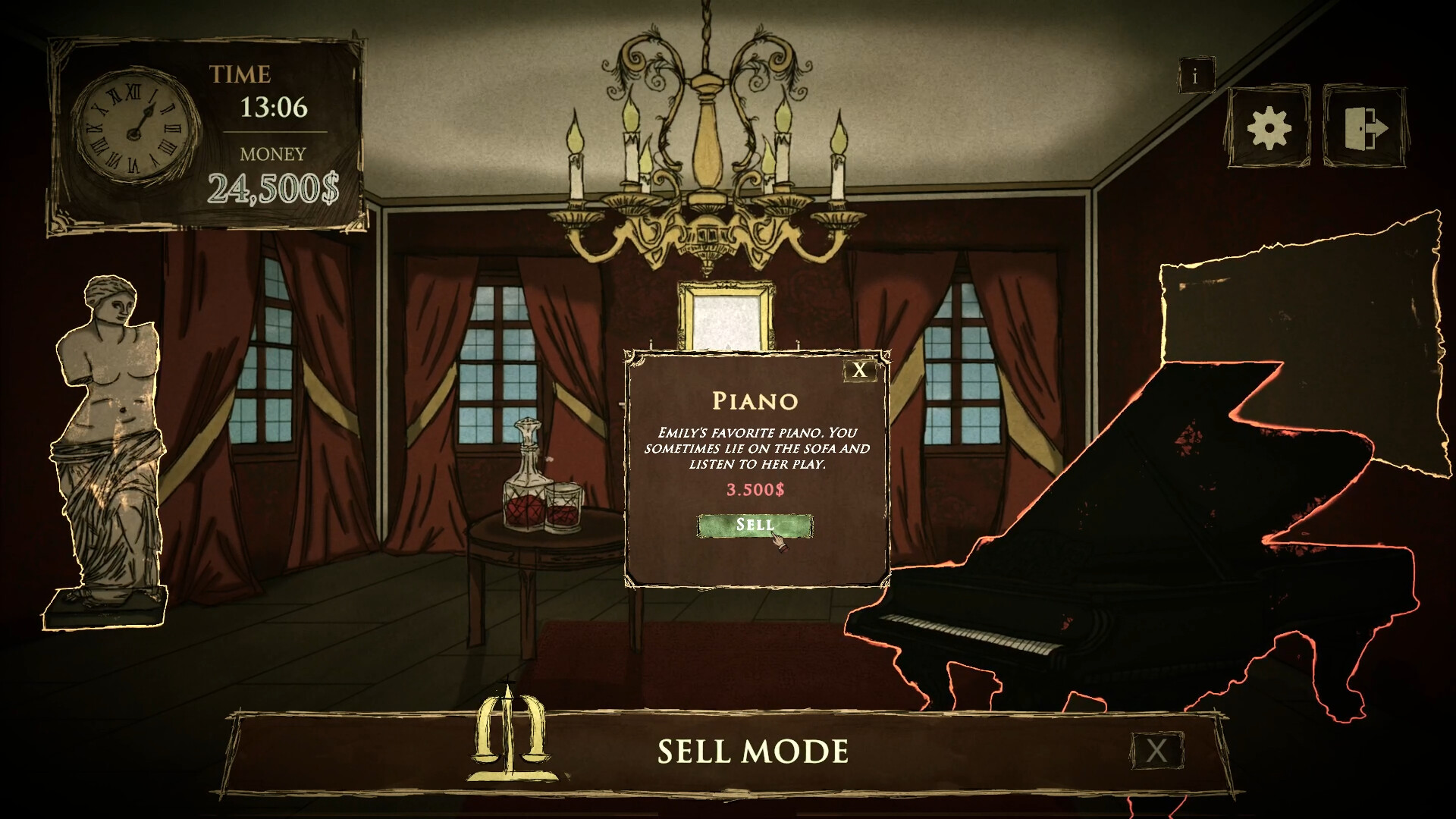
Your assets are the currency. Everything you own has a price if you are willing to sell it, and a cost if you are willing to keep it. The house, the objects, the things other people in the family care about. The inventory screen is really a relationship screen. Every item you sell changes how the story treats you later.
Getting Started: The First Days
The opening days set the tone and a few habits carry through every run.
Read before you click. The temptation in a choice game is to skim dialogue and pick the option that pays. The writing here is short enough that skimming saves nothing. A conversation that looks like filler often tells you which character will remember what you did.
Track what each choice actually trades. The game never shows a morality meter. Its ledger is quieter: who stopped visiting, what the house looks like, what you no longer own. Pay attention to those three things and you always know how your run is going.
Do not treat The Visitor as a scam option. The instinct is to refuse his offers because accepting help from an untrusted person is framed as a sacrifice. He is better understood as a pressure valve. On the runs where you want to see how far the story bends, his offers are the fastest way to find out. On the runs where you want to keep the family intact, he is the line you hold.
Decide your run's goal before the second week. The most common way to feel unsatisfied with a choice game is to play every run in the same middle way, refusing everything and selling nothing. Debt of Life rewards commitment. Pick a direction: survive at any cost, keep the family whole, or find out what The Visitor really is. Then make choices that fit.
Money, Treatment, and Sacrifice
The economy of the game is deliberately simple. One recurring bill, one shrinking pile of assets, and a set of options that convert non-money into money.
The weekly treatment is the only fixed cost, and its existence shapes everything. A week you spend without selling anything is a week you survived on savings. The savings run out. That is the whole engine of the game, and it is why the third or fourth week feels different from the first: by then the easy money is gone and every remaining option is personal.
Selling follows a pattern worth noticing. The first items you sell, you do not miss. The mid-game sales are objects with stories attached, and the game lets the story acknowledge it. The last things on the table are never yours. They belong to the people living with you, and selling those is where the game asks who you have become.
Accepting outside help works the same way in reverse. It converts money now into trust later, and trust is what keeps the family scenes warm. Some of the people offering help are genuinely kind. Some are the reason the game included the word "trust" in its description. The game will not label them for you.
The Visitor
Every description of Debt of Life ends on him, so it is worth being clear about what the game actually says.
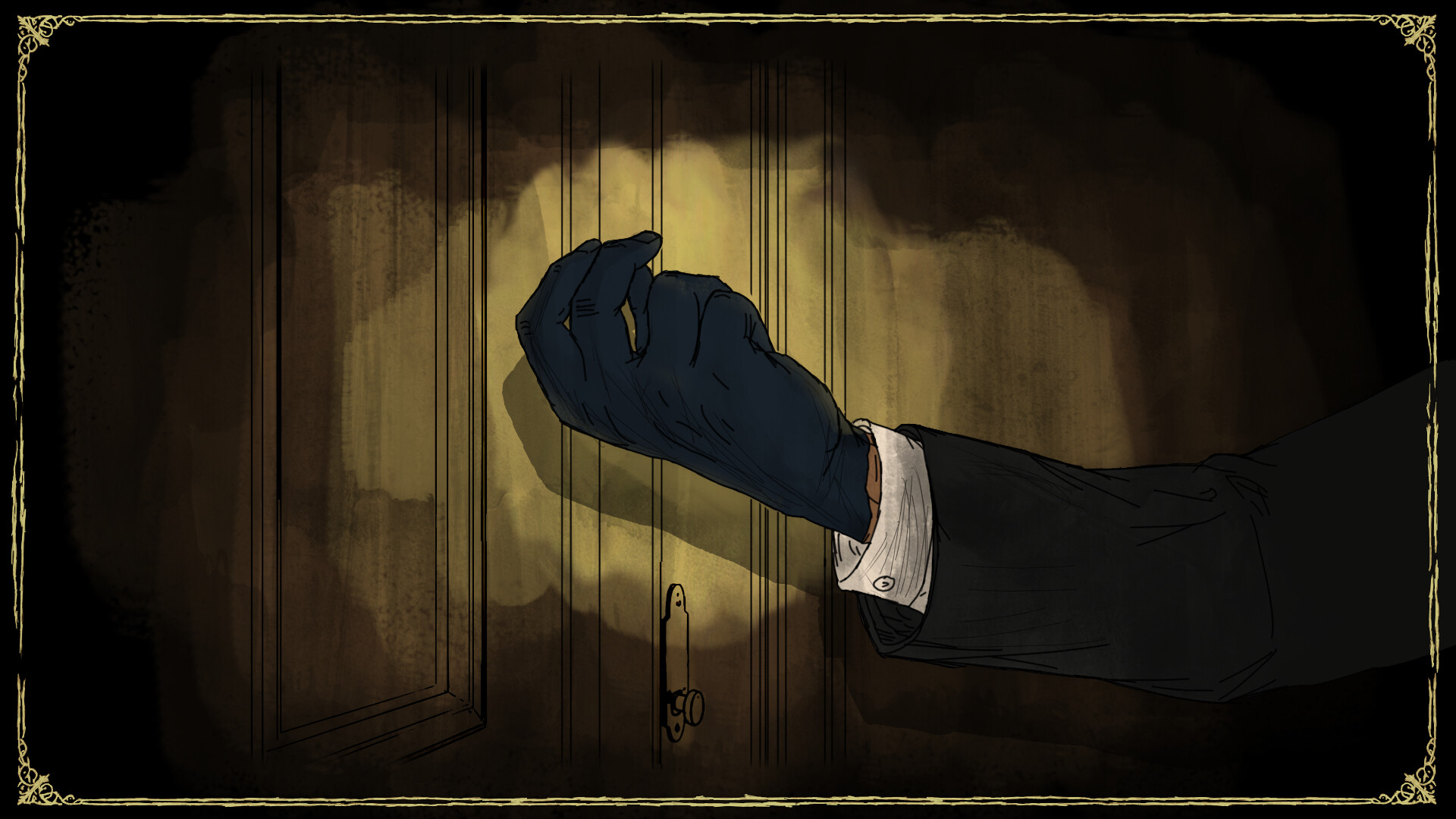
He always has an offer. That is the entire official characterization. What the offer is, what it costs, and what he gets out of it are things the story reveals on its own schedule, and repeating them here would spoil the reason people keep mentioning him in reviews.
Two practical notes. First, his offers appear across the week structure like everything else, so refusing him does not remove him. Second, your answers to him seem to matter for how the late story frames your choices, which is why two runs that survived the same number of weeks can end in very different emotional places.
If you only play one run, do what feels right in the moment and let it land. If you play a second run, play him straight. Say yes early, see what he builds, and decide afterward whether the first run was the naive one.
Family and Relationships
The family is the game's second currency. Money buys weeks, and the family decides what those weeks are worth.
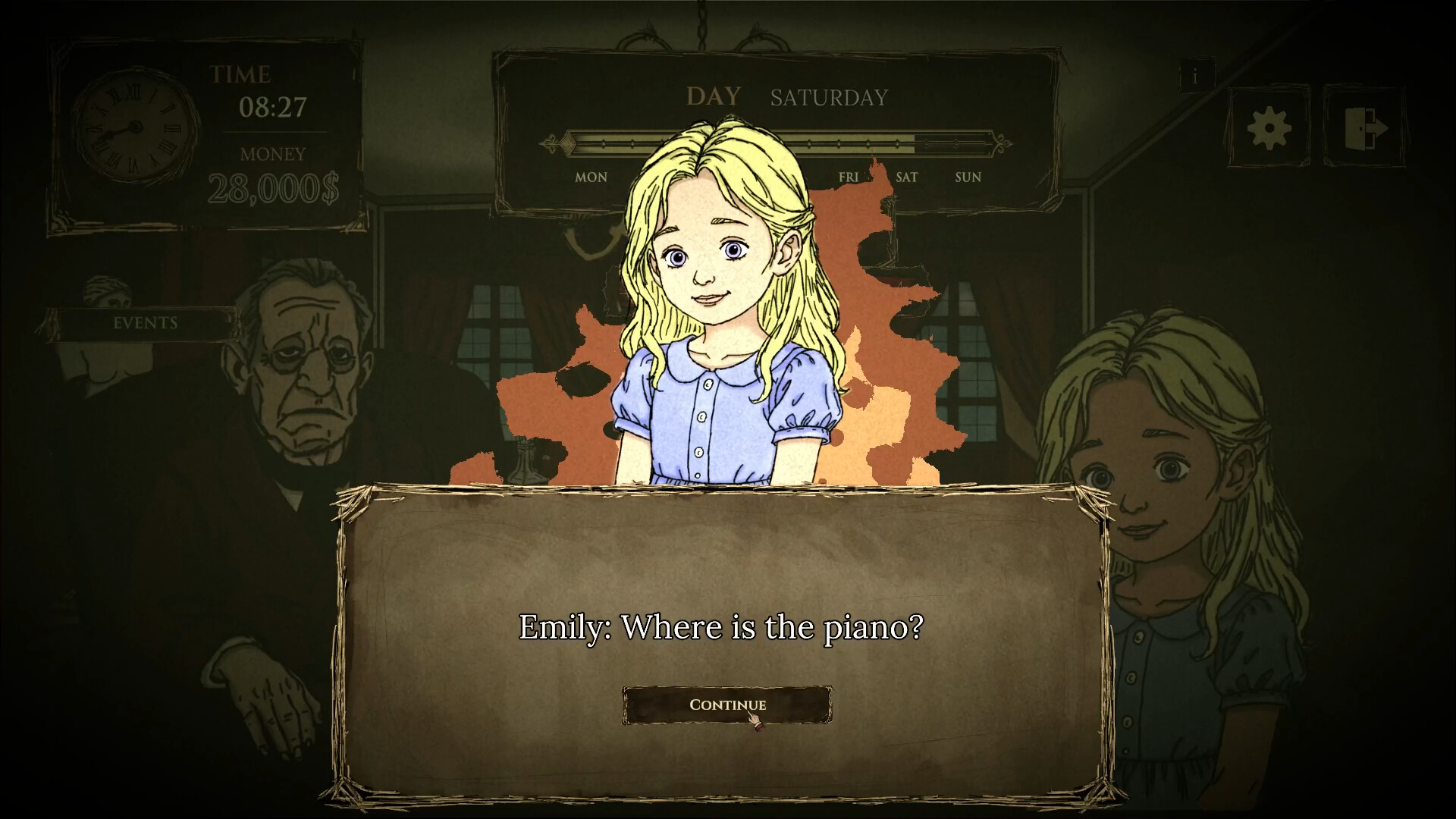
Each member reacts to a different category of decision. Some notice what you sell. Some notice who you talk to. Some mostly notice time, whether you are present in the daily scenes or always off arranging the next payment. The daily event list mixes all of these, so a run that ignores the family for two weeks feels different even if the money never ran out.
The dialogue options rarely announce their consequences. Choosing the honest answer in a kitchen conversation and the convenient answer in a phone call can produce the same immediate result and opposite long-term ones. That is why the community's early advice, on the small number of reviews and discussion threads that exist so far, keeps repeating one line: talk to everyone every day. It costs nothing, and it is the only way to see which relationships your run is spending.
Endings and Multiple Runs
The game does not advertise an ending count, and early players have deliberately kept quiet about specifics. What the structure makes clear is that the ending you reach is assembled from three inputs: how many weeks you survived, what you no longer own, and what you told The Visitor.
A run that survives on savings alone, a run that strips the house bare, and a run that leaned on outside help can all reach the same week count and still feel like completely different stories. That is the design goal, and it is why the game is worth a second playthrough at this price.
Practical sequencing for a two-run plan. First run, play naturally and refuse nothing you find interesting. That gives you the emotional version of the story. Second run, optimize: sell early and hard, use The Visitor, and protect nothing. The contrast between the two runs is where most players say the game's theme actually lands.
Achievements
There are 8 achievements on Steam. The list is short because the game is short, and the achievements track the kind of progress that matters in a narrative game: reaching certain story states rather than grinding tasks.
Nothing on the list requires fast inputs, score chasing, or replaying under constraints. If you play two full runs with different strategies you will clear most of them naturally. The remaining ones are tied to specific late-story outcomes, so chasing them before you have finished a run will only spoil the story for you.
Accessibility and Technical Notes
The game is built to be played with one hand. Every interaction is a click, there is no timed input anywhere, and the Steam store lists custom volume controls and "playable without timed input" among its accessibility features.
Other platform facts worth knowing:
- Single-player only. There is no co-op or online component of any kind.
- Windows only. There is no macOS or Linux build, and no verified Steam Deck status as of this guide.
- Steam Cloud support. Saves follow you between machines.
- Family Sharing is enabled, so one purchase covers a household.
The game is small and the system requirements are modest. If a machine can run a modern browser it will run this.
Who Is This Game For
Debt of Life fits a narrow and real niche. It is for players who liked the decision weight of papers-please-style moral choices but want something shorter and more personal, or who play narrative games once and then think about them for a week.
It is not for players who want systems depth, replay mechanics with numbers, or a long game. One run is a few hours. The value is in the quality of the decisions, not the quantity of the content.
At $3.99 with a 93% early positive rating, the practical advice is simple: play it once, play it honest, and see which of your own answers surprises you.
Tips and Tricks
A short list for players who want the mechanics without the essay:
- End every in-game day with more information than you started with. Talk, read, click. Days are the game's real currency, and days spent silent are days spent blind.
- Sell duplicates first. Anything you own two of is pure money. Keep single items for the story weight they carry.
- Never spend your last week's treatment money on anything else. The game will tempt you with opportunities that cost exactly what you were saving. The temptation is the test.
- Write down who gave you what. Trust in this game has a memory, and so should you.
- On replay, invert your first run. If you refused The Visitor the first time, say yes. The two endings comment on each other better than any review can.
FAQ
How long is Debt of Life? A single run takes a few hours. A second run for a different ending path adds roughly the same again.
Is there a demo? No demo is on the Steam page at the time of writing. The price is low enough that most players go straight to the full game.
Does it have multiple endings? The game does not state a number, but its choice structure clearly supports different outcomes, and the developer's description emphasizes that decisions shape the story itself.
Can you lose early? You cannot die in the first week. The treatment is affordable at the start. The pressure builds as the savings shrink.
Is The Visitor evil? The game never says. Reviews deliberately avoid spoiling him. Make your own call.
Is it on consoles or mobile? No. Windows PC through Steam or itch.io only.
Does it support other languages? Check the Steam page language list before buying. The game launched with a small scope and the language options have been expanding since release.
Screenshots