Official game
Play VERISMO
This game is hosted by Steam. Continue to the official page to play or download it.
Play the Demo on SteamOverview: What Kind of Game Is VERISMO?
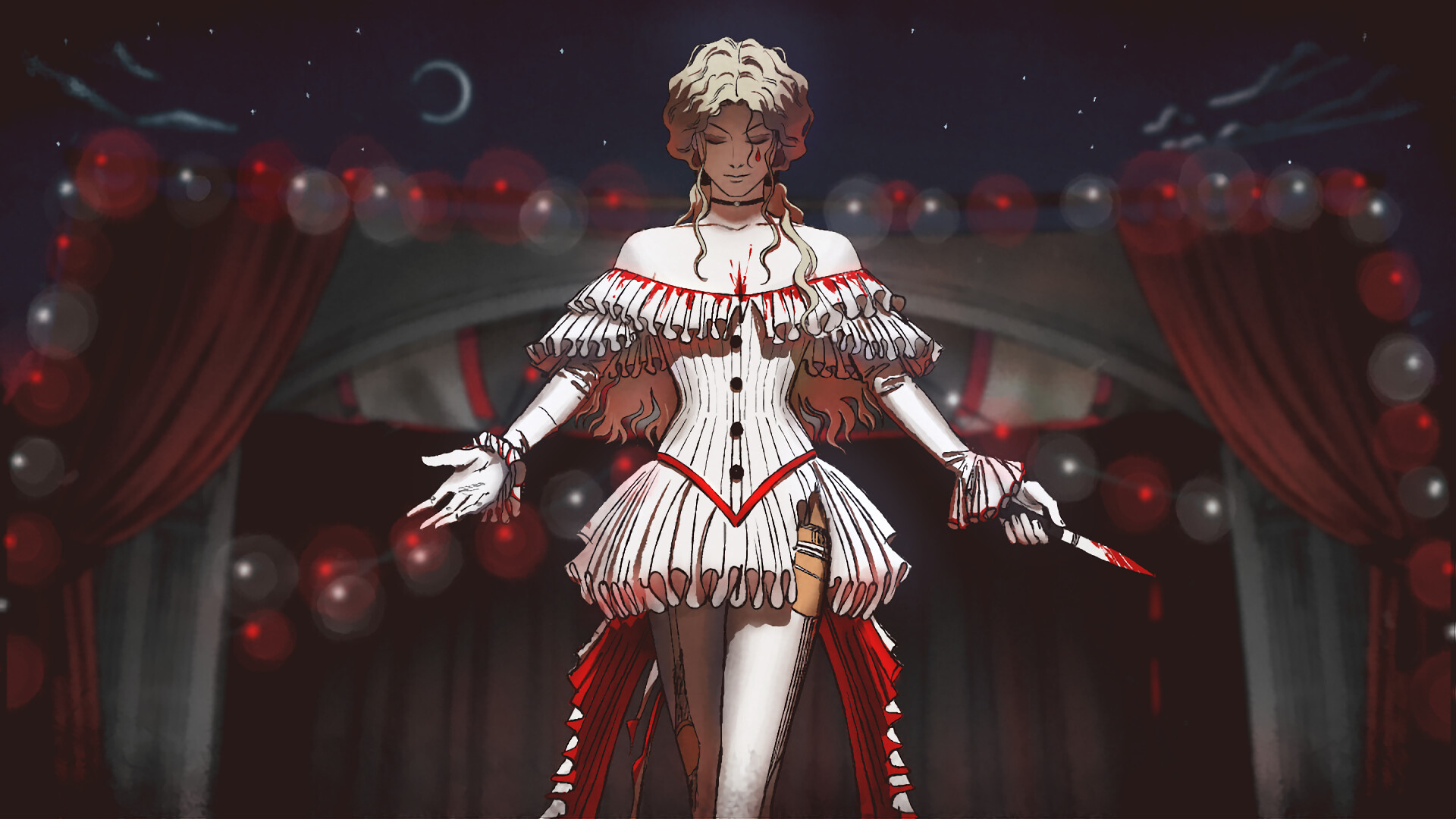
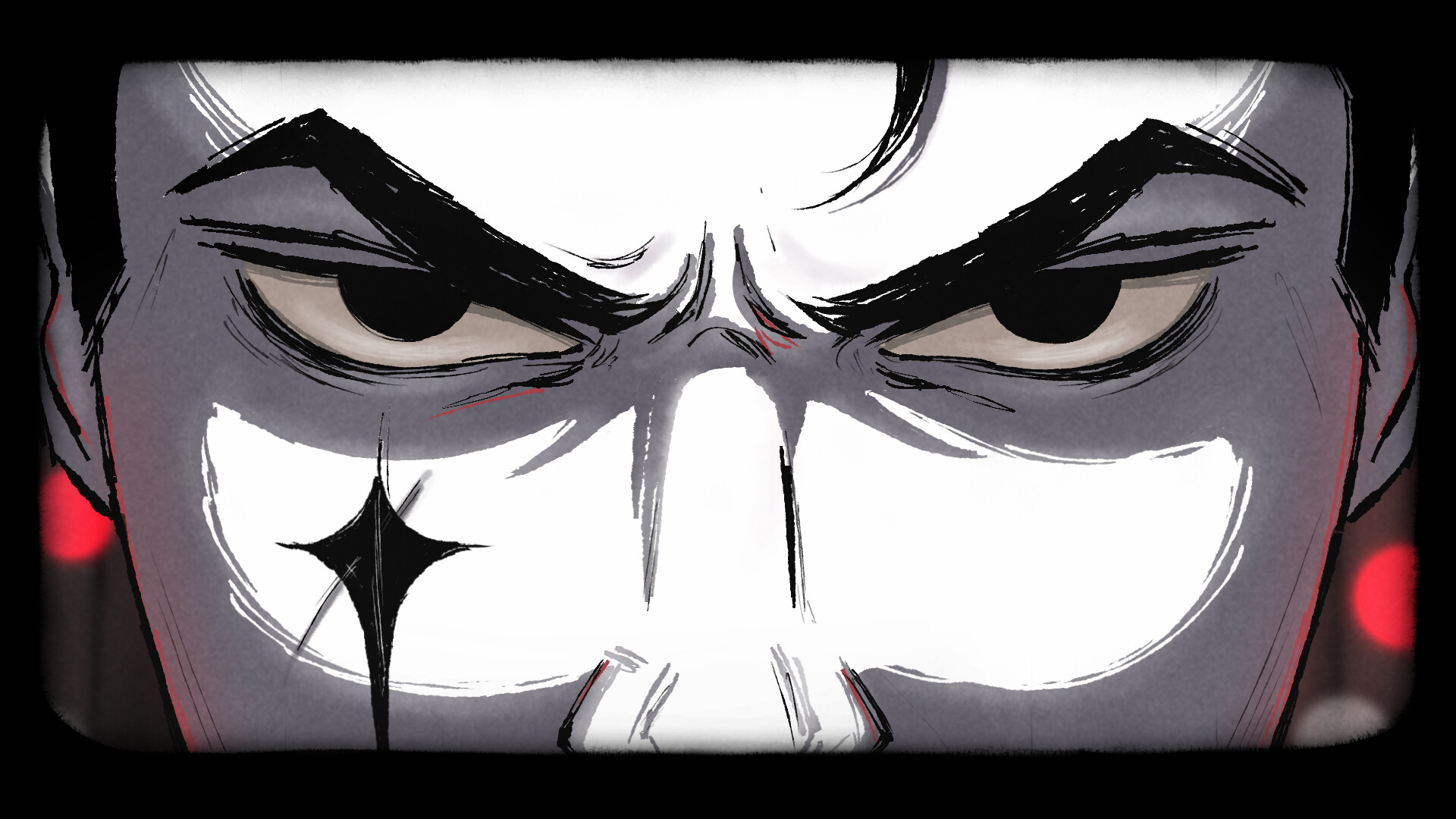
VERISMO is an operatic-tragedy visual novel from stellanise, a solo developer who has spent two and a half years building it. The setup reads like the first act of an opera because that is the point: ten years ago, Vittoria's father was murdered by a worker in their orchard. It is now 1925, and that man has reappeared in her life as the owner of a popular carnival. When Vittoria meets a wayward circus performer who also has a grudge against the Don, the two scheme to teach him a lesson. The lesson has a deadly price.
The game names its own genre on the store page: an operatic tragedy inspired by the verismo (realism) movement in early 1900s Italian opera. Verismo opera put ordinary, often poor people on stage and let their passions run toward violence. VERISMO does the same thing in visual novel form: no chosen ones, no prophecies, just a grieving woman, a knife-wielding clown, and a plan that will not stay contained.
| Field | Detail |
|---|---|
| Genre | Story-rich visual novel, psychological horror, exploration |
| Developer / Publisher | stellanise (solo developer) |
| Platform | Windows (Steam) |
| Price | TBA (demo free) |
| Players | Single-player |
| Release | 2027 (final demo live now) |
| Perspective | Side-view exploration with hand-drawn illustrations |
| Controls | Keyboard only (WASD/arrows, Z/Enter/Space) |
| Languages | English |
| Structure | One in-game week, experienced by day and night |
| Steam | store.steampowered.com/app/3242730 |
The demo trailer pulled 17,000+ views through the Indie Games Hub channel, and the developer's announcement of the final demo is candid about the scale: after 2.5 years of total work, the final demo adds an extra hour of playtime over the old 15-minute prologue, a night carnival, a playable Sicilian town, and dozens of new hand-drawn cutscenes, some animated.
The Story So Far: Revenge in Three Movements
VERISMO structures its tragedy the way opera does, and knowing the shape helps you read the demo's foreshadowing.
Movement one: the wound. Vittoria's father was murdered in the family orchard a decade before the game begins. The killer was a worker. Justice never came; the man simply vanished.
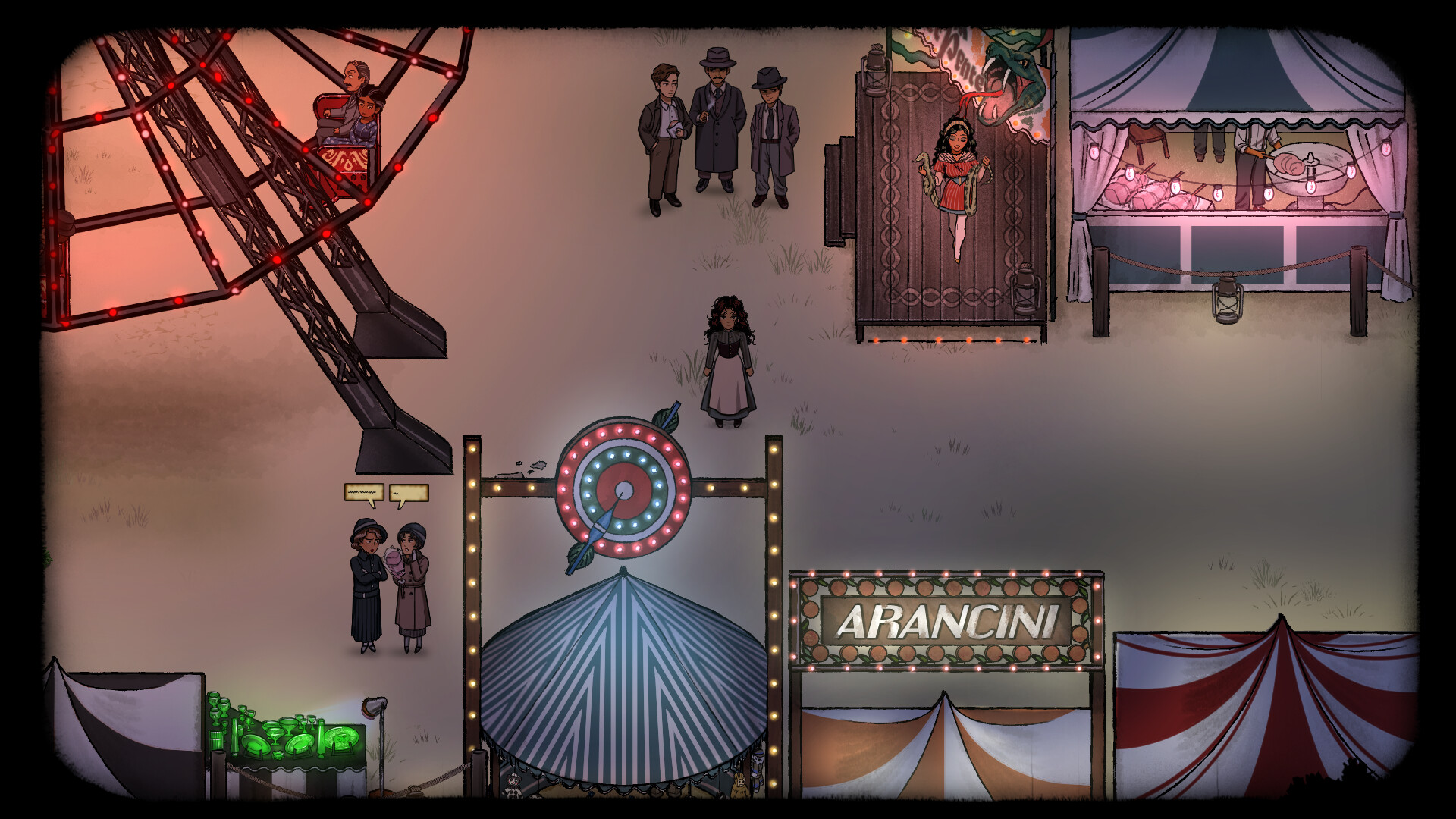
Movement two: the return. In 1925 the murderer resurfaces as the owner of a popular carnival. This is the demo's centerpiece location, and the game lets you feel the wrongness of it: a place built for joy, owned by a man who ruined two lives.
Movement three: the scheme. Vittoria allies with a circus performer who has his own account to settle with the Don. Their plan is the engine of the plot. The store page promises "a deadly price," and the verismo tradition all but guarantees that revenge here is not clean.
The demo covers the opening week of this story, experienced across day and night cycles. Daytime is for the town and its ordinary life. Night is for the carnival, and the demo's scariest material lives there.
Getting Started: Your First Hour
The final demo is free on the Steam page and represents about 75 minutes of new content beyond the old prologue build.
Your opening sequence:
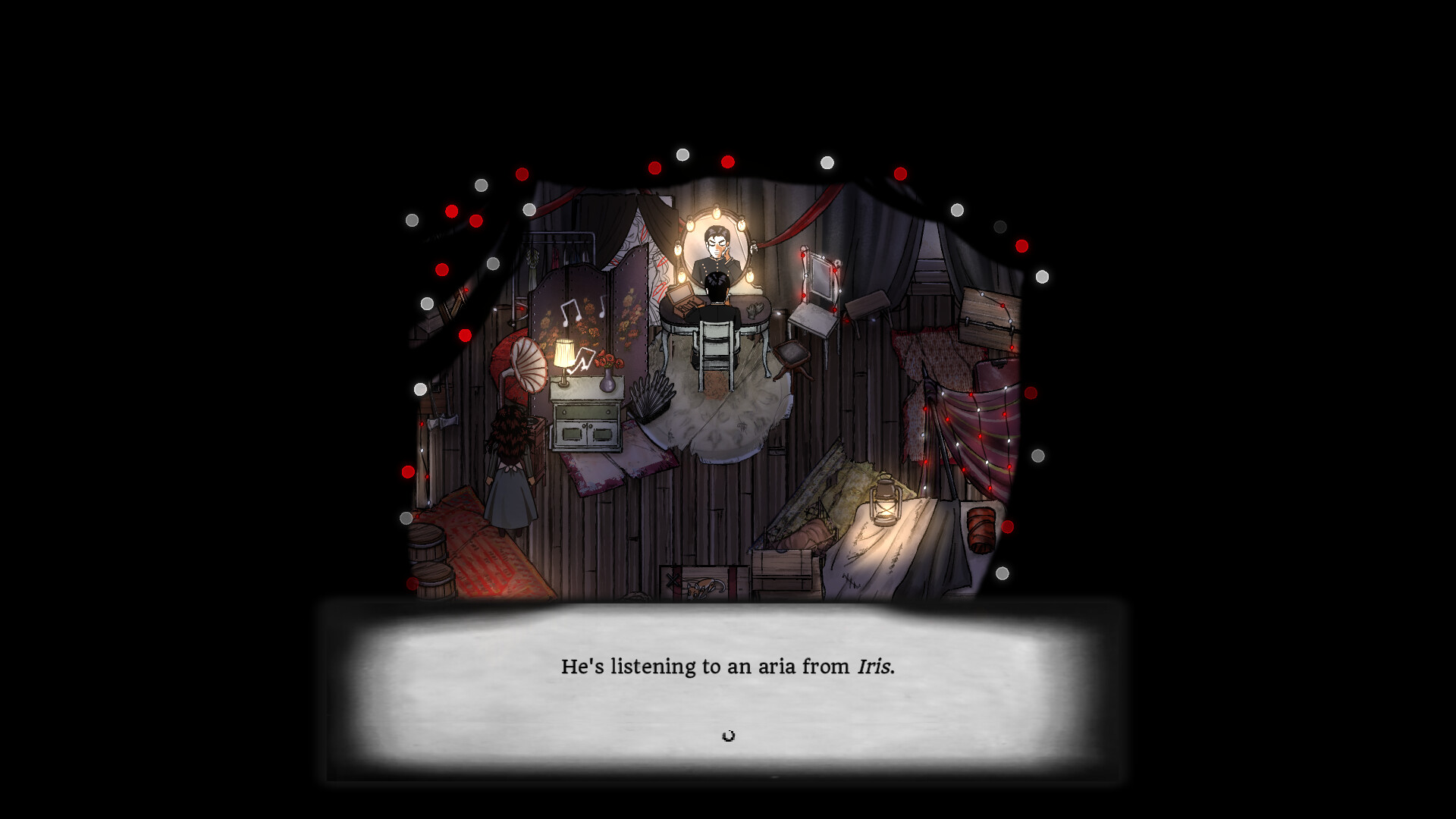
- Play with sound on. The final demo's all-new soundtrack uses authentic early 1900s recordings recreated by a freelance musician, then rearranged into leitmotifs. Characters have musical themes, and the opera references are deliberate foreshadowing.
- Explore the town in daylight first. The demo's maps are inspired by real Sicilian locations. Important interactables now have icons over them (added in the final demo), so you can sweep a screen quickly and move on.
- Return to key locations at night. The day-night structure is not cosmetic. The carnival only properly opens at night, and several characters behave differently after dark.
- Talk to everyone twice. The demo's cast includes "seedier than others" characters by the developer's own description. Second conversations reveal which smiles are painted on.
- Watch the emotion icons. The revamped UI adds emotion icons to dialogue, and they are honest signals. When an icon contradicts the spoken line, the game is telling you who is lying.
Beginner Mistakes to Avoid
| Mistake | Why It Hurts | Fix |
|---|---|---|
| Ignoring background characters | Verismo stories hide motive in the chorus | Talk to minor characters; their gossip maps the Don's reach |
| Skipping the sign at the carnival entrance | The developer teased that "the sign seems to be missing something once atop it" | Inspect it on both visits, day and night |
| Spam-clicking through scenes | Cutscenes carry foreshadowing in backgrounds | The icon system means only marked objects need clicks; everything else deserves a look |
| Playing in short sessions | The week structure builds dread through continuity | The demo is ~75 minutes; play it in one sitting if you can |
| Missing the demo review prompt | The developer reads demo reviews for feedback | Your ending notes can shape the full game |
Core Mechanics Explained
Exploration on Hand-Drawn Maps
Movement is side-view walking across hand-drawn backgrounds of Sicilian towns and the carnival. The final demo added interaction icons over important objects, which solved the old demo's biggest friction point (clicking everything). Unmarked screens are still worth a pass, because the backgrounds hide storytelling: posters change, crowds thin, and the orchard from ten years ago is exactly where you would guess.
The Day-Night Week Structure
The full game plays out over one week, and the demo demonstrates the rhythm. Day scenes advance the social plot: the town, the Don's presence, Vittoria's careful questions. Night scenes belong to the carnival and the ghost's hauntings. The clock does not loop pointlessly; each night escalates.
Emotion Icons and the Dialogue Layer
Dialogue is the combat system here. The revamped UI adds emotion icons, sound effects, and general polish to cutscenes. Read the icons as a second channel: the demo uses them to flag when a character's stated feeling does not match their real one. Choosing when to press and when to retreat shapes what you learn, and what you learn shapes the endgame's options.
The Soundtrack as Storytelling
The final demo's soundtrack deserves its own section. It mixes authentic early 1900s recordings with public domain music remixed by the developer, arranged so recurring characters get recurring themes. When you hear a leitmotif bleed into another character's scene, that is plot information. The developer has confirmed "lots of opera references" in the track list, and Cavalleria Rusticana fans will recognize the debt: that opera is also a Sicilian revenge tragedy that ends badly for everyone.
Demo Walkthrough: The Shape of the Week
The final demo runs roughly 75 minutes and covers these beats:
- The prologue. The old 15-minute demo is folded in as the opening, now with its cutscenes completed. The intro is new and, per the developer, "teeming with mystery."
- The town, day one. You learn the town's geography and its relationship with the carnival. Marked interactables teach you who matters.
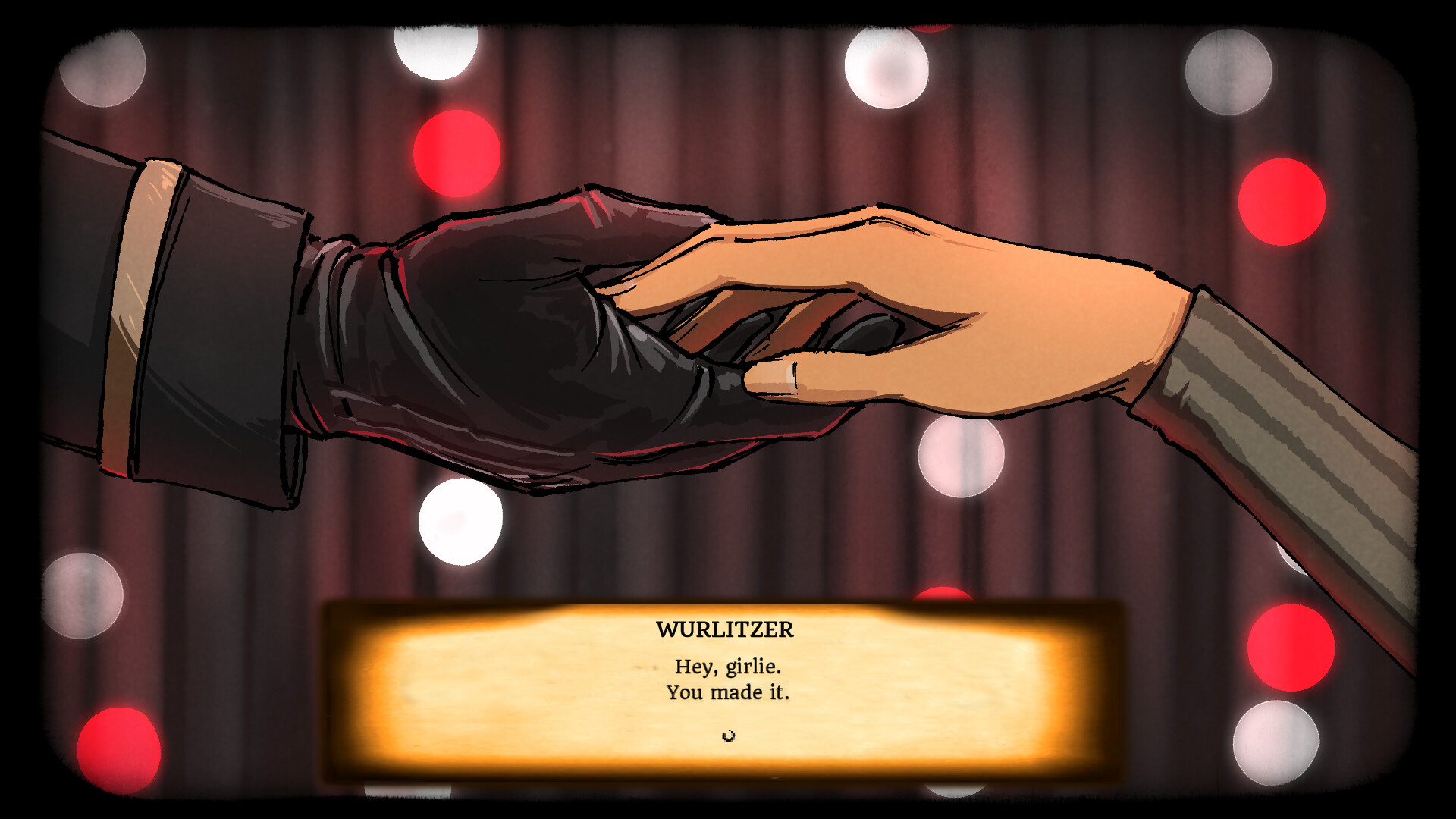
- Meeting the clown. The wayward circus performer enters, and the alliance forms. This scene carries the demo's best dialogue writing and its first emotional-icon contradiction.
- The night carnival. The demo's centerpiece. An hour of exploration through rides, booths, and workers who all owe the Don something. The haunted sign at the entrance is a running thread.
- The hauntings. The ghost's presence escalates at night. The demo's horror is atmospheric rather than jump-scare driven, and the crescendo sets up the full game's revenge act.
Advanced Tips: What Experienced Players Know
The demo's systems are simple on the surface and layered underneath. The emotion icon contradiction is the mechanic that separates a first playthrough from an informed one: once you trust the icons over the dialogue text, scenes start handing you the cast's real positions a scene early.
More habits that pay off:
- Sweep every screen for unmarked changes. The final demo added icons over important interactables, which means anything unmarked is either scenery or a deliberate background detail. Posters, crowds, and window lights change between visits.
- Revisit the carnival entrance sign after major story beats. The developer explicitly teased that it is missing something. Background storytelling like this is how the demo foreshadows without dialogue.
- Note the music shifts. Leitmotifs bleeding between character themes are plot information. If you hear the Don's theme under a seemingly innocent scene, the game has told you who is involved.
- Play the prologue scene twice. The old 15-minute demo is folded into the opening, and its revised intro rewards a second pass once you know what the clown is actually doing in his early scenes.
Controls and Settings
| Input | Action |
|---|---|
| WASD / Arrow keys | Movement |
| Z / Enter / Space | Confirm, interact, advance dialogue |
The control scheme is intentionally minimal for a visual novel. Two caveats from the dev notes: there is no controller support in the current build, and proper key rebinding is planned but not implemented. The developer removed the old rebinding plugin because it locked menu confirmation to Z, so the current build accepts Z, Enter, or Space universally. AZERTY keyboard support was explicitly considered and postponed.
Minimum requirements are light: Windows 10 64-bit, and 1 GB of storage. The store page's listed memory figure (8 MB) is a typo that will presumably be corrected before release; any modern machine handles the demo.
The Verismo Tradition: Why the Title Matters
Verismo was a late-19th-century Italian literary and operatic movement that prized everyday people, raw passion, and ugly outcomes. Pietro Mascagni's Cavalleria Rusticana (1890), set in a Sicilian village, is the movement's operatic flagship: adultery, insult, a challenge, and a death. Giovanni Verga wrote the short story it adapted, and his Sicilian fiction is the movement's literary core.
VERISMO the game borrows the movement's contract with its audience:
- Ordinary people with real jobs and real debts
- Passion that community rules cannot contain
- Violence as a social event, witnessed and judged
- Music that tells you the truth the characters will not
The demo's carnival is a verismo stage in the literal sense: performance spaces where the town's hierarchy performs itself. When the clown takes off the makeup, the game is close to its thesis.
The Developer's Road: 2.5 Years to the Final Demo
stellanise has documented the production openly through Steam news:
| Milestone | What Happened |
|---|---|
| Project start | Development begins, ~2.5 years before the final demo |
| Early playtest | First full demo version goes live, missing cutscenes patched within days |
| Demo Update 1 | New spooky intro, original tracks plus remixed public domain music, content flag fix |
| Key rebinding rework | Plugin removed; Z/Enter/Space confirm universal |
| 1k Wishlists | A 3-year-old meme animation hits the YouTube algorithm, driving 950 to ~1,100 wishlists in 48 hours |
| Final Demo | +1 hour of playtime, night carnival, town exploration, new soundtrack, revamped UI, dozens of new cutscenes |
The wishlist note matters for anyone tracking the game's trajectory: growth is organic and creator-driven, with the developer actively promoting through the same YouTube channel that hosts the trailer. For a solo project with no publisher, the final demo is the marketing plan, and it is working.
System Requirements
| Spec | Minimum |
|---|---|
| OS | Windows 10 64-bit |
| Storage | 1 GB available space |
| Memory | Any modern configuration (the listed value is a typo) |
| Other | Sound recommended; the soundtrack is half the game |
Similar Games
- Slay the Princess: for hand-drawn visual novel horror where the art style is the horror
- Militsioner (demo culture): for players who follow ambitious solo-dev projects early
- Cavalleria Rusticana (the opera): for the source tradition; watch a filmed production and the game's references unlock
- When They Cry / Umineko: for mystery-horror pacing where music signals truth
- Little Goody Two Shoes: for day-night exploration cycles feeding a dark fairy tale
FAQ
Is the demo free? Yes. The final demo downloads directly from the Steam page with no prologue purchase or gating.
How long is the final demo? About 75 minutes of new content beyond the old 15-minute prologue, which is folded into the opening.
When does the full game release? 2027 is the announced window. No month yet.
Does the demo save progress into the full game? Nothing announced. Treat demo choices as rehearsal; the developer has not promised carryover.
Is there controller support? Not yet. Keyboard only (WASD/arrows plus Z, Enter, or Space). Rebinding is planned.
What languages does it support? English only in the current build.
How scary is it? Atmospheric horror: a haunting, a knife-wielding clown, and dread rather than jumpscares. The store tags it psychological horror and dark, and both are accurate.
Where do I report bugs? Steam discussions or demo reviews. The developer has answered both channels directly throughout the demo period.
Wishlist Strategy and What to Watch
VERISMO sits in the rare window where the demo is complete enough to judge and the full game is still far enough out that early attention matters. Three signals worth tracking:
- Cutscene completion. The dev notes say background art for the full demo reached 90% before launch, with sprite and illustration work ongoing. The final game's quality bar will be visible in the next news post.
- The 2027 window. A solo visual novel with finished demo art, locked music, and polished writing is realistically in its final production stretch.
- The community channel. Every major update has followed a Steam news post, so wishlisting and following the news feed gets you the demos and announcements as they land.
Play the demo in one dark sitting. That is how it was built to be seen.
Screenshots