Daily Pick
One deeply researched guide worth reading today.
A practical route through the systems that matter most, written to help new players make confident decisions quickly.
What Is Seaforge: Shores of Atlantis?
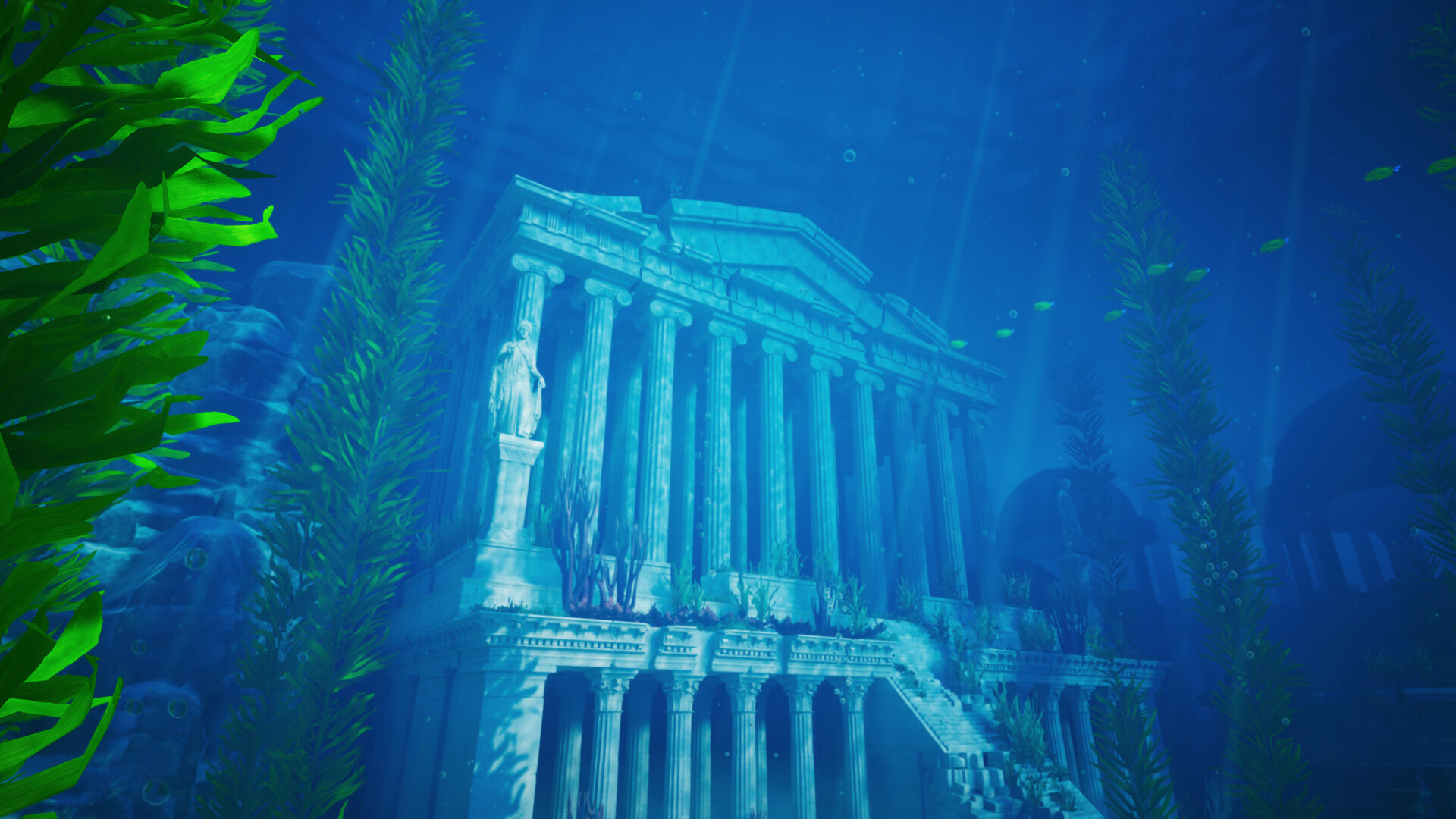
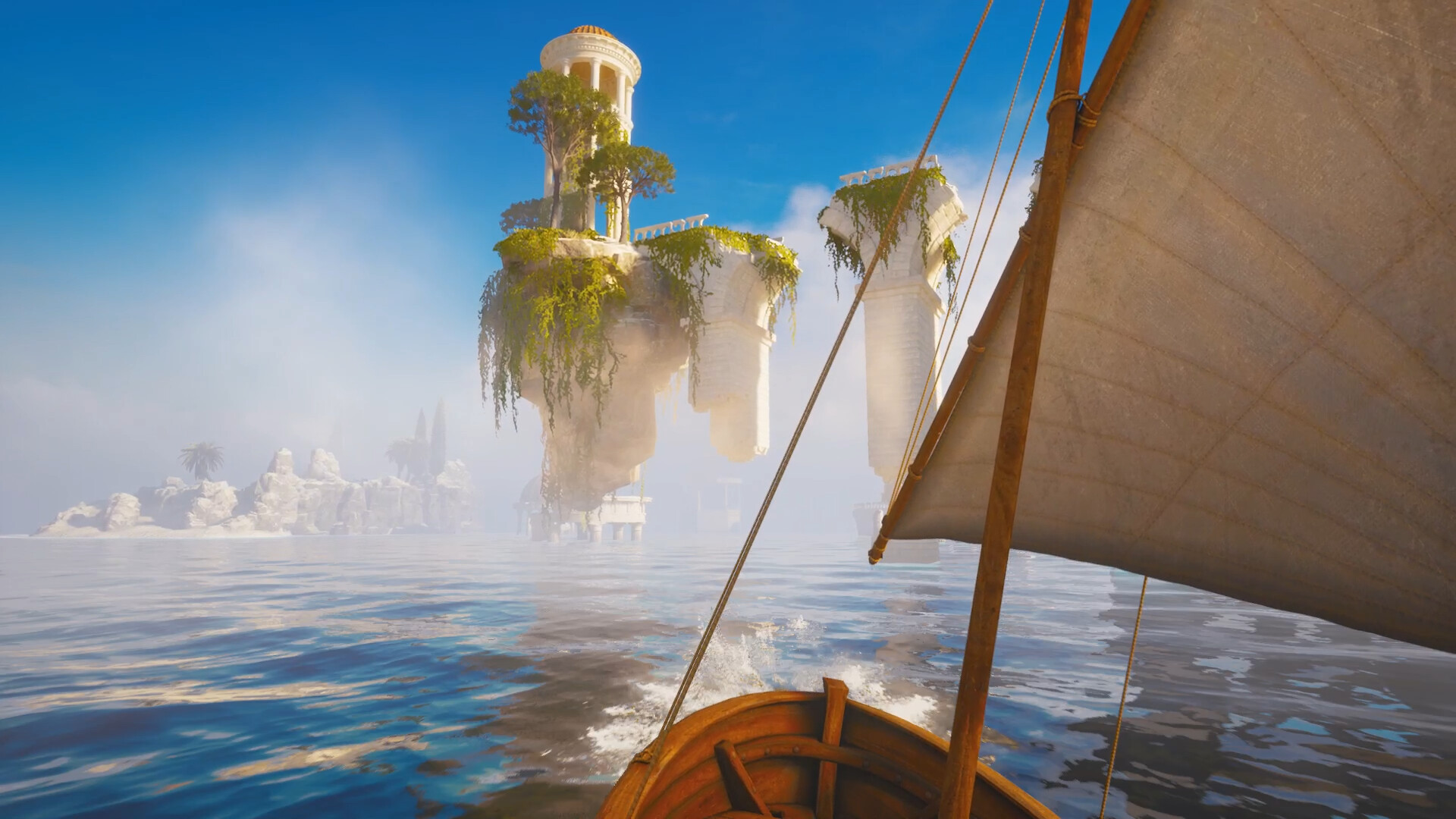
Seaforge: Shores of Atlantis is a 1-4 player open-world survival crafting adventure from Glowbug Games, a small independent studio based in Seattle, Washington. Led by a couple building their debut title, the studio describes their game as combining "the satisfaction of building a cozy home with the thrill of deep-sea exploration." You awaken shipwrecked on a forgotten island chain that hides the lost ruins of Atlantis, and your only path forward is to dive into flooded temples and glowing trenches, haul ancient technology back to the surface, build a seaside villa, and reclaim the sunken civilization's power island by island.
The game's elevator pitch is simple: spend daylight hours diving into sparkling coral reefs, overgrown ruins, and underwater caves in search of gems, ancient technology, and long-lost magic. Oxygen is your ticking clock. The deeper you go, the stranger and more powerful the discoveries become, but every dive demands a return trip. At night, corrupted creatures emerge from the underworld, turning exploration into a constant balance between discovery and survival. Make it home before nightfall or face what crawls out of the dark.
The hook is the sun. Plants power your entire progression. You grow dozens of types of unusual plants on the surface, condense them into energy, and use that energy to fuel Atlantean weapons. You start with scavenged blades and scrap-tier tools. By endgame, you channel solar energy through mystical weapons to take out fearsome bosses like powerful sand-worms and venomous spitters. The deeper you want to dive, the more you need the surface garden you built, a loop that makes farming feel like survival, not busywork.
Mechanically, Seaforge sits at the intersection of Subnautica's oxygen-timed diving, Valheim's combat-and-building loop, and Stardew Valley's plant-to-power economy, and the design openly reaches for those two survival touchstones. You are not a marine scientist or a viking, you are a survivor on a hostile shore, and every dive is a calculated bet against your lungs.
Game Details
| Field | Detail |
|---|---|
| Genre | Open-world survival craft, adventure, co-op |
| Developer | Glowbug Games (Seattle, WA: debut title) |
| Publisher | Glowbug Games |
| Platform | Windows (PC) |
| Price | TBA (paid, not free-to-play) |
| Players | 1-4 players, solo or online co-op |
| Release | 2027 (Early Access planned) |
| Engine | Unreal Engine |
| Co-op | Online co-op, shared home base, divided tasks |
| Languages | English (full audio), Japanese (interface) |
| Age Rating | Brazil: 14+, Germany: 16+, Indonesia: 18+ |
| Estimated Size | 10 GB minimum, 20 GB recommended |
| Website | seaforgegame.com |
| Steam | store.steampowered.com/app/4712440 |
Target Audience
Seaforge is built for players who love survival crafting with a strong exploration hook and co-op play. If you enjoyed the oxygen management and underwater terror of Subnautica but wished it had proper co-op and base building, this is aimed directly at you. If Valheim's loop of building, gearing up, and pushing into progressively harder biomes clicked for you, Seaforge's island-by-island conquest structure will feel familiar. The plant-fueled economy will resonate with Stardew Valley and Palworld fans who appreciate farming that feeds combat progression rather than existing as a parallel mini-game.
The crafting system progresses through distinct material tiers, starting with rustic thatch and fiber shelters, advancing to polished wood and decorative ceramics, and culminating in an extensive building set with paintable walls, tiled mosaic floors, and charming furniture. If you are the type of player who spends hours perfecting your base between expeditions, Seaforge rewards that impulse.
It is not for players who want combat-first survival or fast-paced action. The trailer and developer descriptions center diving, building, farming, and exploration. Fighting corrupted creatures is part of the loop, but the game's heart is the surface-to-depths resource cycle. If you need constant combat or a confirmed release date, this may not be for you, the game is early in development with no launch window announced.
Getting Started: First 30 Minutes
1. Get your bearings on the beach. You start shipwrecked with nothing. Scout the immediate shore for basic resources, wood, stone, and scrap-tier materials. These feed your first tools and your first shelter. Do not wander inland before you have a blade.
2. Gather thatch and fiber first. Your earliest building tier uses rustic materials. Thatch and plant fiber let you throw up a basic shelter. Do not skip this for something prettier, you need a safe zone before nightfall, and thatch is the fastest path to one.
3. Build a simple shelter before nightfall. Night is dangerous. The rule is blunt: "make it home before nightfall." Even a basic hut with a door gives you a safe place to recover health while corrupted creatures creep across the sea. The shelter blocks hostile spawns and lets you heal, without it, your first night is a death sentence.
4. Test your oxygen limit on a shallow dive. Do not swim straight into a deep trench on your first dive. Learn how long your oxygen lasts by exploring a reef or shallow cave near shore, then surface before the meter hits half. The penalty for drowning is not worth discovering the hard way, and the most valuable discoveries lie far from safety, you need to know your range before you push it.
5. Plant your first crops immediately. Sun-loving plants are your advancement engine. Get a few seeds in the ground as soon as you have a basic shelter, even before a greenhouse. Every in-game day they grow is a day of free energy toward your arsenal. Delaying your garden is delaying your combat effectiveness.
6. Mark and activate the lighthouse on your starting island. Ancient lighthouses are fast travel points. Finding and activating them early turns every later island conquest from a long sail into a fast travel click. A lighthouse chain is your map backbone, ignore them at your own pace penalty.
7. Craft a scavenged blade before you explore inland. Your starting tools are scrap-tier. A blade lets you harvest more efficiently and gives you a fighting chance against the corrupted creatures and insect-like enemies that emerge from the underworld. Bare hands will not cut it.
8. Bring a friend if you can. The game supports up to 4 players with a shared home base. Dividing tasks, one farms and cooks, one dives for gems and ancient tech, one builds and fortifies the villa, accelerates the early game dramatically. Solo is viable, but co-op is the intended experience.
Beginner Mistakes to Avoid
| Mistake | Why It Hurts | Fix |
|---|---|---|
| Diving deep before upgrading oxygen capacity | Oxygen drains fast at depth; deep ruins have no air pockets near the entrance and the return swim is longer than you think | Upgrade oxygen first, learn air pocket locations on shallow dives, and never push deeper than half your oxygen bar allows for the round trip |
| Ignoring the garden entirely | Plants are not decorative: they power your weapons and unlock gear tiers. No crops means no condensed energy, which means no Atlantean weapons | Plant early, build a greenhouse to boost growth, automate watering to remove the daily chore, and mix fertilizer for accelerated yields |
| Staying outside after sunset | Corrupted creatures and insect-like underworld enemies are stronger at night, and more of them spawn. The sea itself carries additional dangers after dark | Build a shelter on day one and plan every expedition so you return before the sun sets. If caught outside, stay near a lighthouse |
| Hoarding rare resources instead of crafting | Rare gems and ancient tech sitting in a chest do nothing: they unlock blueprints and gear that make every subsequent dive easier and safer | Craft and upgrade aggressively. Every unused rare resource is a missed power spike |
| Skipping lighthouse activation on conquered islands | Fast travel routes stay locked, making island hopping painfully slow. You will waste real-time hours sailing routes you could teleport | Activate every lighthouse the moment you clear its island. Treat lighthouses as mandatory map objectives, not optional landmarks |
| Exploring deep ruins alone in co-op | The island chain and deep trenches are dangerous. A buddy can revive you, split aggro from corrupted creatures, and carry extra loot on the swim back | Stick with at least one partner for deep dives. Solo scouting is fine for surface resource runs and shallow reefs |
| Building your villa before securing food and oxygen upgrades | A beautiful base with no food supply and base-level oxygen capacity traps you on the surface. You need to dive to progress, and you cannot dive without upgrades | Prioritize function over form in the first few hours. Upgrade oxygen and establish a food garden before expanding your villa's footprint |
Core Mechanics Deep Dive
Oxygen and Diving
Oxygen is the central tension in Seaforge. You dive through glowing trenches, overgrown ruins, sparkling coral reefs, and underwater caves hunting gems, ancient technology, and rare materials. The deeper you go, the stranger and more powerful the discoveries become, and the faster your oxygen drains. The game rewards planning: know where the air pockets are, know your oxygen capacity, and never push one more room deeper than you can swim back from. The most valuable discoveries consistently lie far from the safety of home, the game is designed so that the best loot demands the longest, riskiest dives.
Underwater biomes are varied and handcrafted, not procedural. They span sunny coastal ruins, glowing underwater caverns, deep trenches, and reef systems, each with unique threats and resources. The return trip is not just a swim back; it may involve navigating through territory that corrupted creatures have moved into while you were looting.
The Plant Economy and Gardening
Sun-loving plants are the backbone of progression, not a side activity. You grow dozens of types of unusual plants, some for food and others to condense into energy that powers your arsenal. The gardening system has real depth:
- Greenhouses, dedicated structures that protect crops and boost growth rates
- Automated watering, removes the daily chore of manual watering once you build the infrastructure
- Fertilizer mixing, custom fertilizer blends accelerate growth and increase yields
- Energy condensation, plants are processed into fuel for Atlantean weapons and gadgets
The loop is deliberate: to fight the deep, you must farm the surface. If your garden stalls, your combat power plateaus. This ties the cozy farming fantasy directly to the progression system, you cannot out-grind the garden by just diving more.
The garden also feeds the potion bench. The strange plants you grow become not just food and weapon fuel but "powerful potions." So the same crop plots triple as your pantry, your ammo factory, and your alchemy lab. One greenhouse feeding all three pipelines is worth more than a second greenhouse feeding one.
Energy and Power: Solar Plants vs. Windmills
Seaforge runs on two separate energy tracks, and conflating them is a classic early-game mistake.
Solar energy comes from plants. You condense sun-grown crops into fuel for Atlantean weapons and gadgets. Solar is your combat currency, the deeper you dive, the more of it your arsenal demands.
Wind energy powers your crafting stations. Windmills generate the power that runs advanced crafting stations at your home base. Think of it as the industrial grid: wind keeps your forge, workbenches, and processing stations running, while solar keeps your weapons firing.
| Energy source | What it fuels | First available |
|---|---|---|
| Condensed plant energy (solar) | Atlantean weapons, gadgets, potions | Day 1-2 with first crop plot |
| Windmill power | Advanced crafting stations, base industry | After basic shelter + crafting progression |
| Manual/scrap crafting | Starting tools, rustic shelter, early stations | Immediate |
Two windmill models have been confirmed. A smaller, basic windmill handles early-game power needs cheaply and quickly. A larger, advanced model generates significantly more power later in the game. Both are paintable, matching the game's build philosophy, and their design is inspired by the classic windmills of Mykonos and other Greek islands.
Practical implication: do not build a solar-fuel stockpile and expect it to run your crafting stations, and do not spin up wind power and expect it to charge your weapons. They are parallel pipelines. A smooth mid-game economy has both running: wind for the base, plants for the arsenal.
Base Building and Villa Customization
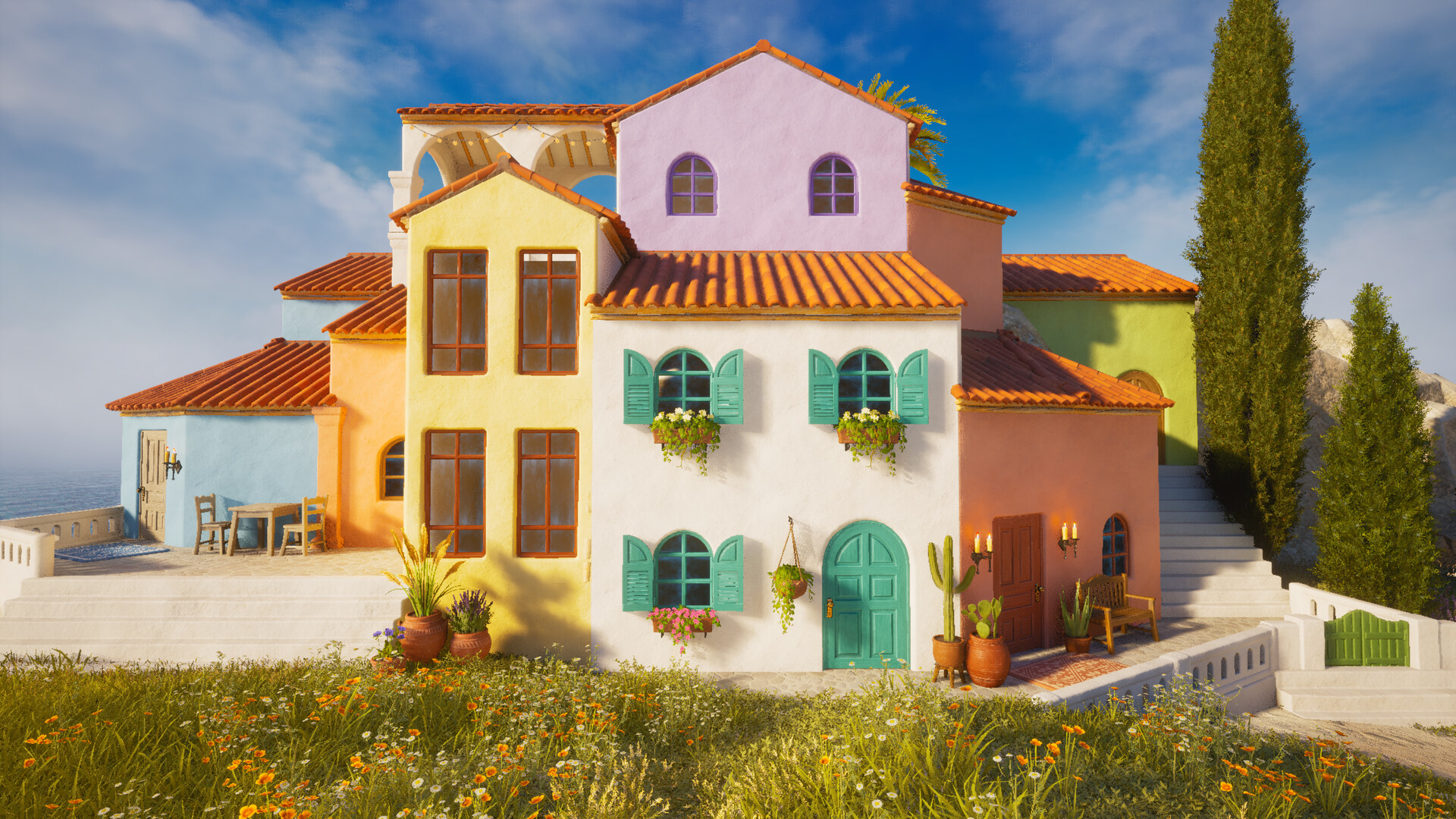
Your seaside villa is your home base, safe zone, and creative canvas. The building system progresses through distinct material tiers:
- Tier 1, Rustic: Thatch and plant fiber. Quick to build, functional, but minimal protection. Your first-night shelter.
- Tier 2, Wood: Polished wood structures with better durability and aesthetics. The workhorse tier for early-to-mid game.
- Tier 3, Decorative: Tiled mosaic floors, paintable walls, charming furniture, and houseplants galore. This tier is where the "cozy home" fantasy fully delivers, complete with the sunset-from-your-deck moment.
In co-op, the villa is shared. You build together, divide rooms and responsibilities, and each player's contributions, whether farming, diving, or crafting, feed the shared progression pool. The villa is also where you recover health safely, store resources, and plan the next expedition.
Island Conquest and Lighthouses
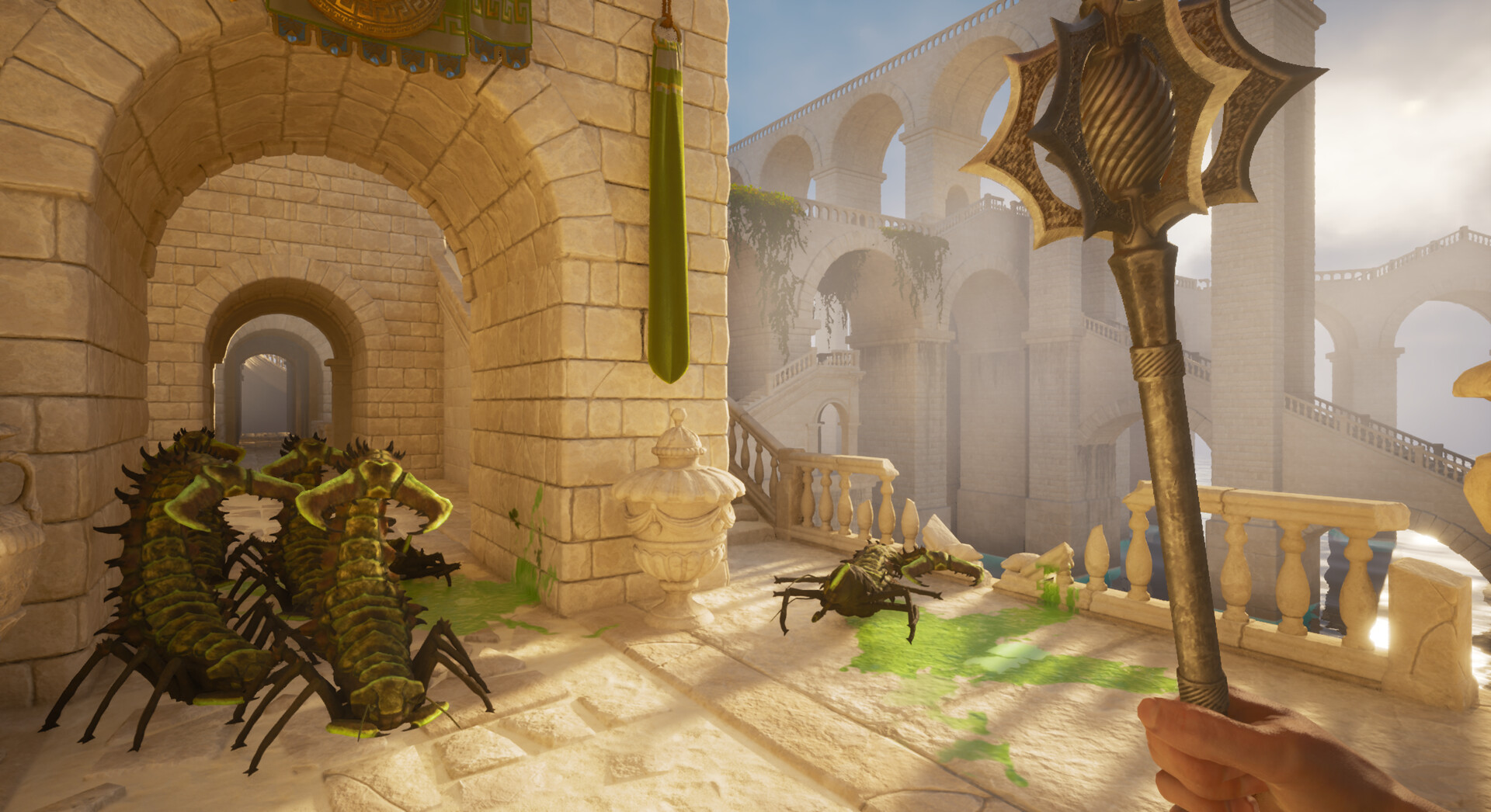
The world is a chain of handcrafted islands, each with its own ruins, resources, secrets, and biome identity. To expand your reach, you battle corrupted creatures and insect-like enemies that have emerged from the underworld, reclaiming the sunken civilization's ancient power.
Travel between islands happens by sail. You set sail across a chain of handcrafted islands, charting new routes as you push farther into the world. So expect a boat or sailing layer on top of the swimming, and route planning to matter: a well-charted path between your villa, the nearest lighthouse, and the next unexplored island cuts real time off every expedition. Uncharted waters are where you lose daylight, and daylight is survival.
The conquest loop works in stages:
- Scout an infested island to identify its resources, enemy types, and lighthouse location
- Clear the island by defeating the corrupted creatures guarding it
- Activate the ancient lighthouse to open fast travel routes back to your home base and previously conquered islands
- Exploit the island's unique resources to feed your crafting and gardening pipelines
Each conquered island permanently adds new resources, tougher enemy types, and more territory to your map. The meta-progression is geographic: the map literally opens up as you push back the decay.
Combat and the Arsenal
Combat escalates through distinct weapon tiers, each unlocked by blueprints discovered through exploration and combat:
- Scrap Tier: Scavenged blades and basic tools. Your starting loadout. Serviceable against basic corrupted creatures but struggles against anything larger.
- Crafted Tier: Weapons forged from rare resources gathered on dives and island conquests. Stronger materials, better reach, higher damage.
- Atlantean Tier: Energy weapons that channel solar energy, condensed from your garden, to deal massive damage. These are required for bosses and endgame threats.
Named enemy types include powerful sand-worms (likely ambush predators in beach and desert biomes) and venomous spitters (ranged threats that punish static positioning). Beyond them, "strange insect-like creatures" emerge from the underworld, suggesting a varied bestiary that mixes corrupted wildlife with supernatural Atlantean constructs.
The weapon tree is tied directly to the farming system: you cannot fuel Atlantean-tier weapons without a productive garden. This makes farming a combat resource, not a side hustle.
Progression Strategy
The Core Loop Order
Seaforge's progression is a cycle, not a ladder. The order matters more than the speed:
Day 1: Shelter → Seeds → Shallow dive → First lighthouse
Early:  Oxygen upgrades → Greenhouse → Crafted tools → First island clear
Mid:    Fertilizer + auto-watering → Deep trench dives → Blueprint hunting
Late:   Energy banking → Atlantean weapons → Boss islands → Fast travel web
What to Unlock First (Priority Order)
- Oxygen capacity. This is the single most important upgrade in the game. Every deeper biome, every longer dive, every boss arena assumes you can stay down longer. Nothing else compounds like oxygen.
- A blade (scrap tier). Harvesting speed and self-defense. Get this before any cosmetic building.
- Basic shelter. Survival gate for night one.
- First crop plot. Starts the energy pipeline that fuels everything after it.
- Greenhouse. Growth boost means more energy per day; the earlier it is built, the more it compounds.
- Basic windmill. Once advanced crafting stations enter your build order, wind power stops being optional. The small windmill is cheap and gets the grid running early; upgrade to the large model when a second station demands more draw.
- Lighthouse on the starting island. Fast travel backbone.
- Crafted-tier weapon. The first real combat power spike, usually unlocked after clearing your first island.
- Automated watering. Frees daily time for diving; the quality-of-life upgrade that turns farming from chore into background income.
Resource Priority
| Resource | Use | Priority |
|---|---|---|
| Wood / stone / fiber | Shelter, tools, base | Always needed; gather passively |
| Seeds | Energy pipeline | Highest: start the garden before anything else |
| Gems | Blueprints, crafted gear | High: unlock new tiers |
| Ancient tech | Atlantean weapons, gadgets | High: endgame gate |
| Rare ores | Crafted tier gear | Medium: after oxygen |
| Fertilizer ingredients | Yield boost | Medium: once greenhouse exists |
Solo vs Co-op Progression
Solo players must prioritize oxygen and lighthouse activation before pushing into mid-game islands, because there is no one to revive you. Co-op groups can afford to spread upgrades: one player banks energy while another hunts blueprints, then both meet at the villa to craft. In a 3-4 player group, assign a dedicated farmer early, the rest of the team's combat power depends on that player's garden output.
Builds / Tier Lists / Best-In-Slot
Weapon Tier List (Current Known Tiers)
| Tier | Weapons | Use | Verdict |
|---|---|---|---|
| S | Atlantean energy weapons | Bosses, endgame islands | Required for endgame; solar-fueled, massive damage |
| A | Crafted rare-material weapons | Mid-game islands, elite enemies | Best cost-to-power ratio once blueprints drop |
| B | Crafted basic weapons | Early island clears | Reliable, cheap to repair |
| C | Scrap blade | First hours only | Functional but outclassed fast |
Best-In-Slot Priorities
- Best first weapon upgrade: any crafted-tier blade with reach. Range matters more than raw damage against swarming corrupted creatures.
- Best first building: greenhouse. It compounds every day, unlike a prettier villa wing.
- Best first gadget: oxygen capacity upgrade. Nothing else lets you reach the loot that unlocks everything else.
- Best first industrial build: the basic windmill. It unlocks advanced crafting stations, and stations are what turn raw island loot into usable gear. The large windmill upgrade waits until at least two stations draw power.
- Best co-op composition: 1 farmer, 1 diver, 1 builder/crafter. The farmer feeds the arsenal, the diver brings blueprints, the builder keeps the base producing.
Garden Build Philosophy
Match your garden to your playstyle. Aggressive players who dive constantly should focus on high-yield fast-growing crops to keep fuel topped up. Defensive players who prefer building should invest in decorative plants and a large villa footprint, but always keep at least one plot of energy crops running. The garden is your fuel tank; its size sets your combat ceiling.
Step-by-Step Strategy
Sequence 1: Surviving Night One
- Spawn on the beach and immediately scout for wood, stone, and fiber within a short radius.
- Craft a basic blade first; harvesting speed matters.
- Gather thatch and fiber for a shelter foundation.
- Build the shelter before the sun reaches the horizon.
- Place a door. A door is the difference between a safe house and a coffin.
- Once sheltered, plant the first seeds you find, even in a bare plot.
- Sleep or wait out the night inside. Do not explore after dark on day one.
Sequence 2: The First Safe Dive
- Pick a reef or shallow cave within swimming distance of shore.
- Memorize your starting oxygen bar; note where the halfway point sits.
- Dive and collect gems and scrap, staying above half oxygen at all times.
- Find and memorize at least one air pocket on the route.
- Surface with half your oxygen remaining, the return trip is always longer than the descent.
- Deposit loot, then repeat the route once more before upgrading oxygen.
Sequence 3: Lighthouse Chain Expansion
- Clear the starting island's immediate threats and activate its lighthouse.
- Scout the nearest adjacent island from the shore, noting enemy density.
- Bring a crafted weapon and full food/energy reserves.
- Clear the island's corrupted creatures in small groups, never pulling the whole island.
- Activate the second lighthouse immediately.
- Fast travel home, then plan the next link in the chain.
- Repeat until the chain connects all major islands.
Sequence 4: Fueling the Arsenal
- Build a greenhouse and plant a mix of food crops and energy crops.
- Set up automated watering so the garden produces without daily attention.
- Mix fertilizer for your highest-yield crop to double output.
- Harvest and condense energy after every second in-game day.
- Bank one full greenhouse cycle of energy before spending any.
- Craft your first Atlantean-tier weapon only when the reserve is full.
Sequence 5: Boss Island Prep
- Identify the boss island's biome and enemy composition from scouting runs.
- Fill your energy reserve; boss fights burn fuel fast.
- Upgrade oxygen to the highest tier you can afford, boss arenas are deep.
- Craft the best Atlantean weapon your blueprints allow.
- In co-op, assign one player to crowd control and one to damage.
- Clear the island's trash mobs before engaging the boss.
- Activate the lighthouse the moment the island falls.
Sequence 6: The Two-Shift Co-op Split
- Split the party into a surface shift and a deep shift.
- Surface players farm, cook, expand the base, and convert crops into energy.
- Deep players dive for gems, ancient tech, and blueprints.
- When divers surface, the surface team immediately processes the haul.
- Swap roles every few in-game days so no one burns out on one task.
- Meet at the villa each evening to pool resources and plan the next day.
Advanced Strategies
The Two-Shift Co-op Split
In a group of 3-4, split into a surface shift and a deep shift. One or two players handle farming, cooking, base expansion, and crafting while the others dive for rare materials and ancient blueprints. When the divers surface with new technology, the surface team converts crops into energy and processes raw materials into upgrades. This keeps the base producing continuously, food never rots, energy reserves never hit zero, and the exploration front never pauses while someone tends the garden.
Lighthouse Chain Optimization
Activate lighthouses in a deliberate chain rather than hopping to the richest-looking island first. Each lighthouse connects back to your home base and the previous lighthouse in the chain, so a linear island-clearing path creates an uninterrupted fast-travel corridor. Once the chain is established, pick the island with the highest-value resource (rarest gems, most blueprints, best farmable enemies) and set it as your expedition hub. The chain also creates safe retreat routes, if a dive goes wrong, you can fast-travel to the nearest lighthouse rather than swimming the entire distance.
Energy Banking
Do not condense every harvest into weapon fuel immediately. Bank a reserve of at least one full greenhouse cycle's worth of condensed energy at all times. Boss encounters and deep expeditions burn through fuel faster than you expect. An empty fuel tank mid-boss fight means you are fighting with scrap-tier damage against an Atlantean-tier enemy. Treat your energy reserves like a shield, if the gauge empties, your damage output collapses.
Day Cycle Discipline
Time every expedition so you surface at your home island or a lighthouse island before sunset. Darkness brings "new dangers": corrupted creatures are more aggressive and more numerous at night, and the insect-like underworld enemies may have nocturnal spawn patterns. If you must operate at night, stay near a lighthouse (the light may deter some enemies), stay shallow, and stay within swimming distance of an air pocket. Night diving is a desperation move, not a strategy.
Garden-First Progression
After securing your first shelter and basic tools, invest every spare resource into your garden before upgrading your weapon beyond scrap tier. The reasoning: Atlantean weapons require plant energy to function, so a large garden enables sustained high-damage output, while a mid-tier crafted weapon with a tiny garden runs dry after one fight and reverts you to scrap-tier effectiveness. A greenhouse with automated watering and mixed fertilizer is more valuable than an extra damage tier on your blade, it enables every future upgrade.
Dive Route Memorization
Underwater biomes are handcrafted, which means routes are learnable. On every dive, note air pocket positions, gem node locations, and enemy patrol paths. After two or three runs of the same trench, you should be able to dive it on memory with a full loot bag. This turns the riskiest activity in the game into a routine, and routine is how you survive the deep.
System Requirements
| Component | Minimum | Recommended |
|---|---|---|
| OS | Windows 10 64-bit | Windows 10/11 64-bit |
| CPU | Intel Core i5-8400 / AMD Ryzen 5 2600 | Intel Core i5-10600K / AMD Ryzen 5 5600X |
| RAM | 16 GB | 16 GB |
| GPU | NVIDIA GTX 1060 6GB / AMD RX 580 8GB | NVIDIA RTX 3060 / AMD RX 6700 XT |
| DirectX | Version 12 | Version 12 |
| Storage | 10 GB available | 20 GB available |
| Sound | DirectX-compatible | DirectX-compatible |
The jump from 10 GB to 20 GB recommended storage suggests substantial asset quality differences between minimum and recommended settings. An SSD is strongly recommended given the open-world island-hopping structure and frequent diving transitions between surface and underwater environments. 16 GB of RAM is required at both tiers, this is not a game you can run on 8 GB.
Early Access Outlook and Roadmap
Seaforge is confirmed for a Steam Early Access launch, planned for 2027, with the full release to follow. The developer has committed to keeping the game in Early Access for roughly 1 to 2 years, and expects the price to increase when it leaves EA, so buying in early is the cheaper entry point if the game's direction appeals to you.
What you get at EA launch is a playable survival crafting experience built around the core foundations: exploration, resource gathering, crafting, base building, underwater traversal, and early progression systems. The studio has been upfront that UI, performance, animations, audio, and balance are still in flux. The current UI is functional but explicitly provisional, and a full interface pass on menus, inventory screens, and interaction prompts is the next major development focus.
Confirmed development priorities and announcements:
| Item | Status |
|---|---|
| Windmills (basic + advanced) | Announced, in development |
| Additional crafting stations | Announced, in development |
| UI overhaul | Next major focus |
| New capsule art | Commissioned from a pro artist |
| Japanese localization | Confirmed |
| Early Access window | 1-2 years, then full release |
| Price at 1.0 | Expected to increase from EA price |
The game saw nearly 5,000 Steam wishlists within two weeks of its first trailer, which for a two-person studio is a strong signal of demand. The developer plans to incorporate player feedback, bug reports, and feature suggestions throughout EA, so early adopters genuinely shape the game. Treat the EA period as a buy-in to the design journey, not the finished product. If you need a polished, finalized experience, wait for reviews after launch.
FAQ
Is Seaforge: Shores of Atlantis released?
No. The game is unreleased, with Early Access planned and a 2027 target. There is no announced Early Access launch window yet, and the game remains "early in development."
Is there co-op? Can I play solo?
Yes to both. The game supports 1-4 players with online co-op. Solo play is fully supported, the entire game is playable alone. However, co-op lets you share a home base, divide tasks, and tackle tougher threats together.
What platforms is it on?
Windows PC only. There is no macOS or Linux support listed. Console versions have not been announced.
What is the price?
TBA. The price has not been announced, but the game is paid, not free-to-play, and the developer expects the price to rise when it leaves Early Access.
Does it have controller support?
Keyboard and mouse controls are the emphasis. Controller support has not been confirmed but is expected given the co-op focus and Valheim-style gameplay.
Is there base building? How deep is it?
Yes, and it is one of the game's pillars. You progress from rustic thatch-and-fiber shelters through polished wood structures to decorative villa builds with paintable walls, tiled mosaic floors, furniture, and houseplants. The building system is designed to be both functional (health recovery, resource storage) and creative (full customization).
What are the enemy types?
Confirmed enemies include sand-worms (likely ambush predators), venomous spitters (ranged poison attackers), and "strange insect-like creatures" emerging from the underworld. Corrupted creatures guard infested islands and become more aggressive at night. Bosses require Atlantean-tier energy weapons to defeat.
Is there farming?
Yes, and it is mechanically essential, not cosmetic. You grow dozens of plant types for food, to condense into energy that powers Atlantean weapons, and to brew "powerful potions." The system includes greenhouses, automated watering, and fertilizer mixing. Your garden directly determines your combat ceiling.
How do windmills work?
Windmills generate the energy that powers advanced crafting stations at your home base. Two models are confirmed: a small basic windmill for early-game power and a large advanced model that generates more power later. They are paintable, and their look draws from the classic windmills of Mykonos. Wind power is separate from plant-based solar energy: wind runs your stations, plants fuel your weapons.
Are there vehicles or mounts?
Sailing is confirmed. You set sail across a chain of handcrafted islands and chart new routes, so a boat or sailing layer sits on top of the island-hopping structure. Besides sailing, ancient lighthouses provide fast travel between conquered islands.
What languages are supported?
English at launch, with full audio and subtitles, plus Japanese interface localization. More languages are under evaluation based on player interest.
Is there a demo or playtest?
No demo is currently listed on Steam. No playtest or beta sign-up has been announced.
Who is making this game?
Glowbug Games, a small independent studio based in Seattle, Washington. It is a couple-led team working on their debut title. The studio cat, Boris, is officially a "very important employee."
Will there be mod support?
Not confirmed. As an Early Access title from a small indie studio, mod support has not been discussed publicly.
Final Tips
Seaforge rewards patience. The loop, farm, build, dive shallow, upgrade oxygen, dive deeper, repeat, is not a suggestion; it is the game's entire rhythm. Rushing past a tier because you found a rare blueprint does not work if your garden cannot fuel the weapon and your oxygen cannot reach the biome where the materials spawn. Every system feeds every other system.
If you plan to play solo, invest heavily in oxygen upgrades and lighthouse activation before pushing into mid-game islands. Co-op groups can afford to spread upgrades and take more risks, but a solo player who skips oxygen capacity and loses a deep dive to drowning loses everything carried on that run.
Verdict: Wishlist this if you love co-op survival crafting with meaningful base building, gardening that matters, and underwater exploration that channels the best parts of Subnautica. Wait for the Early Access launch announcement if you need a confirmed release date, combat-first gameplay, or solo-only play. The game is early in development, but the design vision, a cozy surface life powering dangerous deep-sea expeditions, is compelling and mechanically coherent.
Last reviewed by Game How To Editorial. We play each game, verify controls against official sources, and update guides when game mechanics change.