Official game
Play Japanese Ramen Simulator
This game is hosted by Steam. Continue to the official page to play or download it.
Play on SteamWhat Is Japanese Ramen Simulator?
Japanese Ramen Simulator is a ramen shop management sim from Wild Dog, a Japanese indie studio, that launched into Early Access on October 9, 2026 for Windows on Steam at $12.99. Up to six players run one shop together online, dividing the prep work, cooking, serving, and cleaning that keep a ramen counter alive. Solo players hire part-time NPC staff instead.
The pitch is simple: every part of the job is a hands-on system. You simmer the soup, boil the noodles, plate toppings with physics, carry bowls to customers, watch the register, and mop up before closing. What separates it from the crowd of cooking sims is texture. Noodle firmness, soup temperature, aroma, and Umami all feed into how each bowl scores, so two "identical" orders can land differently depending on how you cooked them.
Two days after launch the game sits at Very Positive on Steam with roughly 150 English-visible reviews out of 145 total recommendations, and it crossed 100,000 wishlists before release, doubling from 50,000 in a single week. The closed betas ran through four rounds (CBT4), and the Day 1 update already adjusted tutorial pacing, decoration unlocks, and crash safeguards.
This guide covers the launch version (v0.1.50.17746). Early Access means systems will shift, but the core loop below is the spine everything else hangs on.
Japanese Ramen Simulator Details
| Detail | Info |
|---|---|
| Genre | Ramen shop management sim, co-op |
| Developer / Publisher | Wild Dog |
| Platforms | Windows (Steam) |
| Price | $12.99 (Early Access, regional pricing varies) |
| Players | 1–6 online co-op, solo with NPC staff |
| Release | October 9, 2026 (Early Access) |
| Store ID | Steam app 4968640 |
| Achievements | 18 |
| Voice chat | In-game spatial voice chat built in |
Game Modes
Solo shop management. You run everything and hire part-time NPC staff to fill the gaps. The game paces itself around your shop level, and easy mode keeps customer patience generous. One reviewer who works at a real ramen restaurant called the workflow realistic, which tells you how much of the job survives the translation to game.
Online co-op for up to six. Invite friends with a room code, then split the work: someone preps ingredients, someone cooks, someone runs bowls and handles the register. Spatial voice chat means distance and walls muffle your teammates, so shouting "ORDER UP" across a busy kitchen genuinely sounds like a busy kitchen. Launch-week reviews report the invite flow works smoothly.
Both modes share the same shop, progression, and economy. There is no PvP and no separate campaign; the "mode" is really how many people you cram behind the counter.
Controls and View Options
Wild Dog ships full controller support alongside keyboard and mouse, and the Day 1 update specifically reworked controller settings after beta feedback. The standard mapping:
| Action | Keyboard + Mouse | Controller |
|---|---|---|
| Move | WASD | Left stick |
| Look / aim | Mouse | Right stick |
| Grab / place item | Left click | RT / R2 |
| Interact (serve, equipment) | E | A / Cross |
| Shop and design menus | Tab | Y / Triangle |
| Crouch / reach low shelves | C | B / Circle |
| Toggle first / third person | V | D-pad or dedicated bind |
| Pause | Esc | Start / Options |
Pick your view early. First person immerses you in the cooking; third person shows your character and surroundings, handy in co-op when bodies crowd the kitchen. The settings menu frames this as a comfort option: if first person triggers motion sickness, third person is a first-class choice, not an afterthought.
How to Play: Getting Started
Every order follows the same physical pipeline, and each stage has its own quality meter:
- Soup. Combine soup ingredients in the pot and manage temperature. Different ingredient mixes produce different soup bases, and the game tracks aroma and Umami separately from raw "correctness."
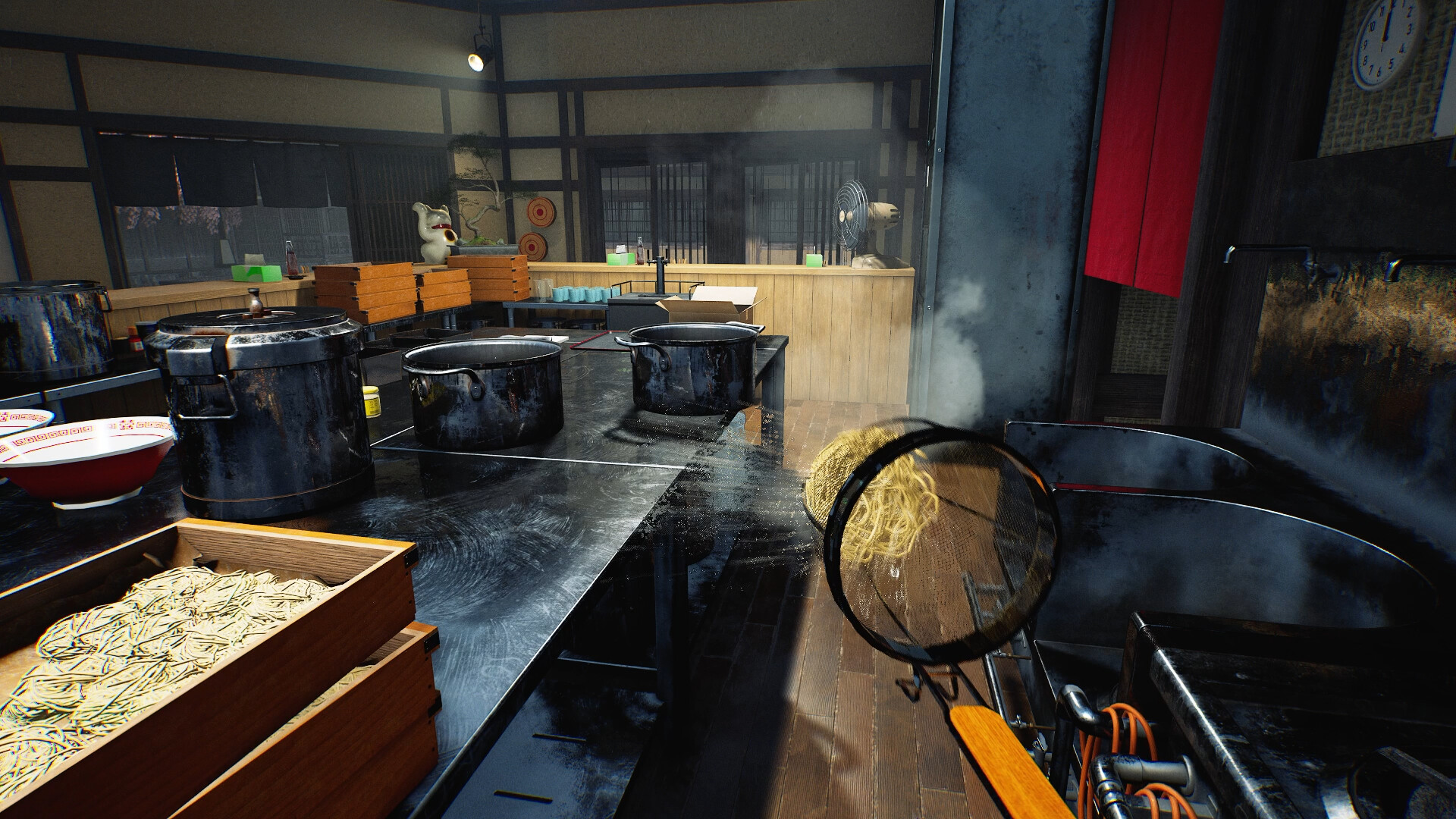
- Noodles. Boil and drain. Timing controls noodle texture, and texture is one of the scored dimensions. Overcooked noodles read instantly on the customer's face.
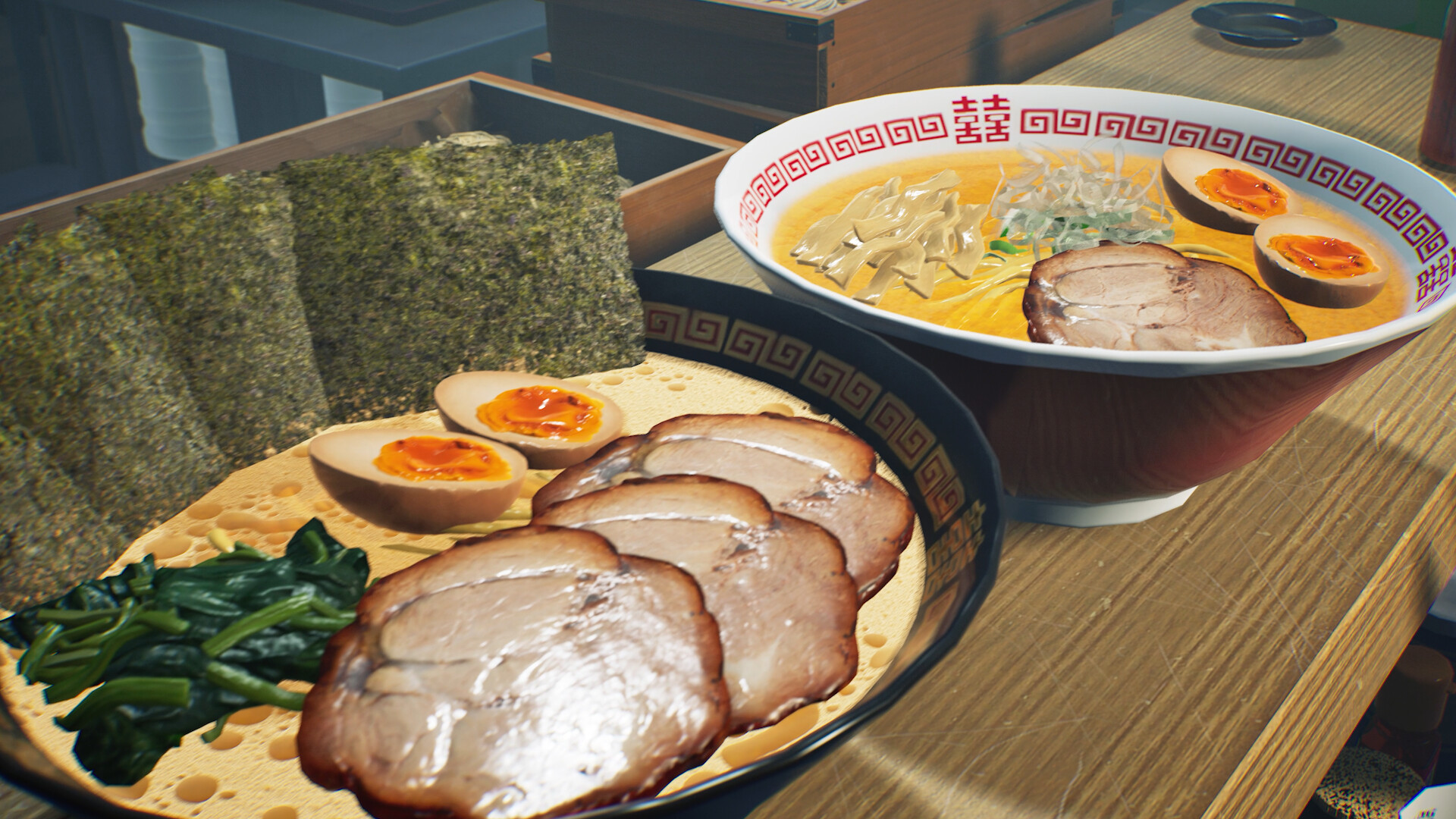
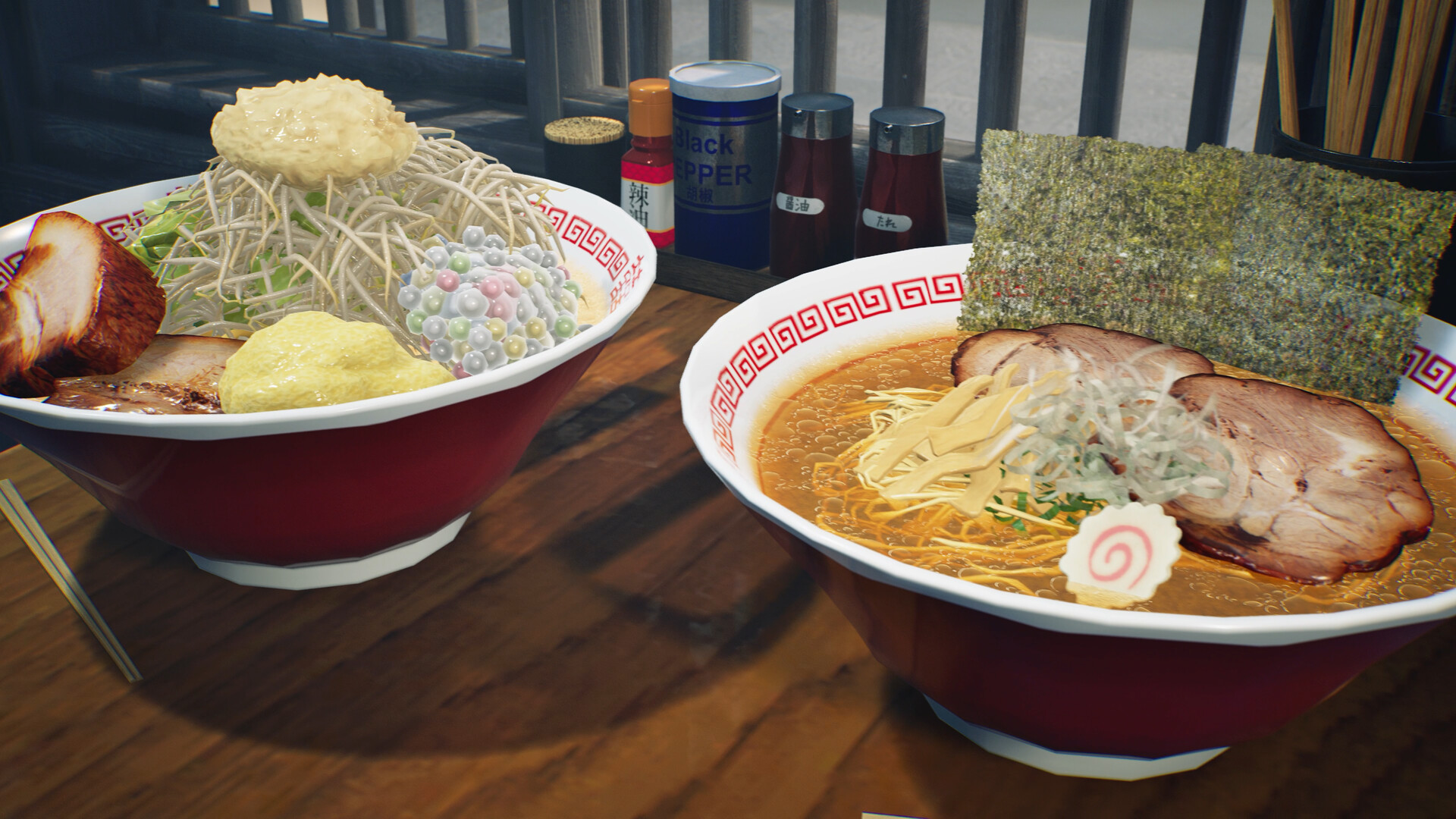
- Toppings. Plating is physics-based. Char siu lands where you drop it, negi scatters, soft eggs wobble. Arrangement affects presentation, and presentation affects tips and reviews.
- Serve. Carry the bowl out before patience runs out. Serve time counts toward the order's final grade.
The game grades each bowl on texture, temperature, aroma, Umami, and speed. That five-part score is why two players can "finish" the same order and get paid differently.
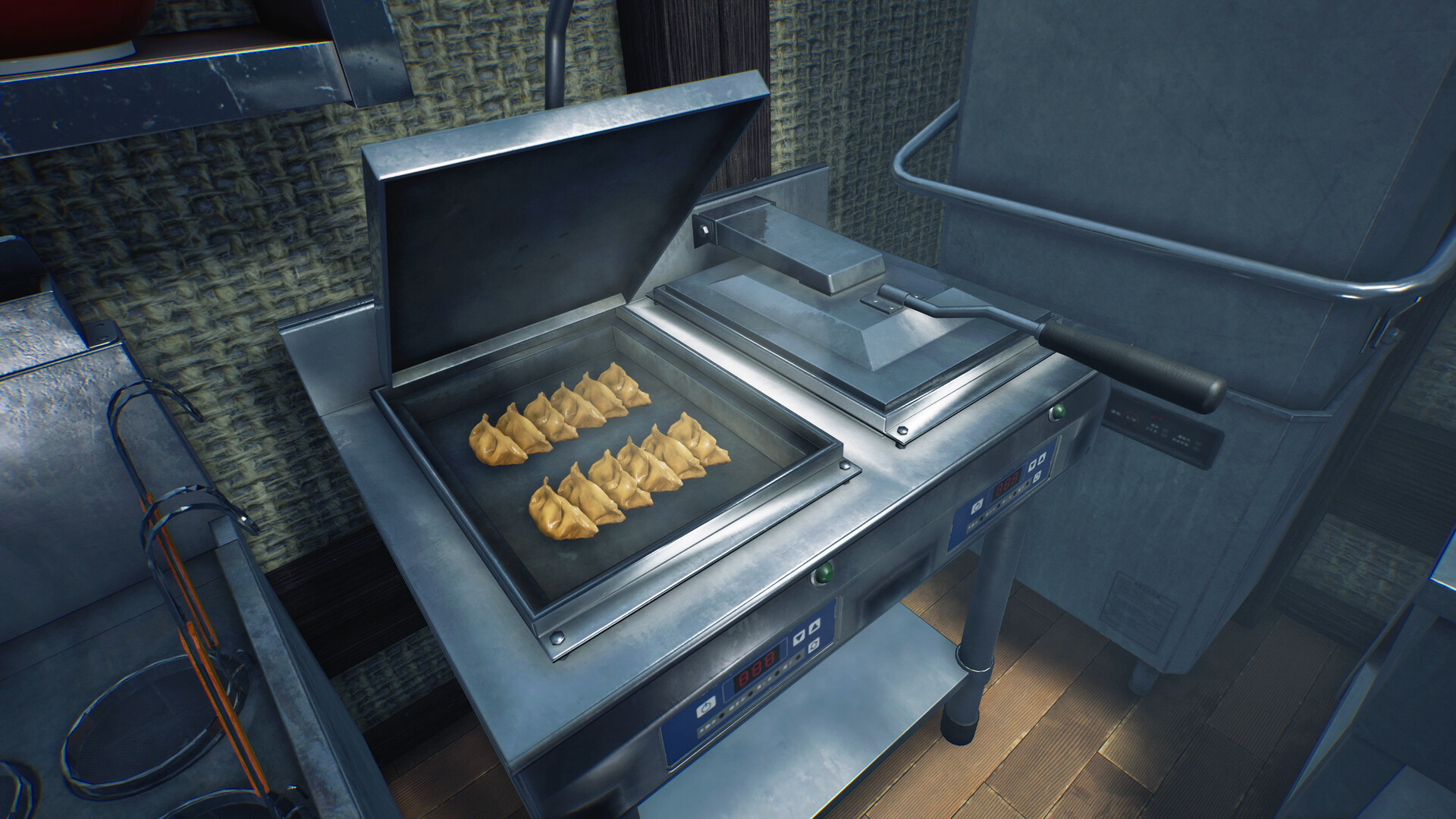
Beyond ramen, the menu grows into gyoza, rice bowls, and beer. Gyoza has its own browning meter. Pouring beer is a foam-balance minigame. Rice dishes reuse your ramen prep: the char siu you sliced for bowls becomes char siu don, so ingredient prep feeds two stations at once.
Tips and Tricks: Getting Started
Do the tutorial, all of it. The Day 1 update specifically retimed when tutorial prompts appear because early players were drowning. The v0.1.50 patch refined it again. Skipping it means discovering the soup temperature system mid-rush.
Unlock decorations at the right pace. The launch patch moved shop decorations to unlock later than the beta, once your shop level supports them. Do not burn early cash on cosmetics; equipment that speeds cooking pays for itself first.
Master one station before co-op. If you plan to play with friends, learn noodle timing solo first. Co-op runs on handoffs, and the weakest station is whoever learned the least.
Take the easy mode without shame for day one. Customer patience is generous, the rhythm teaches itself, and the game stays interesting because the physics stays silly, not because the timer is tight.
Learn the register early. Money management drives everything: shop expansion, menu additions, furniture. Thieves can raid your till during business hours, so check it during lulls.
The Chaos Events: Critics, Thieves, Fires
Three event types break up the cooking loop, and each has a specific counter:
The ramen critic. A demanding critic visits and grades your bowl hard. The Steam description says fine-tune aroma, Umami, and toppings. Practically: use your best ingredient stock, plate carefully, do not rush the noodles. There are two critic achievements, one for the standard critic and one for the True Ramen Critic, and the second one only matters once your ingredient unlocks are deep.
Thieves. During business hours, a thief may target the cash register. Shuriken are your tool. One launch-week review sums up the tone: "i put up meme on the wall, kicked a criminal in the face, gambled and won 900$, then made ramen like a normal person 10/10." Keep a shuriken in reach during busy hours and watch for the approach animation.
Fires. Fires break out without warning in the kitchen. The fire extinguisher is a fixed piece of equipment: know where yours is mounted before you need it, because searching for it mid-flame costs you the station and the order.
The gambling hall. A side location where you can bet your earnings. It is exactly what it sounds like: a luck drain with a jackpot. Treat it as entertainment money, not a strategy.
Co-op Play: Six Players, One Kitchen
The game's strongest hook is dividing labor, and the natural split for a full crew:
- Prep (1–2 players): stocks, slicing, soup base management
- Cook line (1–2 players): noodles and plating, the quality bottleneck
- Floor (1–2 players): serving, register, cleaning, thief duty
The physics does the comedy for you. Reviews from launch week are full of players kicking friends across the kitchen and throwing scalding ramen, and the game lets you. Spatial voice chat sells it: walls and distance dampen voices, so the cook can't hear the floor screaming for bowls until it's too late.
Practical co-op tips: agree on a handoff counter spot so bowls don't pile up; assign one person to the extinguisher and shuriken; and rotate stations between days so nobody becomes a permanent dishwasher. NPC part-timers can backfill missing roles, but they handle routine tasks only, not quality-critical plating.
Shop Building, My Designs, and Customization
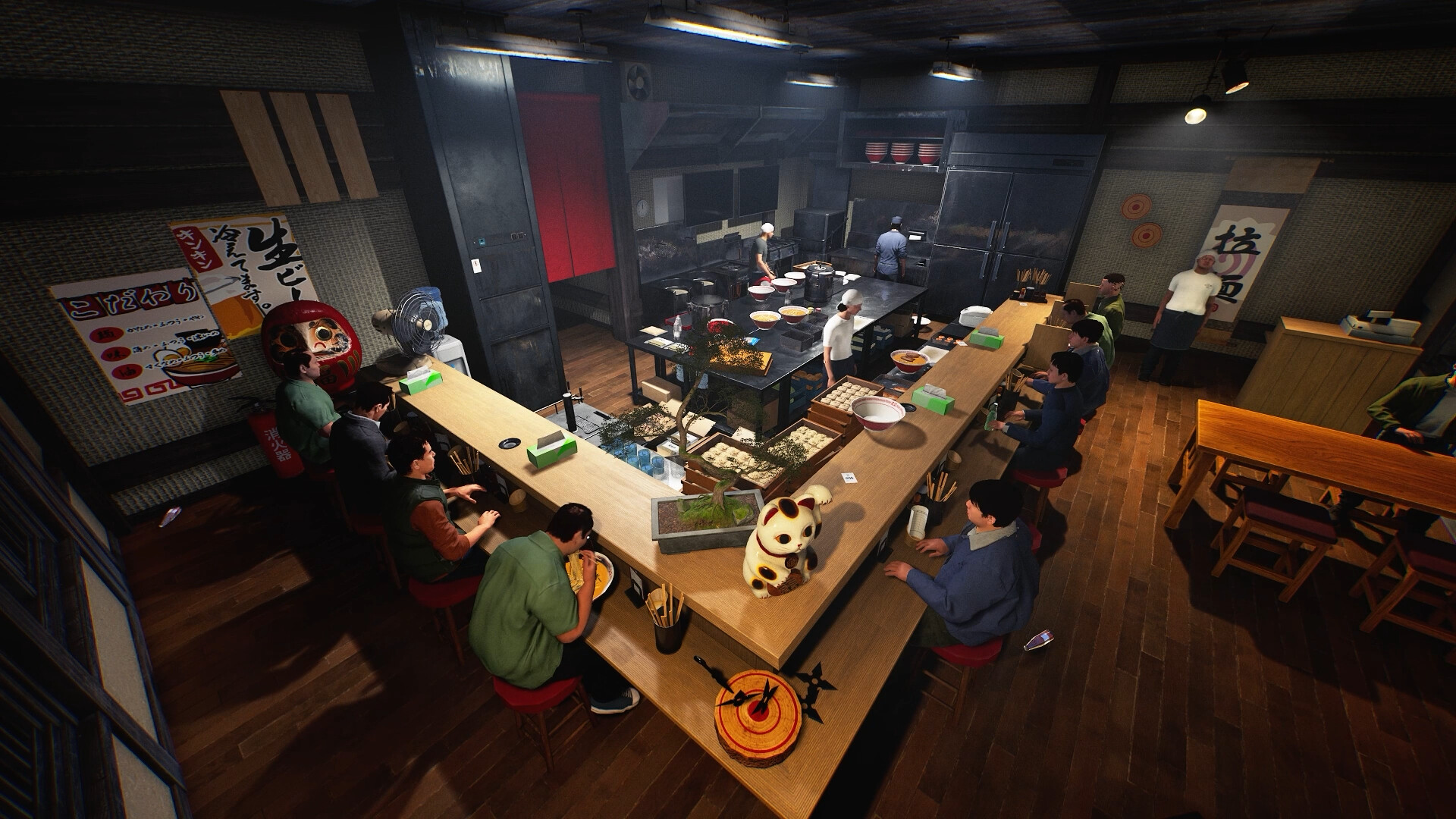
Layout freedom. Cooking equipment, furniture, storage, and decorations all place freely. The meta is either efficiency (short walks between pot, noodle station, and counter) or aesthetics (a shop worth photographing). Both pay: efficiency through throughput, aesthetics through a screenshot economy that has kept the game visible on social media since the betas.
My Designs. The standout feature. You draw on a canvas, and the game applies your art to posters, noren curtains, ramen bowls, clothing, and more. Visit a friend's shop and leave your autograph. Current limitations players want fixed: drawing tablet support, grid size options, and image import/export. All three are common review asks, which usually means they are on the roadmap.
Character customization. Outfits, body shape, emotes, and even noodle-draining animations are customizable, and matching uniforms across a six-player crew are possible with shared designs.
Progression. Shop Level gates everything. Level 5, 10, 15, and 20 are achievement thresholds, and each tier unlocks new ingredients and equipment. Money feeds three sinks: expansion (physically enlarging the shop), menu additions, and dining area upgrades.
Boss Customers and Achievements
The achievement list doubles as a content map. All 18, with unlock rates from launch week:
| Achievement | Requirement | Global % |
|---|---|---|
| A Bowl to Begin | Serve ramen for the first time | 96.4 |
| A Day's Work | Complete your first business day | 91.0 |
| Living Up to the Sign | Apply a My Design for the first time | 86.9 |
| A New Look for the Owner | Customize your appearance at the locker | 78.2 |
| Humble Beginnings | Reach shop level 5 | 71.5 |
| The Perfect Pour | Serve beer for the first time | 66.5 |
| A Neighborhood Favorite | Reach shop level 10 | 42.3 |
| Seared to Perfection | Serve gyoza for the first time | 39.0 |
| Room to Dream | Expand your shop for the first time | 38.2 |
| Even the Critic Is Impressed | Beat the Ramen Critic challenge | 37.0 |
| Persistence Pays Off | Complete 10 business days | 30.3 |
| The Talk of the Town | Reach shop level 15 | 17.9 |
| The First Step to Success | Reach $10,000 total sales | 9.2 |
| A Bowl Worth More Than Gold | Beat the Wealthy Customer challenge | ~6 |
| A Legendary Ramen Shop | Reach shop level 20 | rare |
| Nature's Bounty | Beat the Monk boss customer challenge | rare |
| A Bowl Beyond Criticism | Beat the True Ramen Critic challenge | rare |
| The Works, with Extra Everything | Unlock all other achievements | 0-ish |
The boss customers (Critic, Wealthy Customer, Monk, True Ramen Critic) are the skill checks. Each demands a bowl tuned to their preferences, and the True Critic is the de facto final exam for your ingredient knowledge. At time of writing, under 1% of players have the completion achievement, which tracks for a game two days into Early Access.
Early Access Roadmap and Known Issues
Wild Dog communicates through Steam news in Japanese and English, and the cadence so far has been a delay announcement, a launch confirmation, and two update notes inside the first week. Known friction points from launch reviews:
- Quality-of-life asks: drawing tablet support for My Designs, bigger grids, image import/export
- Easy mode can run quiet for experienced sim players; difficulty lives in higher shop levels and co-op chaos
- Solo play leans on NPC staff that handle routine work but not delicate plating
The wishlists trajectory (50k to 100k in one week pre-launch) plus a Very Positive opening suggests a long Early Access runway. If you buy in now, expect systems to move under your feet in the good way: the Day 1 and v0.1.50 patches both shipped within 48 hours of release.
FAQ: Japanese Ramen Simulator
When did Japanese Ramen Simulator release? October 9, 2026, into Early Access on Steam. Originally slated for October 8, it slipped a day while awaiting Steam's pre-release review, mostly over controller support and cloud sync.
How much does it cost? $12.99 on the US store, with regional pricing. The price briefly showed $12.74 during a launch-window adjustment.
Is it on Mac or Linux? No. Windows only for now.
How many players can play together? Up to six online co-op, plus solo play with NPC part-time staff. Joining works through a room code.
Is there voice chat? Built-in spatial voice chat. Distance and walls affect how teammates sound.
What's the difference between first and third person? Immersion versus situational awareness. The developer explicitly recommends third person if first person causes motion sickness.
How long is a business day? Roughly 10–15 minutes depending on customer volume and how much you decorate between days. Ten days completed is an achievement milestone.
What do shop levels unlock? New ingredients and equipment at each tier, with levels 5, 10, 15, and 20 tied to achievements. Shop expansion (physical size) is separate from level.
Can I play with a controller? Yes, full controller support. The Day 1 update reworked controller settings based on beta feedback.
Is the game kid-friendly? The chaos is slapstick, not graphic. Kicking thieves, kitchen fires, meme posters on the wall. It reads closer to a cartoon than a management sim with consequences.
Do NPCs replace friends? Part-time staff handle routine tasks (running bowls, basic cleaning) but you still own the quality-critical work: soup, noodles, plating.
What's the endgame? Shop level 20, all four boss customers cleared, $10,000 in sales, and a shop your friends keep screenshotting. Early Access will grow that list.
Screenshots