Official game
Play Antivirus Survivors 2003 Professional
This game is hosted by Steam. Continue to the official page to play or download it.
Wishlist on SteamAntivirus Survivors 2003 Professional: Deep Dive Build Guide
Overview
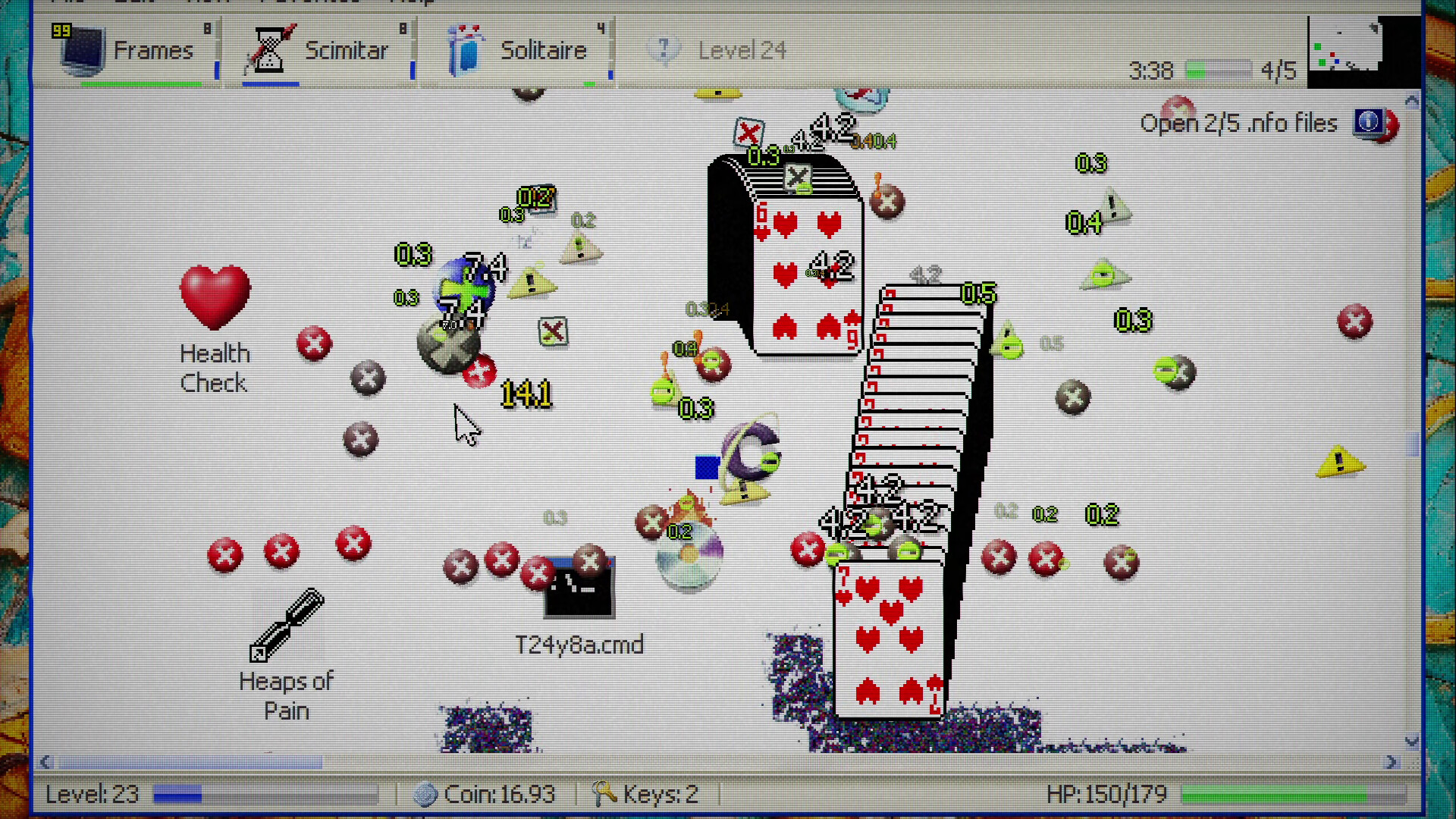
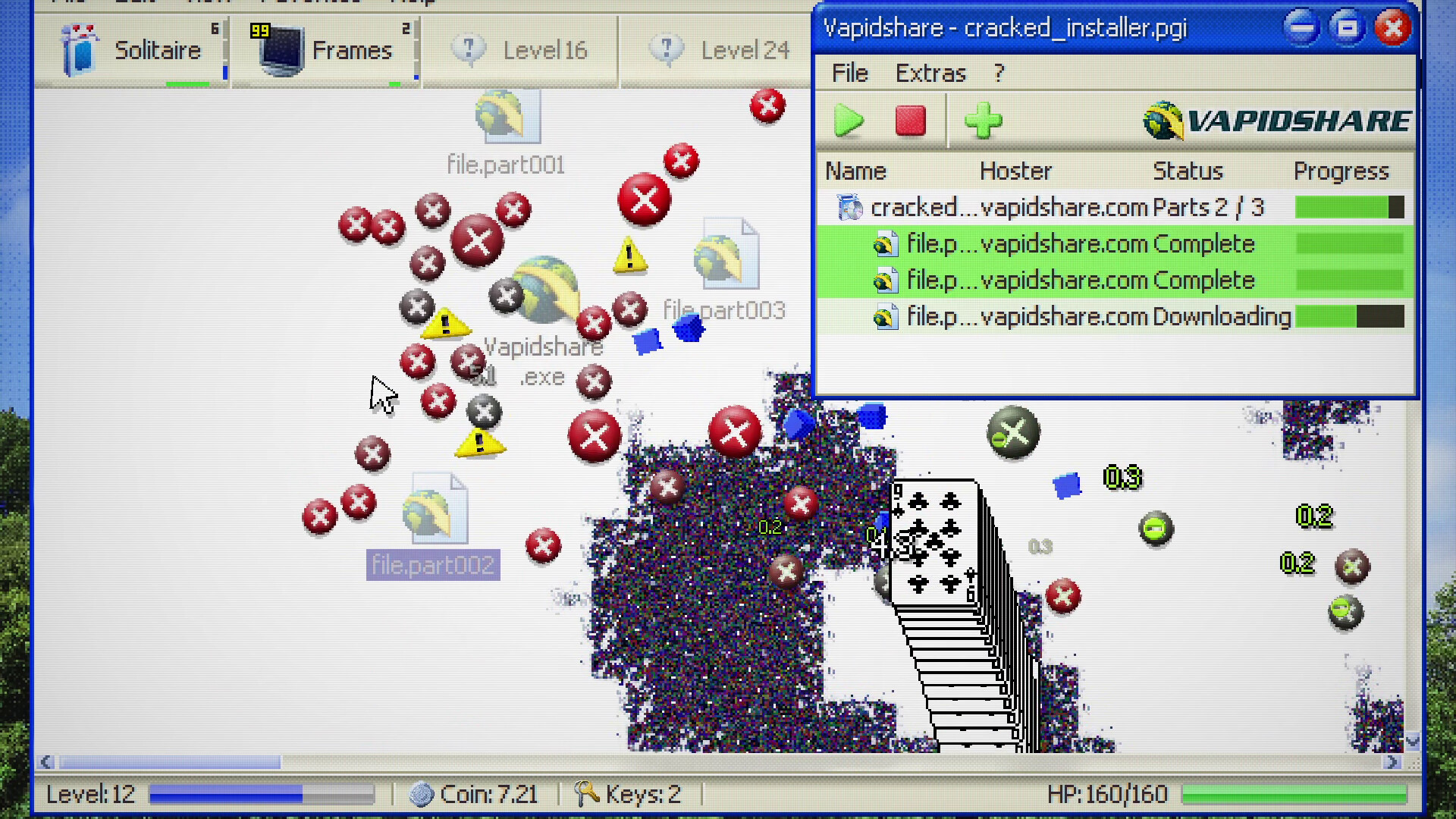
Antivirus Survivors 2003 Professional is a survivors-like from solo developer Shaun Hammond, and the pitch is exactly what the title advertises: the family computer is infected again, and you are the antivirus. You double-click through folders while waves of viruses, spam pop-ups, and voids close in, vacuuming XP and keys from files as you go. Everything is themed on early 2000s computing, from Pinball and Solitaire weapons to LemWire and BigWave file types, and the runs run 30-40 minutes of pure Y2K nostalgia.
The numbers on this one are unusually strong for a solo project. The demo pulled over 6,000 players in its first Next Fest window, wishlists doubled to 13,000 during the fest, and the latest dev post counts 38,000 wishlists with a warmfix out. Rock Paper Shotgun covered it as a charming Windows XP take on the Vampire Survivors formula. Release lands September 28, 2026, with the full game carrying 24 weapons, 50 drivers, 33 file types, 62 plugins, 18 meta upgrades, 5 difficulty levels, 15 policies, 18 player stats, 81 wallpapers, 8 themes, and 6 bosses.
| Fact | Detail |
|---|---|
| Developer | Shaun Hammond Business Solutions |
| Genre | Survivors-like / bullet heaven |
| Platforms | Windows, macOS, Linux |
| Release | September 28, 2026 |
| Price | To be announced |
| Players | Single-player, full controller support + keyboard-only option |
| Runs | 30-40 minutes |
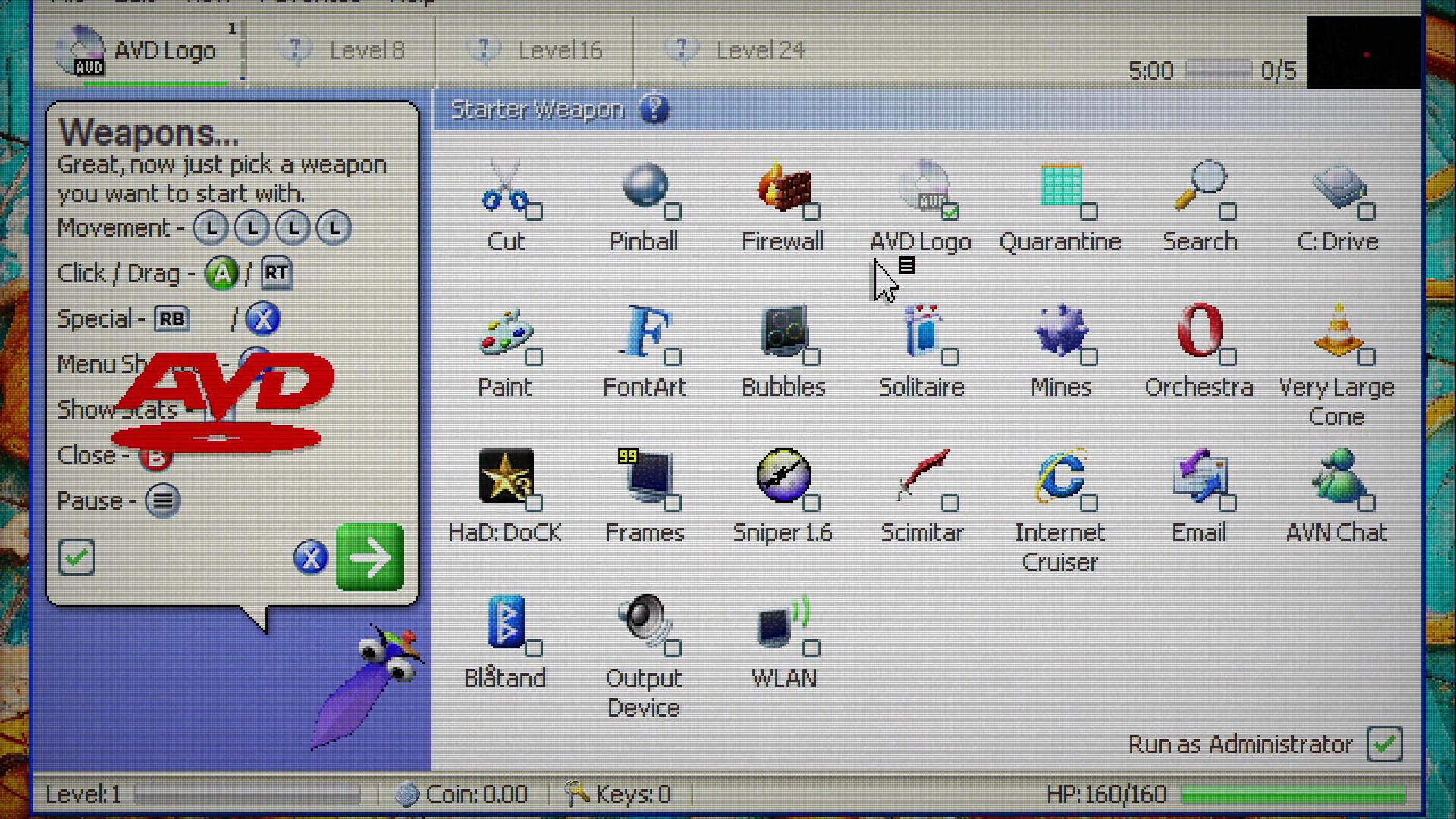
| Weapons | 24, era-themed (Pinball, Solitaire, Mines, Firewall) |
| Upgrades | 50 drivers, 62 plugins, 18 meta upgrades, 18 stats |
| Challenges | 5 difficulty folders, 15 policies |
| Cosmetics | 81 wallpapers, 8 themes |
| Bosses | 6, plus mini-bosses |
Who this is for: Vampire Survivors players who finished the base game twice, anyone who still hears dial-up in their sleep, and players who like their power curves explained in driver versions. Who can skip: people allergic to the survivors formula; this is a themed variant, not a genre reinvention, and the joy is in the skin and the tweak space.
Getting Started: Your First Runs
- Treat the demo habits as launch-ready. The 1.2 demo update ("Drag and then also Drop") added two new weapons and QoL from Discord feedback, so what you learned pre-launch mostly carries.
- Read your folder before you route. Each run happens in a protocol folder (difficulty level). Five exist with escalating risks and rewards. Early on, run one folder below your comfort; the XP curves punish overreach harder than most survivors-likes.
- Open everything once. Files drop XP and keys, tasks and policies pay bonuses. New players lose runs by beelining; the desktop rewards a loose sweep pattern.
- Take the first driver that changes how your weapon moves, not how hard it hits. Movement-affecting drivers compound with positioning; flat damage drivers are a floor, not a build.
- Bank a boss plan. Six bosses plus mini-bosses means your first run should end at a boss you now know. Die there on purpose if you must: information is the meta upgrade nobody prices.
Beginner Mistakes to Avoid
| Mistake | Why it hurts | Fix |
|---|---|---|
| Picking all three new weapons every run | 24 weapons exist; three half- synergized guns lose to two maxed ones | Commit to two carry weapons per run |
| Ignoring plugins | 62 plugins are the real build chassis; weapons are just the paint | Plan a plugin direction before minute ten |
| Hoarding keys | Keys open the file types that pay out; unspent keys scale nothing | Spend on file types the moment a payout window opens |
| Fighting in the spam | Pop-up swarms body-block your routing | Circle the swarm edge, do not cut through |
| Skipping policies | 15 policies are challenge modifiers with real rewards | One policy per run once you clear base difficulty |
| Treating wallpapers as pointless cosmetics | They are the completionist track that gates nothing but pride | Fine, skip them; but 81 wallpapers is a lot of pride |
Core Mechanics Explained
The Double-Click Economy
Your attack verb is the double-click, and the economy runs on three currencies stacked on the desktop:
- XP drops from enemies and opened files, and levels you mid-run.
- Keys drop from exploration and tasks; they open file types for rewards.
- Task and policy bonuses are the third rail: complete the listed task and the bonus lands regardless of kills.
The loop that wins runs is not kill-maximization. It is route-maximization: a path that opens files, completes tasks, and keeps the swarm at arm's length out-earns a pure murder spiral. The dev's demo stats back this up: 6,000 players, wishlist doubling during Next Fest, and balance patches shaped by what routes players found.
Drivers vs Plugins: Two Different Upgrade Philosophies
This is the mechanical heart and where new players go wrong.
Drivers (50) transform how a weapon usually works. Think of them as mutations: a Pinball weapon that returns to you becomes a Pinball weapon that never returns but grows. Drivers change behavior, so they stack multiplicatively with your routing skill.
Plugins (62) install from keygens and modify weapons and player stats. Plugins are the chassis: stat lines, cooldowns, and global effects. Two weapons that share a plugin direction double-dip.
The build order that works for most of the roster:
- One weapon with a behavior driver that fixes its biggest weakness.
- Plugins that feed both weapons at once (shared stat lines).
- A second weapon that covers the first's coverage gap.
- Drivers for the second weapon only after the shared plugin layer is done.
Meta Progression: 18 Upgrades and the Long Game
Meta upgrades shape your path between runs, and 18 of them is a small enough pool to finish but big enough to order badly. Practical ordering from the demo's curve:
- First: anything that raises early XP gain. Survivors-likes live or die on the level-ten power spike timing.
- Second: starting weapon options. Choice at minute zero compounds more than power at minute thirty.
- Third: survivability floors (armor, health regen equivalents). Bosses check these before your DPS does.
Advanced Tips
Reading the Weapon Roster Like a Sysadmin
The 24 weapons map to era software, and their design leans into it. Solitaire-class weapons reward stacking (cards cascade when chains trigger), Mines-class weapons want you to herd enemies over fixed points, Firewall weapons create zones that punish you if you forget your own zones exist. The advanced habit: when you unlock a weapon, play one run where it is your only carry. Weapons in this game reveal their conditions, and a driver that seems useless on run three is the answer to a boss on run fifteen.
Policy Runs Are Build Exams
The 15 policies are self-imposed challenge modifiers, and they are the fastest way to find build weaknesses. A policy that limits healing checks your positioning; a policy that speeds the spawn clock checks your clear rate. Run one policy at a time and treat failure as diagnostics, not punishment. The five protocol folders (difficulty levels) gate rewards sensibly: clear base, then layer one policy, then climb folders.
Boss Notes: Six Fights, One Rule
Six bosses plus mini-bosses ship at launch, and the dev has shown boss-adjacent content in every trailer ("every shot has something new"). Survivors-like boss fights fail for two reasons: walk-speed greed and build tunnel vision. The one rule: at minute 25 of a run you intend to win, stop taking upgrades that require you to stand still. Every boss in this genre punishes stationary DPS, and the mini-bosses before them exist specifically to teach that lesson cheaply.
Performance and Settings
Full controller support with DualShock and DualSense, a keyboard-only option, and Steam Cloud saves are all listed on the store page. The retro aesthetic is light on GPUs; the real performance variable is on-screen entity count late in runs. If frames dip during minute-30 swarms, drop entity/particle settings before resolution; readable swarms matter more in this genre than sharp spam pop-ups.
FAQ
When does Antivirus Survivors 2003 Professional release? September 28, 2026.
Is there a demo? Yes, updated through 1.2 with new weapons and QoL fixes, and it remains the best way to learn the routing habits before launch.
How much will it cost? Unannounced. Solo-dev survivors-likes in this space usually land under $10; treat that as a guess, not a promise.
How long is a run? Roughly 30-40 minutes per the store page, with five difficulty folders extending that for completionists.
Is it on consoles? No console versions announced. Windows, macOS, and Linux via Steam.
Do I need to know 2000s computing to enjoy it? No. The jokes land harder if you remember Winamp and Limewire, but mechanically everything is explained in-genre language you will parse within a run.
How does it compare to Vampire Survivors? RPS framed it well: a charming themed take on the formula. The driver/plugin split gives it a stronger build-crafting identity than most clones; the skeleton is familiar on purpose.
Quick Reference Card
- Route over kills. Files, tasks, and policies out-earn murder spirals.
- Two carry weapons, one shared plugin layer. Drivers fix weaknesses; plugins build chassis.
- Meta order: XP gain, starting options, survivability.
- One policy per run once base difficulty is cleared.
- Stop taking stand-still upgrades before the boss window.
- Launch: September 28, 2026. Windows, macOS, Linux. Single-player.
Screenshots