Official game
Play AVELUNE
This game is hosted by Steam. Continue to the official page to play or download it.
Wishlist on SteamAVELUNE is a solo-developed 2D action metroidvania from Skyho, coming soon to Steam on Windows and macOS. The Kingdom of Abel shone under its king's grace until the king vanished, and the realm is crumbling around you. The store page promises the two numbers that matter in this genre: 20 main bosses and more than 30 field bosses. That is 50+ handcrafted encounters from one developer, a density no recent solo metroidvania has shipped.
The announcement trailer shows what kind of game the numbers belong to: fast, readable combat with short dodge windows and committed enemy swings, closer to Nine Sols tempo than to slow soulslike pacing. This deep dive covers the strategy layer before launch: how to build your combat habits for Skyho's system, how to route a 50-boss map without burning hours on backtracking, and what the confirmed feature set tells us about difficulty and accessibility.
The Boss Economy: How 20 + 30 Changes How You Play
Metroidvanias with this boss split follow a rhythm worth planning around. Main bosses gate progression and hand out ability unlocks. Field bosses guard the optional layer: hidden rooms, stat boosts, traversal shortcuts. The tactical difference is who each boss is designed to test.
- Main bosses teach one thing at a time. Expect a mechanic, a phase transition, and a check on your current kit. First-attempt deaths are the intended experience; the lesson is always in the wind-up.
- Field bosses test combinations. Two or three mechanics at once, larger health pools, and rewards that matter more for the endgame than the moment. This is where the real difficulty ceiling lives in games structured like this one.
The efficiency play for a first run: clear field bosses as you encounter them, not on a cleanup pass. In a 50-boss economy, the optional fights are where your build gets the muscle memory that main bosses demand. Leaving 30 encounters for the post-credits backturn means fighting the game's hardest content with the least practice.
Getting Started: Your First 30 Minutes
AVELUNE is pre-release, so the opening hours are untested public knowledge. What follows is the standard opening discipline for fast-tempo action metroidvanias, tuned to what Skyho has confirmed about the game's structure.
- Play keyboard-and-controller testing in the first ten minutes. Both are confirmed supported. Pick the one that survives a 30-minute sit; metroidvania hands cramp are real and switching input at hour five costs muscle memory.
- Test the accessibility panel before the first real fight. Contrast controls, custom volume sliders, keyboard-only mode, and play-at-your-own-pace setting are all on the Steam page. If you want the low-pressure mode, decide early. Pride costs more than the settings menu.
- Map the first region fully before pushing story. Solo metroidvanias reward players who learn the map language early: one-way drops, ability-gated doors, and where save points cluster.
- Count the enemy attack animations. The trailer's variety is the game's depth preview. In-game, your first job in any new area is learning which enemies telegraph and which ones don't.
- Save before every new boss door. Steam achievements are confirmed; so are the deaths that come before them.
Beginner mistakes to avoid
- Dodging away from attacks instead of through them. Fast combat games punish retreat; the dodge i-frames exist to pass through swings, and distance only prolongs the fight.
- Skipping field content to rush the story. Ability-gated progression means the route you can't open yet is the route you'll need later. Full-clear as you go.
- Ignoring the map until lost. Metroidvania maps are built for three-hour-later-you. Annotate as if you'll forget, because you will.
- Treating every boss as a damage race. Phase transitions exist in this genre to punish greed. At half health, stop the combo habit and watch for new tells.
- Playing through fatigue. Precise-input action games degrade hard after hour two of a session. Field boss deaths cluster at session ends.
Core Mechanics Explained
Combat: The Aggression Contract
Skyho's confirmed wording is "fast-paced, intuitive combat" with "intuitive, precise controls." The trailer backs it with the tells: enemies wind up visibly, strikes commit, and the player answers with quick slashes and dodges. No stamina bar appears in any footage, which separates AVELUNE from soulslikes. The practical contract: you are the pressure. Enemies in this design die to sustained aggression between their recovery windows, and the dodge is a damage-dealer's tool, not a coward's.
Three combat habits that transfer from the genre's fast tier:
- Dodge into the swing. Passing through the attack lands you behind the enemy, inside your own damage window. Dodging backward resets the neutral.
- Two-hit discipline. Most first-attempt deaths in fast action games come from a third combo hit eaten by a counter you didn't wait for. Two hits, reposition, read.
- Learn the recovery, not the attack. The wind-up tells you what's coming. The recovery tells you how much damage you're owed. Every boss is a recovery-punishment schedule.
Ability Gating: The Expected Progression
No official ability list exists yet. The genre contract and the trailer's movement (dashes, aerial options) support the standard unlock ladder:
| Stage | Likely unlock | What it opens |
|---|---|---|
| Early | Dash | Gap crosses, first shortcuts |
| Early-mid | Double jump / aerial attack | Vertical routes, aerial punishes |
| Mid | Attack upgrade | Armor breaks, damage thresholds |
| Mid-late | Traversal wildcard (wall cling, grapple) | The map's sealed third layer |
| Late | Combat super | Boss phase skips, optional boss checks |
Plan your exploration around the ladder. When you hit a sealed door, drop a map marker and route around; the game is telling you what's coming. Every sealed door is a future loot room.
The Kin and the Warriors: What the Cast Suggests
The Steam page names Abel's mighty warriors, your own kin, and monsters harboring secrets. In metroidvania practice, that cast list predicts three NPC behaviors: warriors who teach fights (and possibly re-fight them later as corrupted elites), kin who gate story beats and upgrades, and secret-bearing monsters who are the field boss layer's lore delivery. Talk to everything between fights. Solo devs put their narrative budget in the dialogue trees because cutscene budget doesn't exist.
Progression Strategy
The Route Discipline
The efficient first pass through a 50-boss map:
- Full-clear each region before the main boss. Field bosses first, then the gate boss. You enter the story fight with every tool the region offers.
- Ability in hand, backturn one screen. Every unlock opens something within one screen of where you got it. Sweep for it immediately; that's where the route's next leg usually hides.
- Mark everything sealed. Three marker colors: need-ability, need-key, suspicious. The endgame cleanup is only painful for players who didn't annotate.
- Save-point arithmetic. Before any boss attempt, know your run-back length. Long run-backs are the genre's tax on impatience; factor them into how many attempts you spend before a break.
Resource Priority
Unconfirmed specifics, but the genre-standard priority stack holds: movement upgrades beat damage upgrades in value per hour, healing upgrades beat raw health in boss fights, and currency sinks at the first shop beat saving for late-game stock. If AVELUNE ships with charm-style loadout slots (common in the genre's current wave), pick mobility pieces for exploration and damage pieces for boss attempts. Two loadouts, swapped per task, is the meta.
Step-by-Step: The Field Boss Method
Field bosses are where 30 of your 50 fights live. The repeatable sequence:
- Scout the arena. Entry point, wall positions, hazards, and whether the door locks. Locked doors mean no cheese and no retreat; open arenas mean you can reset positioning.
- Spend attempt one purely watching. Eat the loss if you must. Catalog attacks: which are dodge-through, which are jump-over, which have recovery windows you can punish hard.
- Pick your two punishes. Every field boss design has at least two attacks with generous recovery. Build your whole fight plan around punishing only those two and respecting everything else.
- Control the center. Bosses chase; corners trap you against hitboxes. Fight from the arena's center, retreating through the boss, not away from it.
- Watch the phase gate at 50%. Stop the aggression, create distance once, and let the transition animation finish. Ten seconds of patience saves five attempts of phase-two surprises.
- Take the reward, sweep the room. Field boss rewards in this genre tend to be permanent (stats, movement, keys). Check the room they guarded before leaving.
Advanced Tips
- The audio tell. Fast action games telegraph with sound before animation. Play with voice/music sliders down and effects up; the confirmed custom volume controls exist for exactly this.
- Learn one weapon path completely. If launch ships multiple attack options, depth beats breadth. One fully-learned kit clears 50 bosses faster than five half-learned ones.
- Deaths are data. Solo-dev balance means bosses are tuned to a death count, not a fair fight. If attempt five feels worse than attempt two, stop. The balance tip is usually a movement option you're ignoring.
- Backtrack with fresh eyes. The post-unlock sweep is where this genre hides its best optional content. Do it immediately; context makes the sealed room's puzzle solvable.
- Mac performance habit. macOS support day one is rare for the genre; if you're on Apple silicon, cap the framerate in the first session. Action metroidvanias hide frame-time drops in busy arenas, and dodge i-frames care.
- Screenshot your map before boss runs. The pre-fight save plus a map photo is the cheapest insurance in gaming.
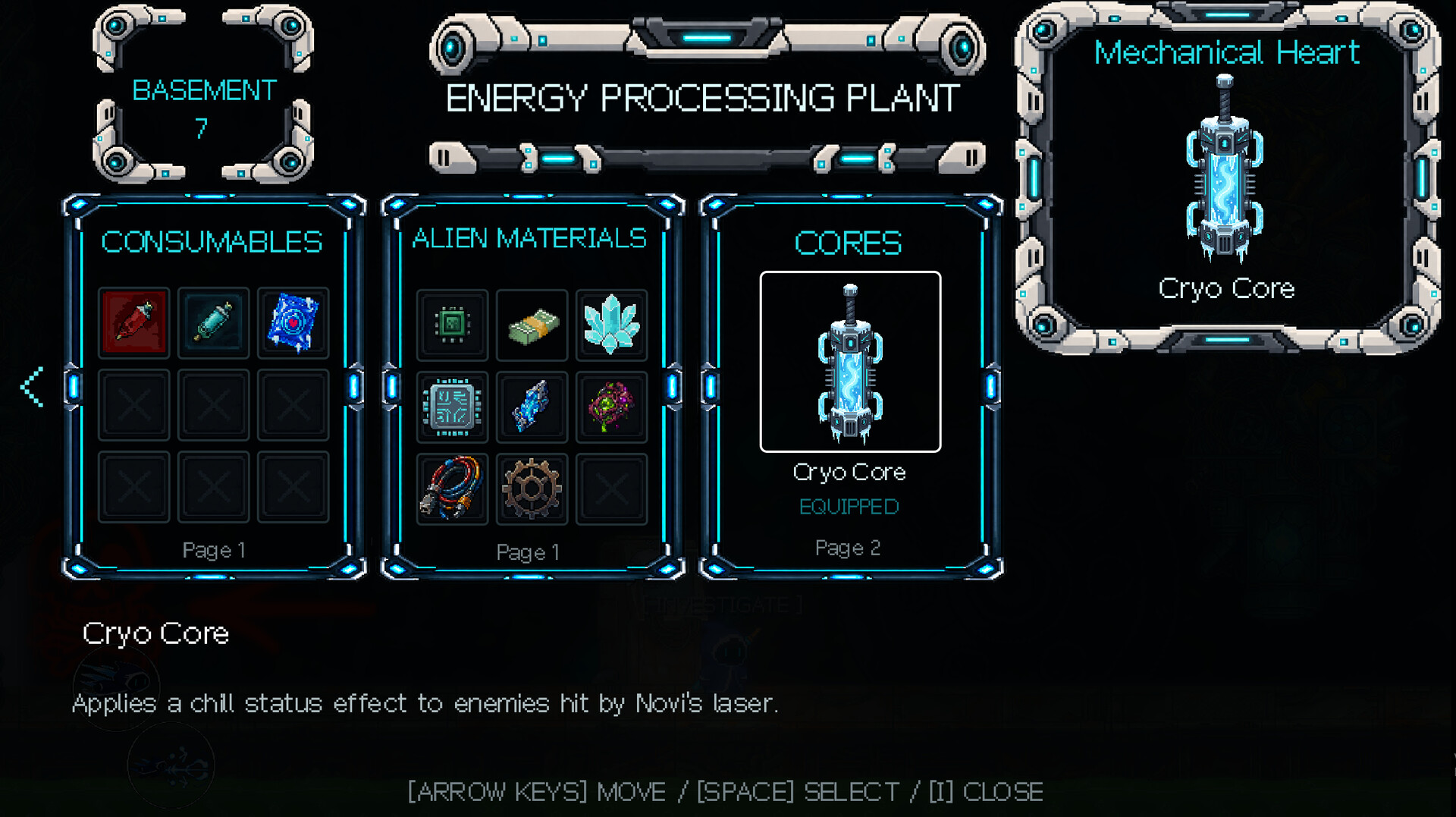
- Wishlist and watch the dev channel. Skyho communicates through Steam news; the September 25, 2026 post about a robot customization system (visual changes via crafted parts at a Cryo Sector crafting machine, using a Cryo Core) shows active, feature-dense development. Solo metroidvanias add systems like this until they go gold; the changelog previews the launch scope.
FAQ
When does AVELUNE release? No date announced. The page says coming soon. Solo metroidvanias in active development (the September news post is days old) typically announce dates 4-8 weeks out. Wishlist to catch the announcement.
How much will it cost? Unannounced. The comparable solo band is $15-20, based on Islets and Crypt Custodian pricing.
What are the system requirements? Modest: minimum is Windows 7 64-bit or later, Core i3-6100 / FX-6300, 4 GB RAM, GTX 750 / R7 260X, 2 GB storage. Recommended is Core i5-8400 / Ryzen 5 2600, 8 GB RAM, GTX 1050 Ti / RX 570. This runs on nearly anything; laptops are fine.
Is the combat parry-based? Nothing suggests it. The trailer shows dodge-centric fast action without parry prompts. Nine Sols tempo, no parry requirement.
How many bosses are there? 20 main bosses plus 30+ field bosses are the confirmed counts. That is the headline feature and unusually dense for a solo project.
How long is the game? Unconfirmed. A thorough first run through 50+ boss encounters typically lands in the 12-20 hour band for this genre.
Does it have accessibility options? Yes: contrast controls, custom volume sliders, keyboard-only support, and a play-at-your-own-pace setting are all listed on the Steam page.
What about the AI-generated assets disclosure? The developer discloses that the protagonist is entirely hand-drawn, while some tilesets, objects, background music, and sound effects used generative AI with manual retouching before inclusion. No generative AI runs during gameplay. Judge accordingly.
Windows and Mac only? Confirmed: Windows and macOS. No Linux or console versions announced.
Screenshots